

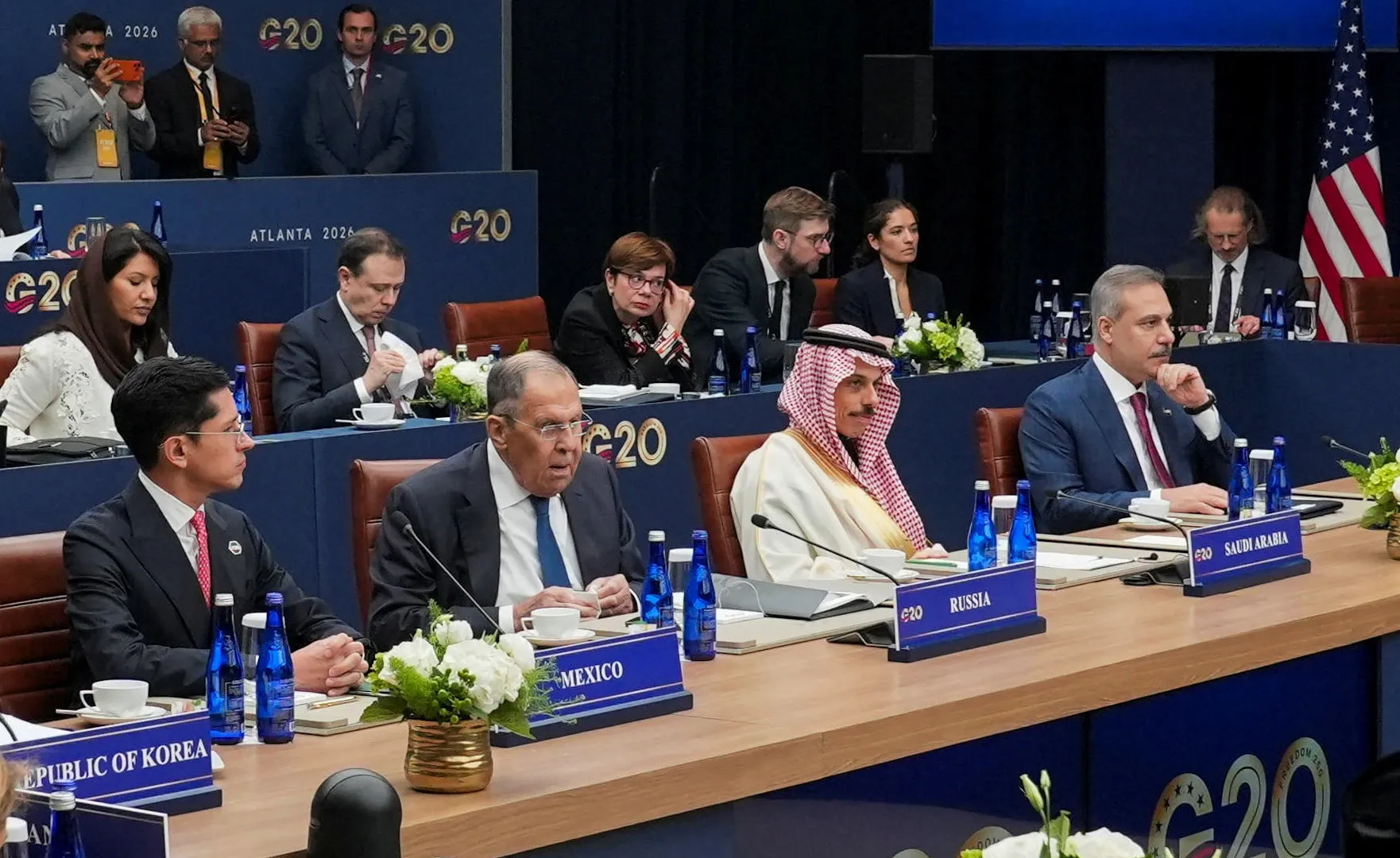
G20 foreign ministers scrapped their traditional group photo in Atlanta. European officials refused to be pictured with Russia's foreign minister.
The United States government canceled the traditional group photo for the G20 foreign ministers. This event took place during a meeting in Atlanta, Georgia. Officials made this choice after European representatives refused to stand near Russian Foreign Minister Sergey Lavrov.
Also, the decision highlights strong disagreements within the G20 group. Tensions remain high among the world's leading economies. These nations struggle to find common ground during their current summit.
Next, the ongoing wars in Ukraine and Iran dominate the conversation at the meeting. These conflicts create significant friction between the attending countries. Diplomats find it difficult to maintain unity while these international crises continue.
Meanwhile, the refusal to pose for a picture shows the severity of the divide. European officials clearly signal their stance against Russian policies. They choose to avoid public displays of cooperation with Moscow’s representative.
After that, the summit organizers adjusted their schedule to avoid further conflict. They removed the photo session entirely from the agenda. This change prevents a potentially awkward or hostile situation for the group.
Still, the G20 meeting continues despite these deep political rifts. Foreign ministers must still address several pressing global issues in Atlanta. They focus on their diplomatic goals while navigating these sensitive relationships.
As a result, the absence of a group photo marks a symbolic moment for the gathering. It illustrates how current global conflicts disrupt standard diplomatic traditions. The world watches as these leaders try to conduct business despite their differences.
Finally, the situation in Atlanta serves as a clear reminder of current geopolitical challenges. The G20 members remain split over the wars in Ukraine and Iran. This meeting underscores the difficulty of maintaining global cooperation during times of war.