

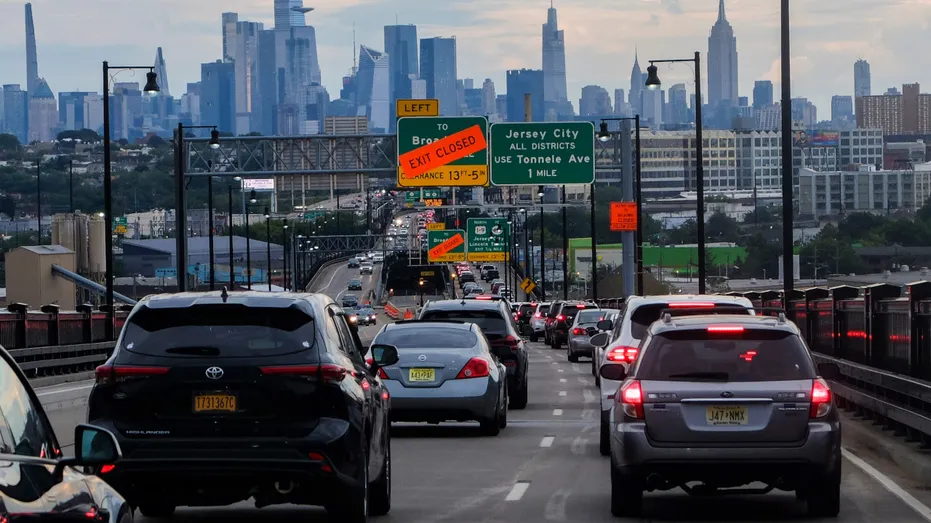
A new city health report reveals that New York City's $9 congestion toll has resulted in no statistically significant improvement in air quality after one year.
A recent analysis conducted ity's congestion pricing program. Despite the implementation of a $9 daily toll for vehicles entering Manhattan's Congestion Relief Zone, the study found that local air quality has remained largely unchanged since the initiative began in early 2025. Researchers examined four primary traffic-related pollutants and concluded that there was no statistically significant improvement that could be directly linked to the reduced number of vehicles on the road.
The data comes after a year of operations under the new tolling structure, which applies to passenger vehicles entering the area at or below 60th Street. While proponents of the policy had initially framed the toll as a critical environmental intervention, this latest report suggests that the relationship between vehicular traffic and the city's overall pollution profile is far more complex than anticipated. The findings have ignited a fresh wave of debate regarding the efficacy of using financial penalties to achieve environmental goals in such a densely populated urban environment.
One of the primary revelations from the city's study is that vehicles account for a surprisingly small portion of the total air pollution in New York City. According to the Health Department, cars and trucks represent only about 10% of the city’s overall emissions. This realization highlights why a reduction in traffic, while beneficial for alleviating gridlock, does not automatically translate into a cleaner atmosphere. The city’s unique architectural and industrial landscape creates a distinct pollution footprint that differs significantly from most other American municipalities.
A significant percentage of the city’s air quality issues are attributed to its dense concentration of buildings, which rely heavily on burning fossil fuels for heating and hot water. Furthermore, emissions from the city's vast network of restaurants and the power plants responsible for supplying electricity to the most populous city in the United States contribute heavily to the problem. Because these sources remain largely unaffected to shift the needle on overall air quality metrics.
The release of the report has provided ammunition for critics who have long described the congestion pricing program as an unnecessary financial burden on working families and small businesses. Throughout the development and implementation of the toll, opponents—including high-profile figures such as President Donald Trump and Transportation Secretary Sean Duffy—argued that the policy unfairly penalized commuters. For these critics, the lack of environmental progress serves as evidence that the program was more focused on revenue generation than on solving the city's public health challenges.
The findings have also caused embarrassment for supporters of the initiative, who had previously promised that the toll would lead to cleaner air and easier breathing for residents. Social media users and political commentators have pointed to past statements from New York Governor Kathy Hochul, who once touted the program as a way to significantly lower carbon emissions and improve public health. The discrepancy between these early promises and the current data has fueled public skepticism regarding the city's justification for the ongoing tolling system.
Despite the failure to meet air quality expectations, the city maintains that the program has achieved other measurable successes, such as an 11% reduction in overall traffic volume. Officials continue to highlight benefits such as faster travel times, reduced noise, and increased funding for public transit upgrades as key justifications for keeping the toll in place. The legal battle over the program, which reached a federal judge earlier this year, solidified its status as a permanent fixture of the city's transportation infrastructure.