

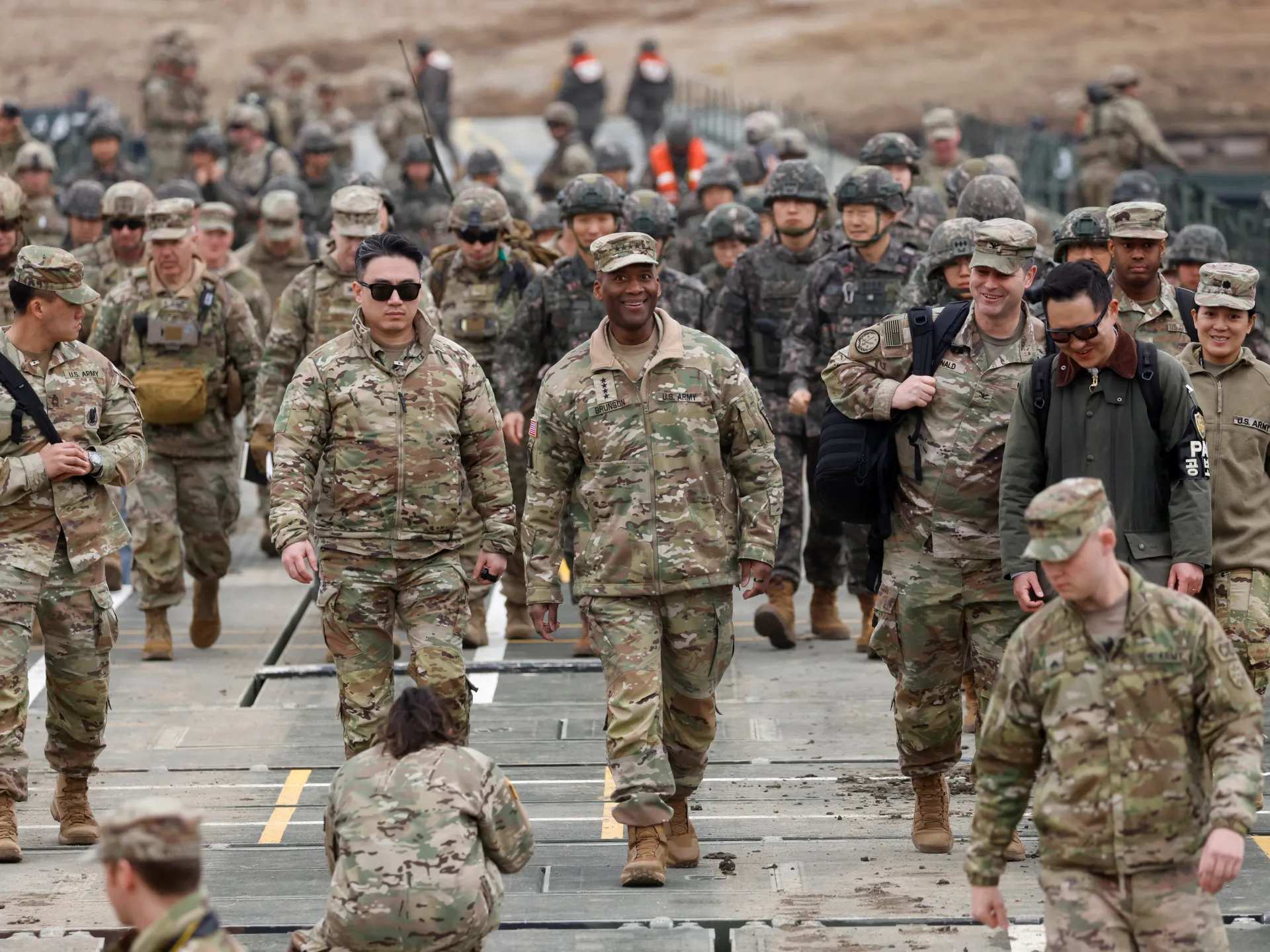
Democratic lawmakers have sharply criticized the administration's decision to scale back joint military exercises with South Korea, citing risks to regional stability.
The recent announcement t military exercises between the United States and South Korea has triggered a wave of intense criticism from Democratic lawmakers. These drills, which have served as a cornerstone of the bilateral defense partnership for decades, are viewed . the integrity of long-standing security commitments and the potential geopolitical consequences of such a unilateral shift.
Critics argue that the decision undermines the 1953 Mutual Defense Treaty, which provides the framework for the security umbrella that protects Seoul. Senator Jack Reed, the ranking member of the Senate Armed Services Committee, characterized the move as an inane policy shift that effectively signals that American alliances are subject to negotiation. He warned that global adversaries, particularly China and Russia, are closely monitoring the situation, interpreting the decision as a sign that the United States is willing to abandon its allies, which could embolden these nations in future confrontations.
The rationale provided for the reduction in exercises appears to be multifaceted, involving both personal diplomatic relations and wider foreign policy grievances. President Trump cited his rapport with North Korean leader Kim Jong Un as a contributing factor. Additionally, the President linked the decision to Seoul’s refusal to participate in the ongoing United States-led military campaign against Iran. This linkage has caused significant concern among foreign policy experts who emphasize that defense treaties should be insulated from disagreements over tertiary diplomatic or military objectives.
Democratic Senator Andy Kim has been vocal about the process through which this policy change was implemented. He argued that military exercises of such strategic importance require a collaborative decision-making process involving both Washington and Seoul. passing established diplomatic protocols and disregarding the collaborative nature of the Indo-Pacific security architecture. Lawmakers remain concerned that such actions weaken the economic and technological ties that define the broader regional partnership, ultimately harming American interests in the long term.
The broader implications of this policy shift extend beyond the Korean Peninsula, touching upon the ongoing conflict in Ukraine. Republican Senator Thom Tillis has joined the chorus of dissent, noting that the reduction of military presence and training in East Asia creates a power vacuum that North Korea may exploit. Specifically, there are concerns that a reduced focus on the peninsula could allow North Korea to increase its military support for Russia. Such an escalation would have direct consequences for the war in Ukraine, potentially providing Moscow with additional resources to continue its campaign.
Furthermore, Congresswoman Pramila Jayapal and other critics have framed the decision as a dangerous departure from democratic values. There is a palpable fear that the administration is prioritizing personal relationships with authoritarian figures over the collective security of democratic allies. As the United States continues to face pressures from various global conflicts, including the war with Iran and the ongoing strategic competition with China, the decision to scale back exercises with a major Pacific ally is being viewed as a significant miscalculation that could jeopardize regional equilibrium.
The current situation is not the first time the diplomatic relationship with North Korea has dominated the headlines. During his previous term, President Trump held multiple summits with Kim Jong Un, which were initially touted as a breakthrough in denuclearization efforts. However, those diplomatic overtures ultimately failed to yield a lasting agreement or halt North Korea’s missile testing programs. The current policy appears to be a continuation of that unconventional approach to diplomacy, which has consistently drawn scrutiny from lawmakers who prefer traditional, multilateral security strategies.
As the administration pivots its foreign policy resources, the debate over how to balance global commitments remains central to the political discourse. With the Indo-Pacific region remaining a critical theater for international security, the decision to reduce engagement with South Korea is likely to remain a flashpoint in upcoming legislative sessions. Lawmakers are expected to continue pressing the executive branch for a clearer strategy that ensures the security of key allies while addressing the evolving threats posed