

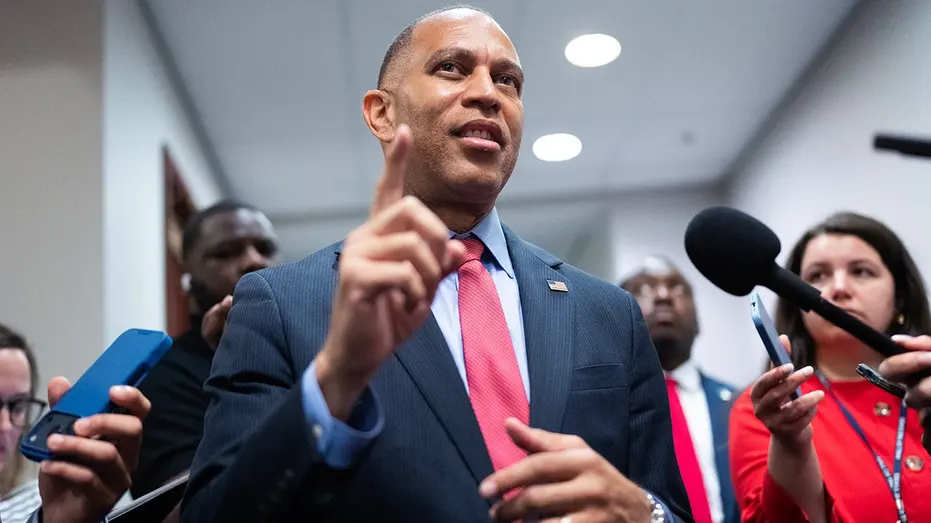
House Minority Leader Hakeem Jeffries has rejected the Medicare for All agenda, stressing a focus on healthcare affordability as the party prepares for the November elections.
House Minority Leader Hakeem Jeffries has publicly distanced himself from the Medicare for All initiative and the broader policy agenda promoted , the New York Democrat emphasized that his focus remains on improving health care affordability rather than pursuing a single-payer system. This stance marks a notable pivot for the party leadership as they navigate an internal divide regarding the future of healthcare policy in the United States.
While Jeffries was previously a cosponsor of Medicare for All legislation in 2019 and 2021, he has not joined the list of sponsors for the most recent iteration of the bill, H.R. 3069. When questioned about this change in position, Jeffries explained that his current priority is to address the systemic flaws in the existing healthcare framework. He argued that the immediate task for the Democratic Party is to repair the current system to ensure that every American can access affordable care, rather than committing to a total overhaul at this juncture.
The Democratic leader’s comments come at a time when the party is managing significant internal friction, particularly following a series of primary election results. Several incumbents supported rsed aintained that the House Democratic Caucus will remain a diverse coalition, encompassing various ideological factions ranging from progressives to more centrist "Blue Dog" members.
Jeffries explicitly rejected the comprehensive platform proposed Senate and ICE, as well as the complete restructuring of the judiciary and the executive branch to be subordinate to Congress. effries aims to maintain a pragmatic approach to governance that he believes is more aligned with the broader electorate, even as he acknowledges that candidates who win their primaries will ultimately join the caucus.
The rejection of the Medicare for All platform n ranks. Representative Ro Khanna of California publicly disagreed with the leadership’s position, labeling universal, single-payer healthcare as the most vital priority for the party. Khanna cited recent economic analysis suggesting that a single-payer system could significantly reduce national health expenditures, arguing that the urgency for such a transition is higher than ever.
The disagreement highlights a growing rift between party leadership and a vocal contingent of progressives who advocate for systemic reform. Critics of the current leadership approach, including political commentators, have argued that the party's reluctance to embrace Medicare for All puts the leadership out of touch with a significant portion of the Democratic base. As the party looks toward the November elections, these conflicting visions for the future of American healthcare continue to shape the internal discourse and influence the strategies of various congressional campaigns.
As the House Democratic Caucus prepares for the upcoming election cycle, the tension between maintaining a broad-tent party and adhering to specific ideological platforms remains a central challenge. Jeffries has signaled that his approach will prioritize unity and "electability" as the party strives to recapture the majority. peal to a wider demographic of voters who may be wary of the more sweeping changes proposed
Whether this strategy will successfully mitigate the internal pressure remains to be seen. With primary losses highlighting the influence of grassroots organizations, the party leadership faces a balancing act. They must contend with both the pressure to adopt more progressive policies to satisfy their base and the necessity of presenting a platform that resonates with moderate voters in competitive districts. The coming months will likely see further debate as both sides attempt to define the legislative identity of the Democratic Party heading into the general election.
2 comments on “Hakeem Jeffries Distances House Democrats from Medicare for All and DSA Platform”