

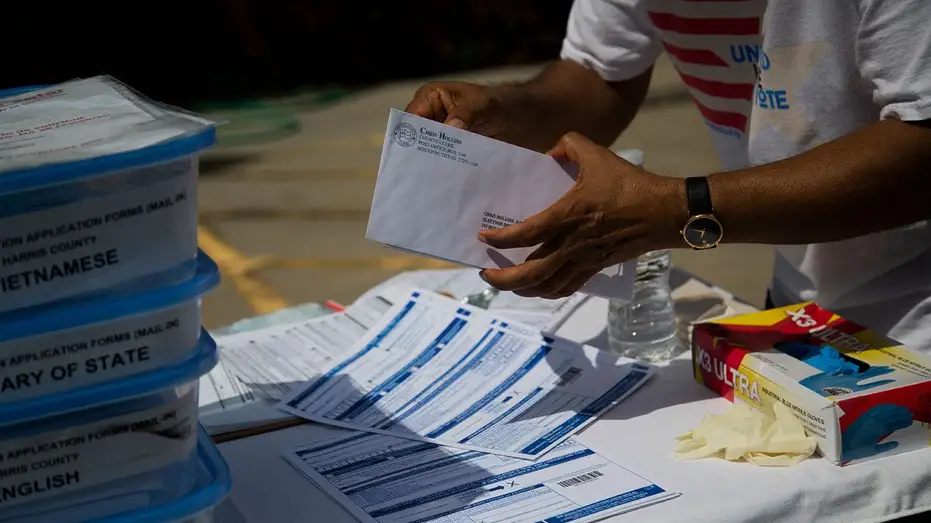
A federal appeals court has reinstated key Texas mail-in voting identity requirements, overturning a lower court's decision and affirming the state's authority to regulate election integrity.
In a significant legal development, the 5th U.S. Circuit Court of Appeals has reinstated several key provisions of Texas Senate Bill 1, a comprehensive election law enacted in 2021. The ruling marks a major turning point in a protracted five-year legal battle, effectively overturning a lower court’s decision that had previously blocked nine specific components of the state's voting regulations. The appellate panel expressed frustration over the ongoing litigation, noting that they have consistently reversed the district court's findings throughout the duration of the case.
Writing for the court, Judge Andrew Oldham emphasized that the plaintiffs failed to establish the necessary legal standing to challenge the majority of the provisions. The court maintained that none of the arguments presented authority to establish protocols aimed at preventing voter fraud and ensuring the integrity of the electoral process. ts specific identity verification standards for mail-in ballots once again.
The restored regulations primarily focus on the procedural aspects of mail-in voting. Under the reinstated rules, Texas voters are once again required to provide a valid identification number or the last four digits of their Social Security number on their ballot applications. Furthermore, this data must accurately correspond with the information currently held in state records. These requirements were designed to create a more robust verification system, ensuring that every ballot cast st official databases.
In addition to these identification requirements, the law mandates a structured process for voters to correct or "cure" defective ballots, providing a mechanism to rectify minor errors rather than having votes discarded outright. The legislation also introduces a formal oath requirement, which must be signed ath serves as a legal assurance that no coercion or undue influence occurred during the voting process, thereby protecting the sanctity of the individual's choice.
The legal challenges to Senate Bill 1 were largely brought forward he stricter requirements created undue burdens for voters with disabilities. These plaintiffs contended that the ID verification process and the new administrative hurdles violated the Americans with Disabilities Act n the democratic process. However, the appeals court concluded that the plaintiffs lacked the legal standing to pursue these claims, effectively dismissing the core of their arguments regarding accessibility.
The court's decision also highlighted empirical data concerning the efficacy of the law. Since the implementation of the identification-number requirements, the rejection rate for mail-in ballot applications and ballots due to clerical errors has seen a notable decline, dropping from 11% to 2.7%. The appellate judges pointed to this statistical improvement as evidence that the system is functioning as intended, helping to streamline the verification process while reducing the frequency of ballot rejections caused
The passage of Senate Bill 1 in 2021 was the result of a highly contentious legislative session in Texas. The bill was developed in the wake of the COVID-19 pandemic, targeting specific voting initiatives and procedural changes that had been utilized in major jurisdictions like Harris County. The legislative process was marked who attempted to break the quorum to block the bill’s advancement. Despite these efforts, the law was successfully passed and signed, setting the stage for the subsequent years of litigation.