

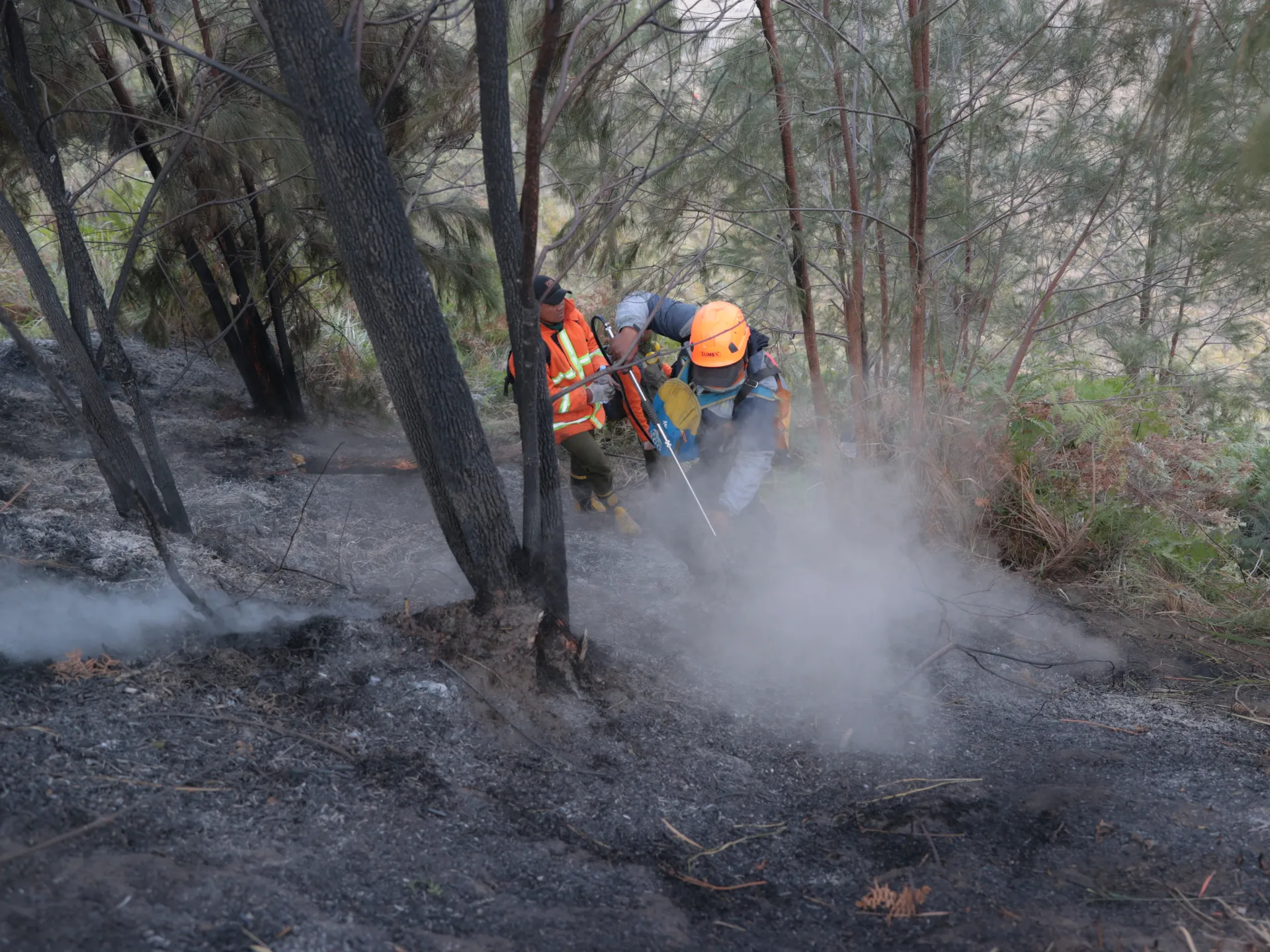
Indonesian authorities are deploying nearly 50,000 personnel to combat massive wildfires that have scorched over 100,000 hectares, forcing widespread school closures due to hazardous air quality.
Indonesian authorities are currently engaged in a massive emergency operation to suppress wildfires that have decimated more than 100,000 hectares of land across the archipelago. The scale of the destruction has necessitated the deployment of nearly 50,000 personnel, who are working tirelessly to contain blazes that threaten both biodiversity and public health. This year’s wildfire season has proven significantly more aggressive than the previous cycle, with the total affected land area marking a staggering 110 percent increase compared to the same period in 2023.
The government has identified six primary provinces as the highest risk zones: Riau, Jambi, and South Sumatra on Sumatra island, alongside West Kalimantan, Central Kalimantan, and South Kalimantan on the island of Borneo. In these regions, the combination of dry, arid vegetation and shifting wind patterns has created a volatile environment where small flames can rapidly transform into uncontrollable infernos. The government’s security leadership has placed these areas on high alert, emphasizing that current weather patterns are exceptionally conducive to the rapid expansion of these fires.
The environmental crisis has had a direct impact on the daily lives of citizens, particularly in urban centers where smoke haze has degraded air quality to hazardous levels. In West Kalimantan, the mayor of Pontianak has taken the precautionary measure of shuttering schools for multiple consecutive days. This decision is designed to protect students from the immediate health risks associated with breathing smoke-filled air, which can cause severe respiratory distress and long-term health complications.
Under the current mandate, students have transitioned to distance learning, with officials stating that schools will remain closed until air quality monitors indicate that the environment is safe for children to return to campus. This disruption highlights the broader societal strain caused amidst an environmental emergency that shows few signs of abating in the near term.
Meteorologists and government officials have identified the El Nino climate phenomenon as the primary driver behind the current catastrophe. El Nino, which alters global wind patterns, air pressure, and rainfall distribution, typically results in prolonged dry spells for Southeast Asia. This lack of seasonal moisture has turned vast tracts of forest and peatland into tinderboxes, significantly reducing the natural moisture retention of the landscape and making it easier for human-induced or accidental fires to ignite.
Chief Security Minister Djamari Chaniago has warned that the country remains in a precarious position as long as these arid conditions persist. The government is monitoring the situation with extreme caution, recognizing that the current climatic state makes it difficult to predict where the next major ignition point might occur. The reliance on historical data suggests that the intensity of these fires is directly linked to the strength of the El Nino cycle, which has left the nation’s emergency response teams stretched thin.
To combat the lack of natural rainfall, Indonesian authorities have launched a sophisticated cloud-seeding campaign. This process involves the strategic dispersal of chemicals, such as silver iodide and salt, into the atmosphere to encourage the formation of precipitation. A specialized fleet of over a dozen aircraft has been deployed to conduct these operations, acting as a force multiplier for the 43 helicopters and thousands of ground personnel currently fighting the fires on the front lines.
Despite these technological interventions, progress remains hampered o noted that the primary challenge is the scarcity of suitable clouds to seed. Because the atmosphere is so dry, finding the right conditions for effective rainfall generation is a constant struggle. Nevertheless, the government continues to track atmospheric changes in real-time, ready to deploy resources the moment a viable opportunity for induced rain presents itself.
While large-scale efforts continue, there have been minor successes in smaller, contained areas. For example, in East Java, emergency crews have successfully brought a long-standing fire at Bromo Tengger Semeru National Park under control. After nine days of burning and the destruction of roughly 900 hectares, the fire has been reduced to a manageable size of approximately two hectares. This success story provides a glimmer of hope for the exhausted crews working in more volatile regions.
However, the national focus remains on the broader landscape, where the threat of renewed ignition remains high. The combination of massive personnel deployment, aerial support, and meteorological surveillance represents the largest effort to curb environmental disasters in the region this year. As officials continue to battle the elements, the nation remains focused on long-term recovery and the hope that incoming weather patterns might finally provide the moisture needed to extinguish the remaining hotspots.