

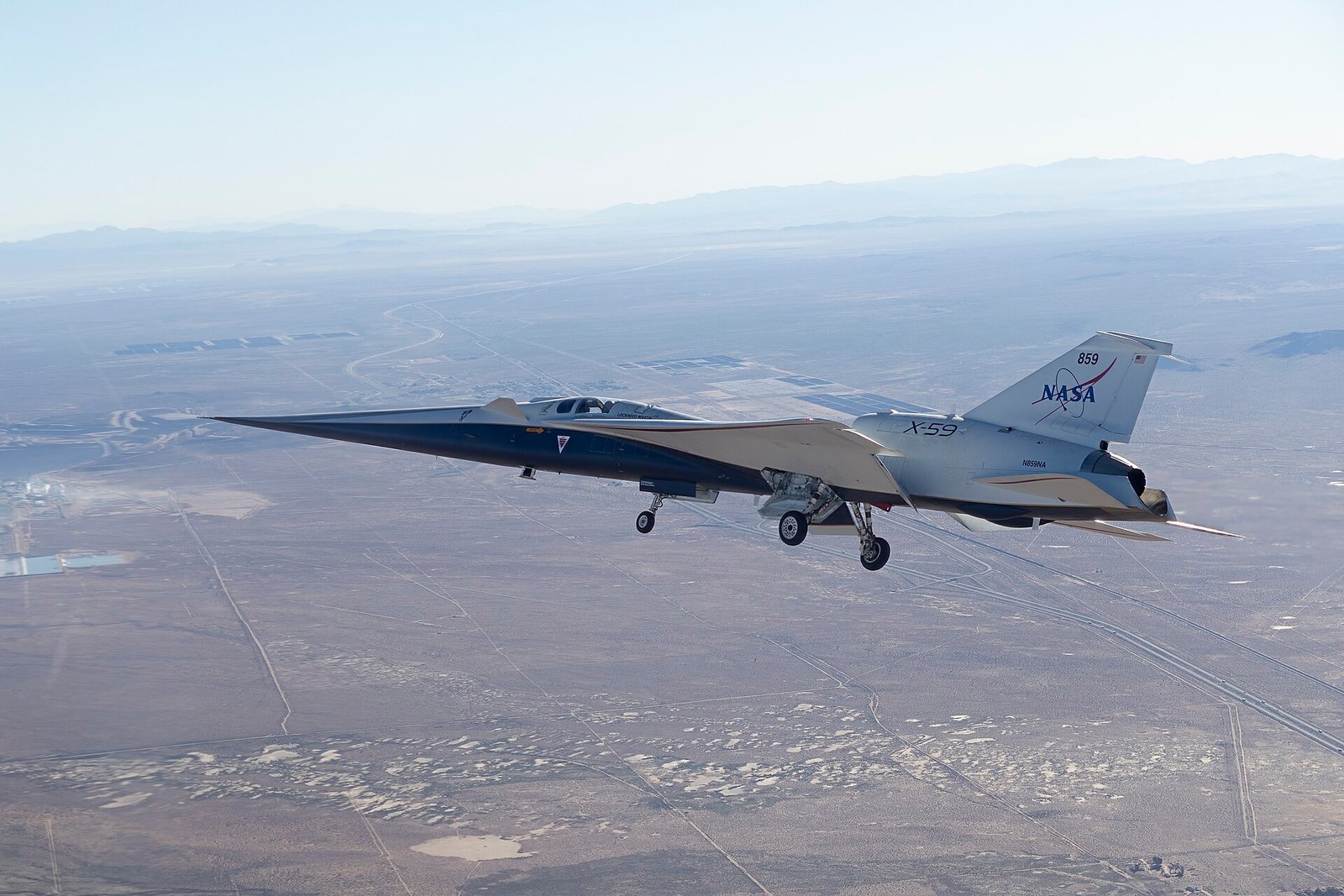
NASA has unveiled the X-70 Fractal, a new crewed experimental aircraft designed to test advanced flight controls and explore levels of manoeuvrability never before demonstrated in crewed flight.
Key Points
- NASA announced the X-70 on November 4 during the UP.Summit at Kennedy Space Center in Florida.
- The aircraft features a rapidly reconfigurable flight-control system and a modular design that can carry up to 2,000 pounds of experimental payloads.
- It is designed to cruise at Mach 0.75, reach 45,000 feet and fly more than 1,500 nautical miles.
- NASA expects the X-70 to make its first flight under the agency’s banner within two years.
The X-70 is not a commercial passenger aircraft or a conventional military fighter. Its primary role is experimental flight research: a reusable flying laboratory that lets researchers test new aviation technologies under real flight conditions, rather than relying on computer simulations or ground-based experiments.
A laboratory that can change shape
The aircraft’s defining feature is its rapidly reconfigurable flight-control system, which will allow research teams to change how the aircraft handles between experiments. Its modular design means internal and external payloads can be swapped relatively quickly, so one airframe can serve many different research programmes instead of each test needing its own aircraft.
“The X-70 Fractal gives NASA a crewed, high-performance platform to test advanced flight-control, maneuverability, and other cutting-edge technologies in real flight,” said NASA Administrator Jared Isaacman. “We expect her first flight under the NASA banner within the next two years, and X-70 is just one part of this new beginning for aeronautics.”
NASA has published the aircraft’s design targets: a takeoff weight of 10,000 pounds, a cruising speed of Mach 0.75 — about 75% of the speed of sound — a ceiling of 45,000 feet and a range exceeding 1,500 nautical miles, or about 1,726 miles. The agency has not disclosed the final airframe configuration, the manufacturer, the programme’s cost or a detailed flight-test schedule. It has released only an AI-generated concept image of the aircraft, so no real photograph of the X-70 exists yet.
What happens next
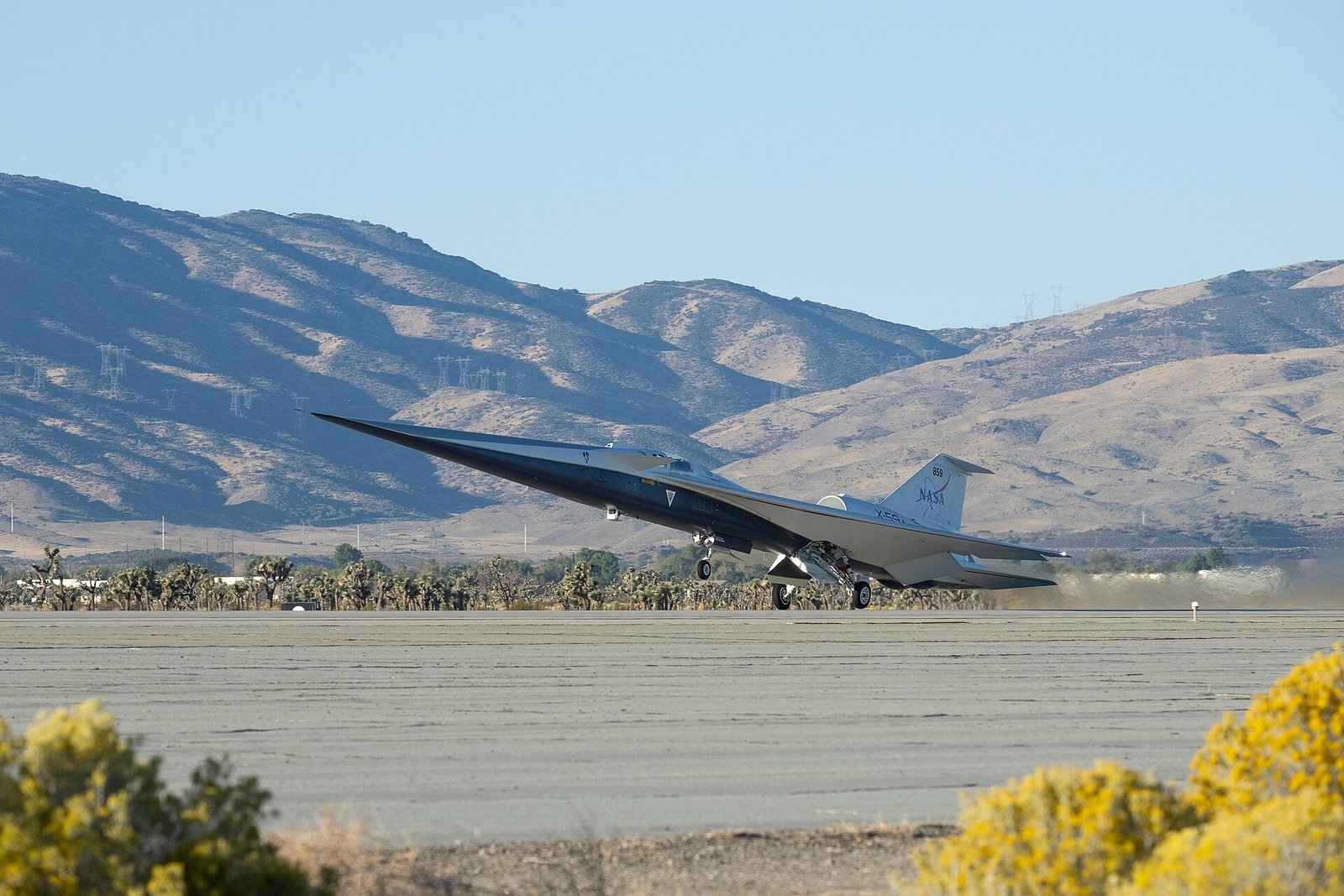
The X-70 joins a long line of NASA experimental aircraft. The X-plane programme has produced some of aviation’s most famous machines, from the Bell X-1 that first broke the sound barrier in 1947 to the X-15 rocket plane that flew to the edge of space in the 1960s. The programme’s most recent X-plane, the X-59 quiet supersonic research aircraft, made its first flight on October 28, 2025. The unveiling comes as the technology industry debates the cost of AI infrastructure and the pace of advanced research, with NASA positioning the X-70 as a flexible platform for the next generation of flight science. If the schedule holds, the Fractal should be flying by late 2028.
Sources: NASA via Business Today — https://www.businesstoday.in/amp/science/story/nasa-unveils-x-70-fractal-experimental-aircraft-what-makes-it-special-and-what-will-it-test-565831-2026-11-05 ; The War Zone — https://www.twz.com/space/nasa-announces-x-70-fractal-experimental-aircraft