
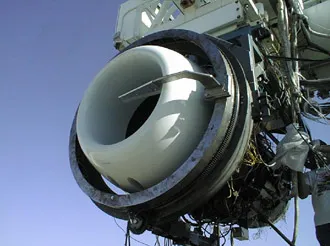
NASA Glenn Research Center utilizes specialized instrumentation and advanced measurement systems to reduce noise in aviation engines.
Researchers at the NASA Glenn Research Center use advanced tools to study airflow and sound. These experts use particle image velocimetry and special microphones to gather data. The global aviation industry relies on this information to improve noise prediction software.
Also, engineers often use the Rotating Rake Mode Measurement System to test turbofan engines. This tool helps them design better noise control systems for quieter flights. They pioneered these rotating microphone procedures back in the 1990s.
Next, these rotating rakes work well in many different test environments. Researchers use them for small-scale proof of concepts and large-scale engine tests. This flexibility makes them a vital part of modern aerospace testing.
Meanwhile, the center uses microphone phased arrays to pinpoint specific noise sources. These systems arrange microphones in different patterns to process sound data accurately. Engineers have used these arrays on everything from model jets to military engines.
Additionally, experts use specialized methods to track noise directly on rotating fan blades. This allows them to see exactly where engine sounds originate. Such precision helps teams create more effective solutions for reducing unwanted aircraft noise.
Furthermore, hotwire probes and Laser Doppler Velocimeters measure air velocity inside engines. These devices capture data between fan blades to visualize air disturbances. This process helps scientists understand how turbulence creates noise during flight.
Finally, these velocity measurements help validate complex noise estimation calculations. The team uses this data to refine their theories on engine performance. These efforts lead to quieter and more efficient aircraft for the future.
As a result, NASA continues to lead in aviation acoustics research. They offer various tools and software to support the global aerospace community. Interested parties can reach out to the center for more information on their work.