
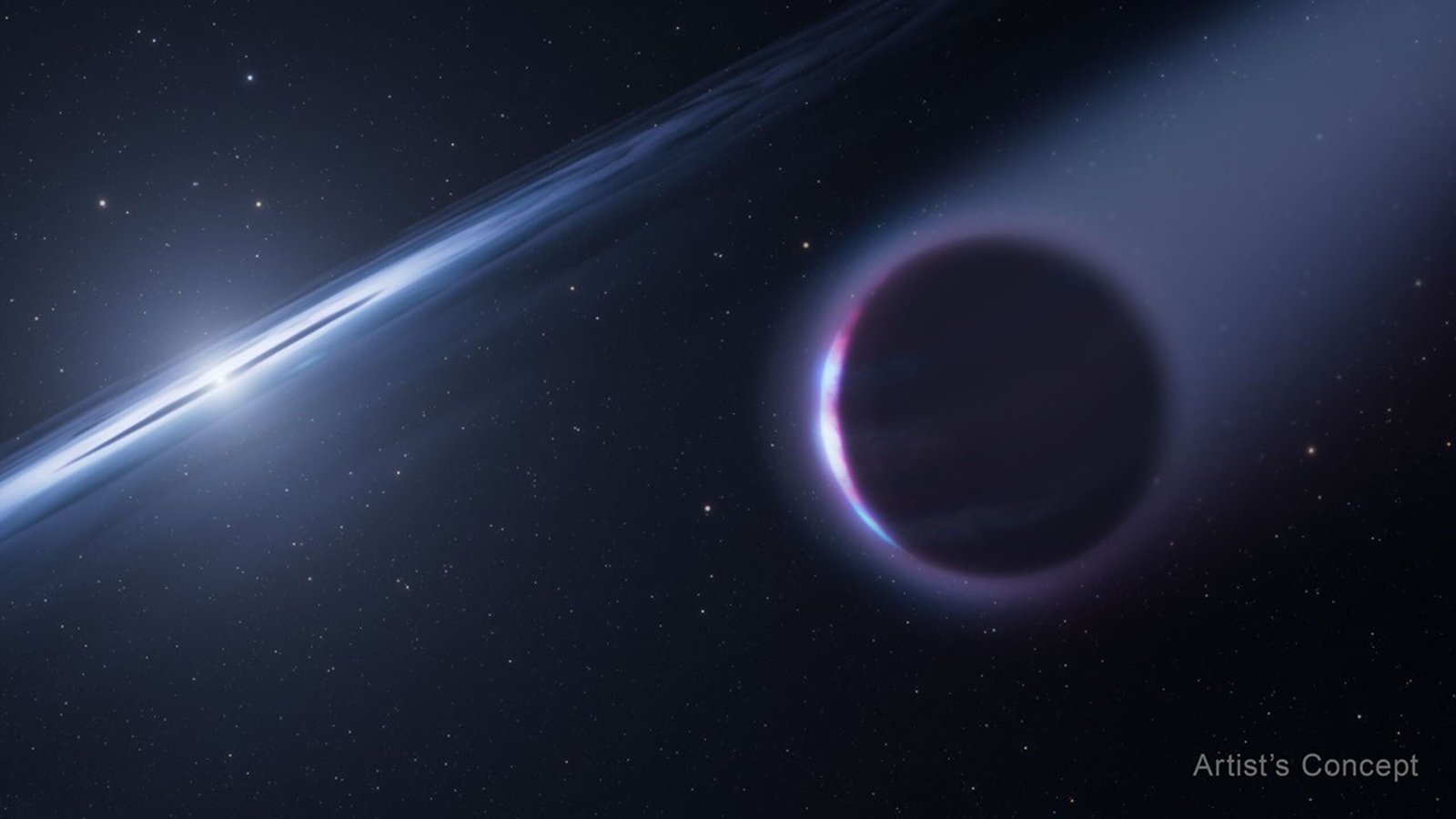
Astronomers discover a new type of planet orbiting a dead star while political tension rises in Zambia and new sanctions affect Iranian travel.
Why this matters
Science and politics often move in different directions across the globe. Some discoveries change our view of the universe. Others change the lives of people on the ground.
These events show how data can solve old mysteries. They also show how political power creates new conflicts. Readers must look at both space and Earth to see the full picture.
New clues from a dying star
Astronomers recently solved a cold case from the Hubble Space Telescope. They analyzed data from a white dwarf star named HS 0209+0832. This star sits far away in space.
Researchers found high levels of the element niobium. This metal is rare in such environments. They believe a second-generation planet circles this star.
Most planets form from the birth of a star. This new planet formed from the remains of a dead one. It proves that star systems have longer life stories than scientists once thought.
Political shifts and aviation bans
Meanwhile, Zambia held a major election on August 13. President Hakainde Hichilema won a second term in office. He secured 60 percent of the total vote.
However, the runner-up Brian Mundubile challenged the final results. He claimed the count involved illegal tampering. Courts remained closed during the time allowed for legal complaints.
After that, police arrested opposition leaders on treason charges. Officials accused the group of planning an armed takeover. The opposition denies these serious claims against them.
Also, international travel faces new hurdles in the Middle East. US officials launched secondary sanctions against Iranian aviation. This move forced the cancellation of key flight routes.
Next, passengers now face fewer options to reach Baghdad and Muscat. These rules target specific parts of the Iranian economy. Such actions often change how nations interact during times of tension.
How we got here
- 1999: NASA Hubble first observed the mysterious star HS 0209+0832.
- 2021: Hakainde Hichilema first took office as the president of Zambia.
- August 13, 2026: Zambian voters went to the polls for a general election.
- August 14, 2026: Security forces raided a property linked to the opposition in Lusaka.
- September 1, 2026: President Hichilema was sworn in for his second term.
- Late September 2026: New US sanctions forced cancellations of Iranian air routes.
What happens next
Scientists plan to study more white dwarf systems soon. They hope to find further proof of late-stage planet formation. This could change how we understand the evolution of galaxies.
Finally, the political situation in Zambia remains very tense. Observers will watch how the government handles the opposition prisoners. Many regional leaders want to see lasting stability in the nation.
Meanwhile, air travelers in the Middle East must adjust to the new rules. Airlines will likely shift schedules to follow the US sanctions. Experts will monitor if these policies change Iran's behavior.