
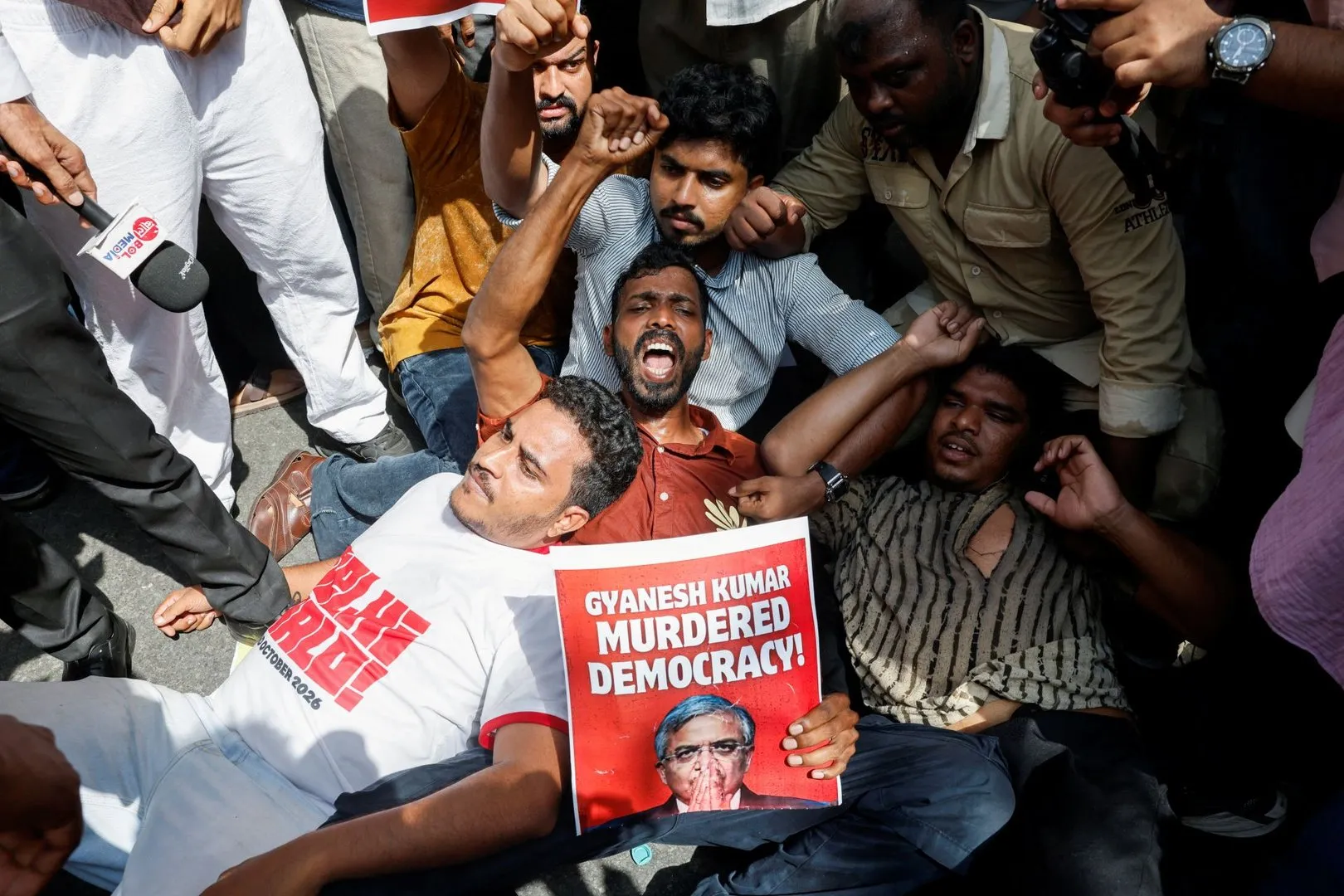
Protesters in New Delhi demand election reform while a court's compassionate letter to a child abuse survivor gains national attention.
Why this matters
India faces two very different challenges regarding the rule of law. Citizens are protesting the independence of election officials in New Delhi. Meanwhile, the legal system is trying to better support survivors of serious crimes.
Also, these events show a split in the nation. Public trust in government leaders is currently very low. People want more transparency in how officials gain their positions.
However, the judicial branch is finding new ways to connect with victims. Judges are using personal language to help children feel safe in court. This approach changes how the state deals with harm against minors.
Election Protests and Security
Thousands of police officers now block major roads in India’s capital. These measures aim to stop large crowds from gathering at public sites. Authorities want to maintain order during these tense times.
Meanwhile, police detained several opposition politicians during the recent unrest. The protesters demand that the chief election commissioner resign immediately. They believe current leadership is not fair to all political groups.
Next, the government has increased security across many parts of New Delhi. Officials fear that the crowds might grow even larger this week. Local businesses and offices remain on high alert as the situation continues.
Judicial Support for Survivors
A recent court order revealed a special letter written by Judge Rajani Ranga. She wrote to a 10-year-old girl who survived sexual abuse. The judge wanted to ensure the child felt heard and protected by the law.
Also, the judge promised the child that her abuser would never walk free again. She used simple, strong words to explain the life sentence. The court wants the girl to know she is very brave for speaking up.
Then, the judge encouraged the survivor to go to school and play. She acknowledged that the court cannot give back her lost childhood. This letter came to light during a high court appeal process.
Finally, the high court rejected the convict’s request for bail. The man must remain in prison for the rest of his life. This verdict protects the victim and the community from further harm.
How we got here
- July 23, 2023: A 10-year-old girl was sexually abused by an adult.
- July 11, 2026: Judge Rajani Ranga sentenced the attacker to life in prison.
- September 30, 2026: News of the judge’s personal letter to the victim reached the public.
- October 2, 2026: Protesters gathered in New Delhi to call for the election chief’s resignation.
What happens next
As a result, political leaders will likely keep pressuring the government for changes. Opposition groups want to see a new process for picking election officials. They plan to hold more rallies if their demands are ignored.
Meanwhile, the government must decide how to respond to these public calls for change. Officials might try to calm the crowds with new talks. They could also continue using police force to keep the streets clear.
After that, the judicial system may use more personal methods in sensitive cases. Experts say this could help more victims come forward. The success of this approach depends on future court rulings across India.