
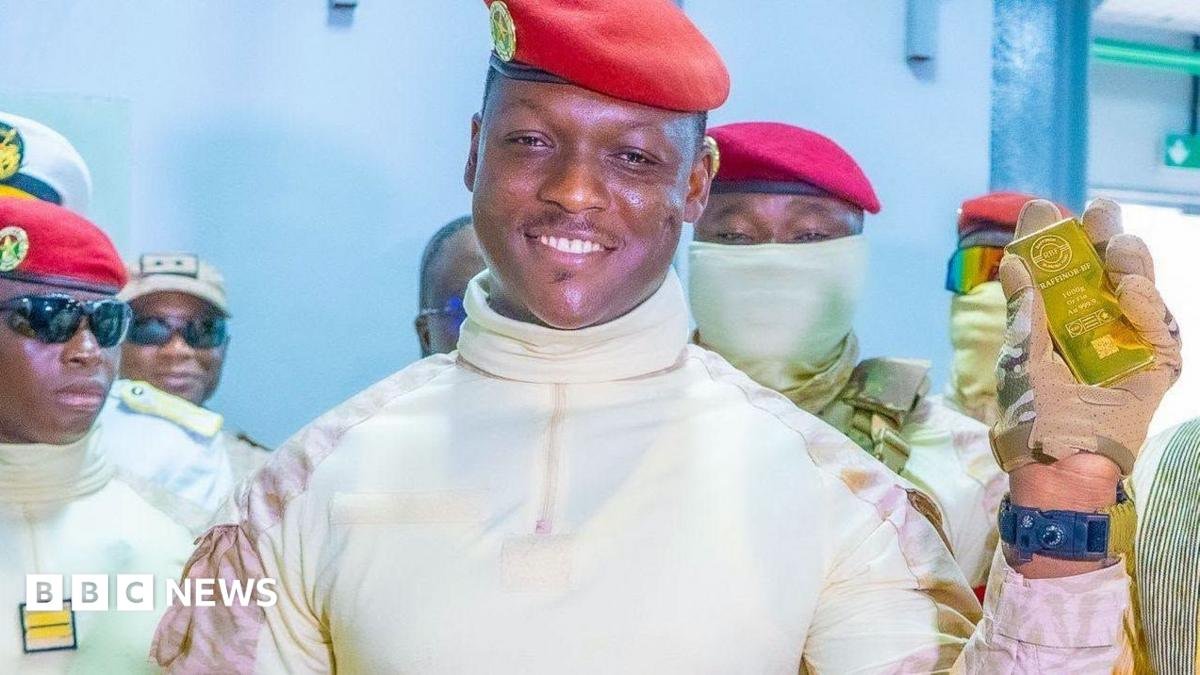
Burkina Faso opens a new gold refinery to boost its economy while NASA celebrates a historic record set by the Artemis II crew.
Burkina Faso just opened its first major gold refinery in the capital city of Ouagadougou. The military-led government wants to keep more mineral profits within the country. Junta leader Ibrahim Traoré believes this step will help end reliance on foreign processing.
Meanwhile, in the United States, space explorers are celebrating a new record. The crew of NASA’s Artemis II mission will their experiences in Houston this week. These astronauts traveled further from Earth than any humans in history.
Why this matters
These two events show how nations define their own power. Burkina Faso seeks economic control by refining its own raw materials. This shift aims to stop wealth from leaving the country during the production process.
Also, the space mission shows how human achievement changes our view of the world. By breaking the Apollo 13 distance record, the Artemis crew pushes boundaries for future travel. Both stories highlight a global drive for independence and discovery.
However, Burkina Faso faces real challenges in its mining sector. Smuggling and illegal operations often fund local conflicts in the region. The government hopes this new refinery will help them track gold more effectively.
Still, the success of these goals remains uncertain. Burkina Faso must secure its mines against violence to reach its full production potential. Success will depend on keeping both the mines and the refinery safe from insurgents.
Refining gold and space records
The new refinery, named Raffinor-BF, cost more than 11 million dollars. It has the capacity to refine 164 tonnes of gold every year. Officials suggest this facility could eventually process gold from neighboring countries as well.
Next, the government of Burkina Faso is requiring foreign mining firms to change their practices. These companies must now give the state a 15% stake in their work. They also need to train local workers to help the national economy grow.
Then, in Houston, the public can hear directly from the Artemis II crew. The team includes three NASA astronauts and one Canadian Space Agency astronaut. They will speak at the University of Houston on Wednesday evening.
Also, the National Aeronautic Association will honor the crew for their journey. The mission launched on April 1 and traveled over 250,000 miles. This journey marks a major step toward future missions to the Moon and Mars.
How we got here
- 1970: The Apollo 13 mission sets the previous record for the farthest human spaceflight.
- 2024: Burkina Faso establishes a state-owned mining company to manage its resources.
- April 2026: The Artemis II mission launches to the Moon with a four-person crew.
- April 2026: The Artemis II crew splashes down in the Pacific Ocean after ten days.
- September 2026: Burkina Faso inaugurates the Raffinor-BF gold refinery to process metals locally.
What happens next
After the refinery opening, Burkina Faso will work to increase its output. The government aims to raise capacity to 515 tonnes of gold per year. They hope this will establish the country as a regional hub.