
NASA is growing its international space coalition while launching new tools to explore the dark universe and monitor Earth's atmosphere.
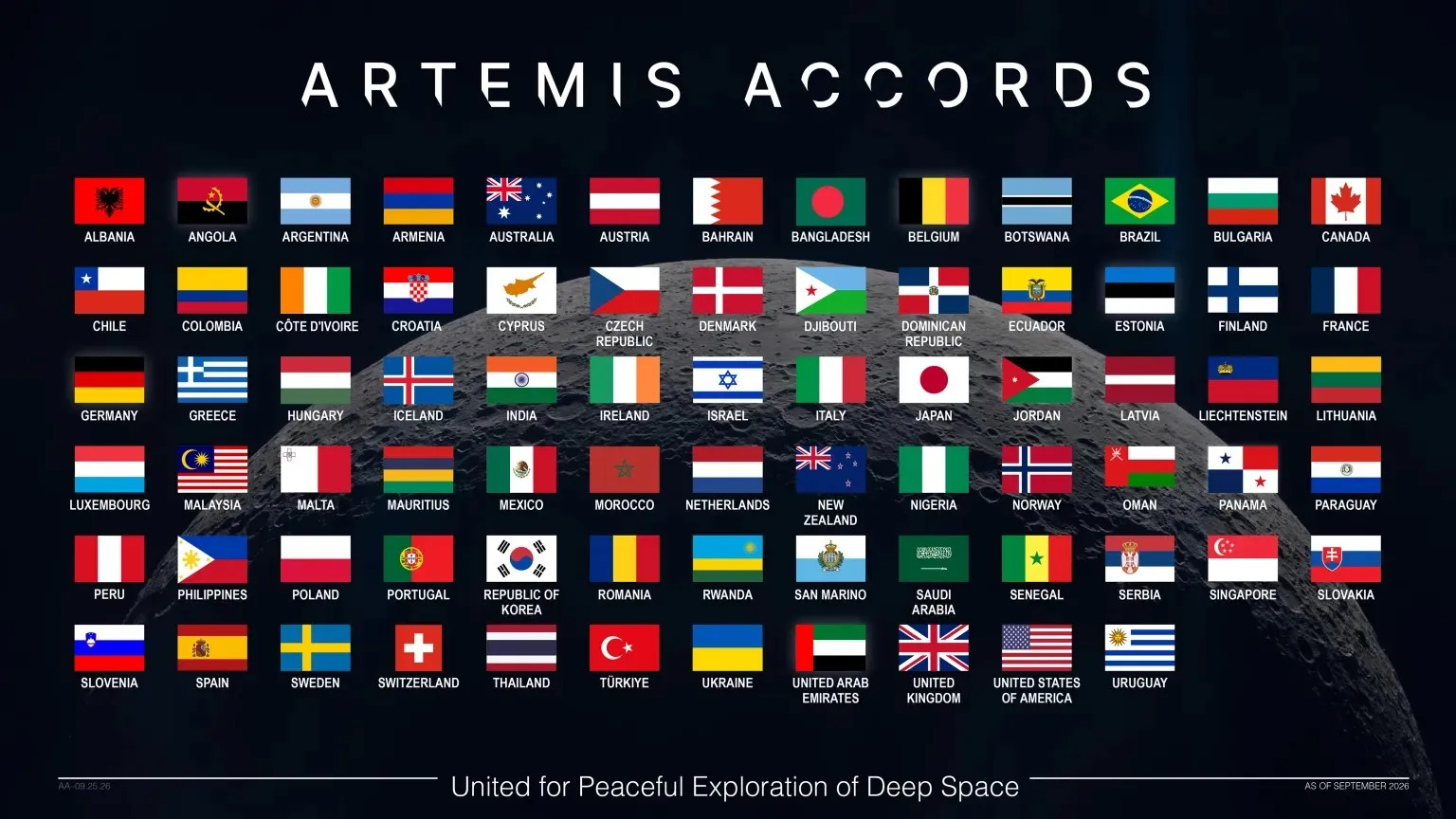
NASA continues to grow its international influence through the Artemis Accords. The agency recently added four new countries to the space pact. This brings the total number of participating nations to 76.
Meanwhile, American space activity extends far beyond lunar agreements. NASA successfully launched the Nancy Grace Roman Space Telescope this past August. This new technology promises to reveal secrets of the dark universe.
Why this matters
These developments show a push for both scientific discovery and global leadership. The Artemis Accords create a shared set of rules for space. These rules help avoid conflict as more nations reach the moon.
Also, the Roman telescope represents a massive leap in observation power. It sees 100 times more space than previous telescopes. This helps researchers answer if life exists elsewhere in the universe.
Furthermore, these missions require immense technical cooperation. Scientists must data across borders to succeed. This cooperation fosters peace on Earth while humans explore the stars.
Expanding the reach of space exploration
NASA recently welcomed Albania, Croatia, Côte d’Ivoire, and San Marino to the Artemis Accords. This expansion marks a rapid growth in civil space cooperation. Nearly 40 percent of all nations now collaborate with the agency.
Next, experts plan to use these accords to manage lunar operations. Signatories will soon meet in Türkiye to discuss technical standards. They aim to reduce debris and ensure missions do not interfere with each other.
Meanwhile, the Roman telescope is currently traveling one million miles from Earth. It will soon reach a point where it can observe far-off planets. It will likely find thousands of new worlds in our galaxy.
Scientific research and atmospheric monitoring
Beyond deep space, NASA researchers study the atmosphere right here at home. Scientists recently used high-flying aircraft to monitor wildfires in Montana. They observed rare pileus clouds forming above intense fire smoke.
After that, the team analyzed how rising heat creates these unique clouds. This research helps experts understand extreme weather patterns. It also demonstrates the versatility of NASA’s research equipment.
How we got here
- August 30, 2026: NASA launched the Nancy Grace Roman Space Telescope from Florida.
- September 28, 2026: Fighting in Ethiopia’s Afar region increased as rebel groups formed new alliances.
- September 29, 2026: NASA scientists published rare images of pileus clouds over Montana wildfires.
- October 2026: NASA welcomed four new countries into the Artemis Accords, reaching 76 total members.
What happens next
Next, the Roman telescope will begin its primary mission. It will spend 100 days traveling to its final orbit. Once there, it will start mapping thousands of exoplanets.
Also, NASA leaders will gather in Antalya, Türkiye. They will hold a meeting to support emerging space nations. They will also finalize plans for lunar debris management.
Finally, scientists will continue monitoring wildfire clouds using new data. They hope to improve aviation safety with these findings. The agency remains focused on both earthbound and deep space goals.