
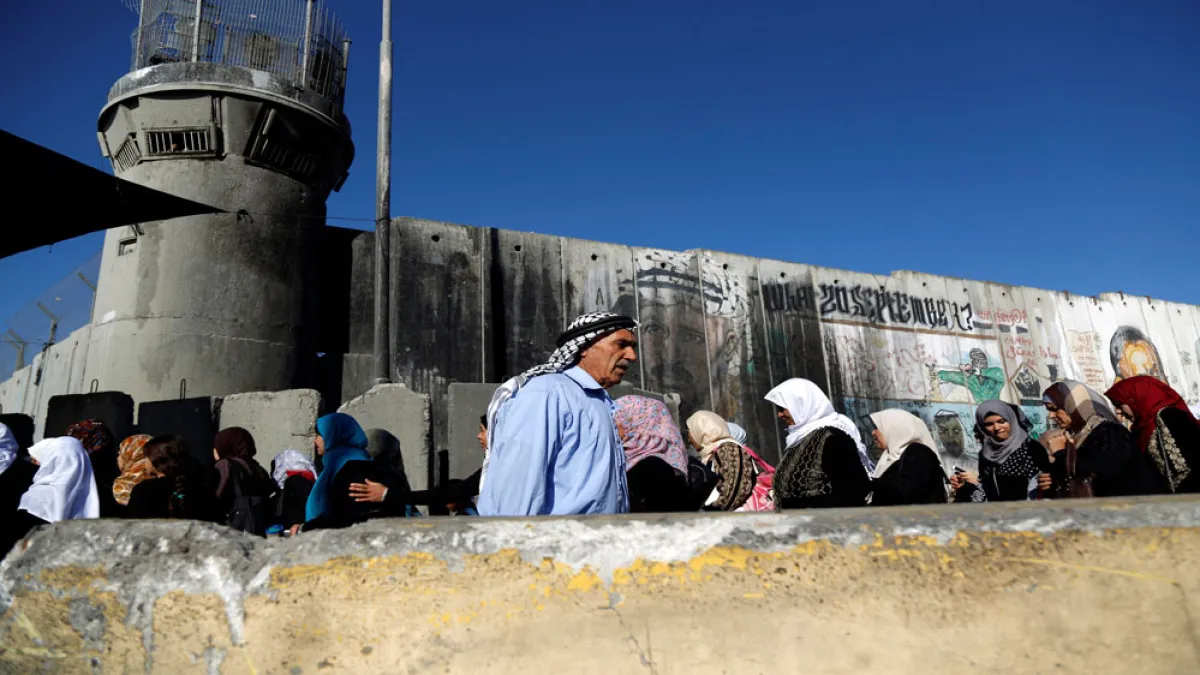
Israel has closed all West Bank crossings for the Sukkot holiday. This move restricts movement for millions while global tensions rise at the United Nations.
Israel recently sealed off the occupied West Bank for one week. Defense Minister Israel Katz ordered this total closure. The military recommended the move during the Jewish holiday of Sukkot. This action severely limits how Palestinians move through their own territory.
Meanwhile, soldiers have blocked roads and shut entrances to several Palestinian towns. These areas include Turmus Aya, Aboud, and Nabi Saleh. Troops also set up new checkpoints in Yabroud and Jaba. They search vehicles and check identification cards at these spots.
Why this matters
These new closures add to a long-standing system of movement control. The United Nations reports over 300 Israeli checkpoints exist in the West Bank. These barriers affect the daily lives of 3.4 million people. They cut off access to vital work and religious sites.
Also, the closures harm the local economy. Unemployment in the West Bank rose significantly over the last year. It climbed from about 13 percent to over 30 percent. Most workers cannot reach their jobs in Israel or industrial zones anymore.
However, the impact goes beyond economics. Families struggle to reach schools or hospitals due to the roadblocks. Many Palestinians report feeling trapped in their own neighborhoods. These restrictions deepen the divide between the two populations.
Tensions on the world stage
The situation in the West Bank remains a top concern for global leaders. Prime Minister Benjamin Netanyahu recently spoke at the United Nations. Dozens of delegates walked out while he took the stage. Netanyahu defended his military actions in Gaza and the Middle East.
Then, Palestinian President Mahmoud Abbas addressed the same assembly. He spoke via a video link because he lacked a visa. Abbas warned that settlement growth threatens the lives of Palestinians. He called the situation in Gaza a genocidal war.
Next, the two leaders exchanged sharp criticisms. Netanyahu rejected claims of genocide and attacked his critics. He even insulted the Turkish President during his speech. These public arguments show how far apart the two sides remain.
How we got here
- October 2023: The war in Gaza begins, leading to tighter border controls.
- Mid-2024: The number of Palestinians working in Israel drops to about 27,300.
- September 2024: The UN calls on Israel to end its occupation within one year.
- September 2026: Israel closes all West Bank crossings for the Sukkot holiday.
What happens next
Analysts expect movement to remain difficult after the holiday ends. The military often keeps these closures in place for extended periods. Tension likely will stay high across the West Bank.
Also, the diplomatic fallout from the UN meeting will continue. Other nations might apply more pressure on both sides to change. Still, neither leadership shows a desire to compromise at this time.
Finally, citizens will continue to navigate these daily hurdles. The lack of a clear peace plan keeps the future uncertain. Both groups will watch for the next move by the military.