
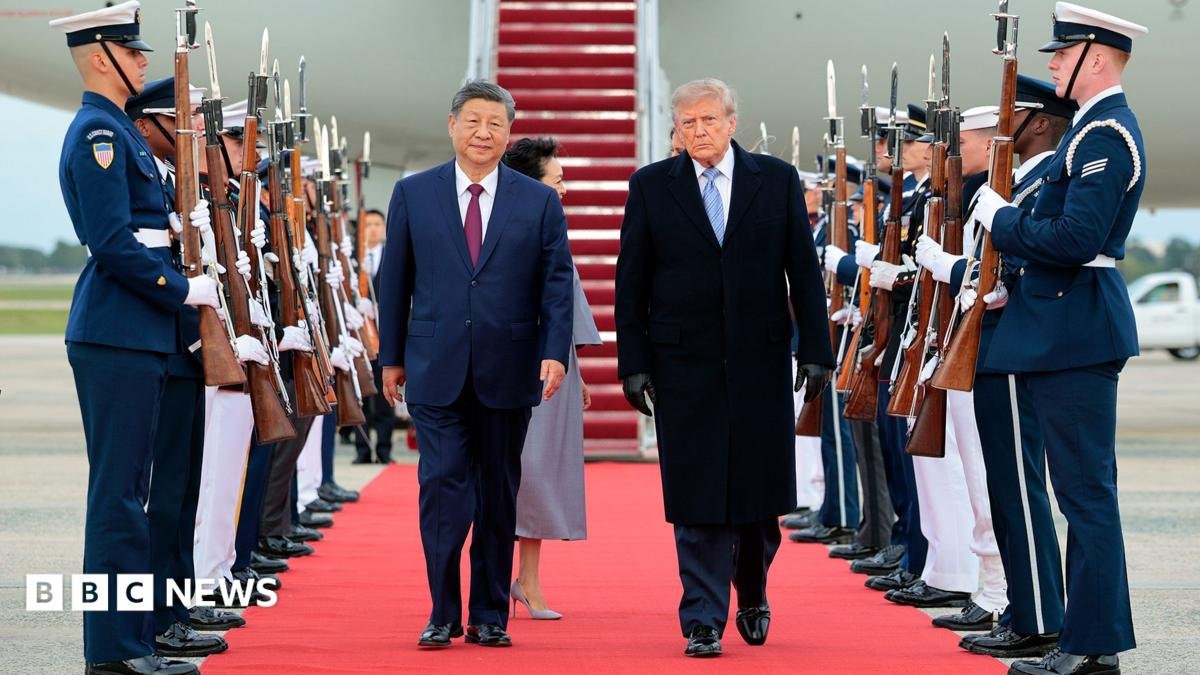
President Xi Jinping and Donald Trump met for summit talks. The two leaders discussed trade and Taiwan but reached few firm agreements.
Global stability depends on the relationship between these two powers. Both nations hold vast influence over the world economy. Their current disagreement creates uncertainty for global markets.
Also, the talks show how leaders use diplomatic theater to hide deep cracks in policy. While the red carpet suggests friendship, the substance remains thin. Both men struggle with pressure from their own people.
Meanwhile, the lack of firm deals on technology creates risk for international businesses. Investors worry about future trade rules. These meetings set the tone for years of future policy.
President Xi Jinping visited the United States for a high-stakes summit. President Donald Trump welcomed him with a formal red carpet reception. They held a state dinner to project an image of unity.
However, the two leaders made little progress on major disputes. They agreed to extend the current truce on trade tariffs. This delay prevents a worse economic fight for now.
Still, China wanted a much longer deal to fix its economy. Beijing faces high youth unemployment and falling property values. Exports remain vital for their growth, but American tariffs threaten this goal.
Finally, the summit ignored many difficult issues like rare earth metals. These resources stay at the center of the fight over technology. Negotiators kicked these problems into the future.
The status of Taiwan remains a top concern for both sides. Xi called American arms sales to the island a red line. He warned that these sales could lead to a conflict.
Then, Trump avoided a clear response to these warnings. He previously called a $14 billion arms package a bargaining chip. Political pressure in Washington makes it hard for him to back down.
Furthermore, artificial intelligence dominated part of their private talks. Xi emphasized that humans must control AI systems at all times. Trump dismissed concerns about AI causing human extinction as a hoax.
Consequently, the leaders did not create any new safety rules for technology. They failed to announce a summit to discuss AI risks. Both sides chose to keep their current strategies for now.
Washington will likely wait for China to change its trade habits. The U.S. government wants to see more action before offering long-term concessions. This stalemate will likely continue for several months.
Also, both leaders will face heat from their domestic audiences. Trump must balance party demands on Taiwan with his trade goals. Xi must manage his struggling economy without looking weak to his people.
Finally, expect more tension regarding global supply chains. As technology competition grows, these two countries will keep testing each other. Diplomatic meetings will remain frequent but likely remain low on concrete results.