
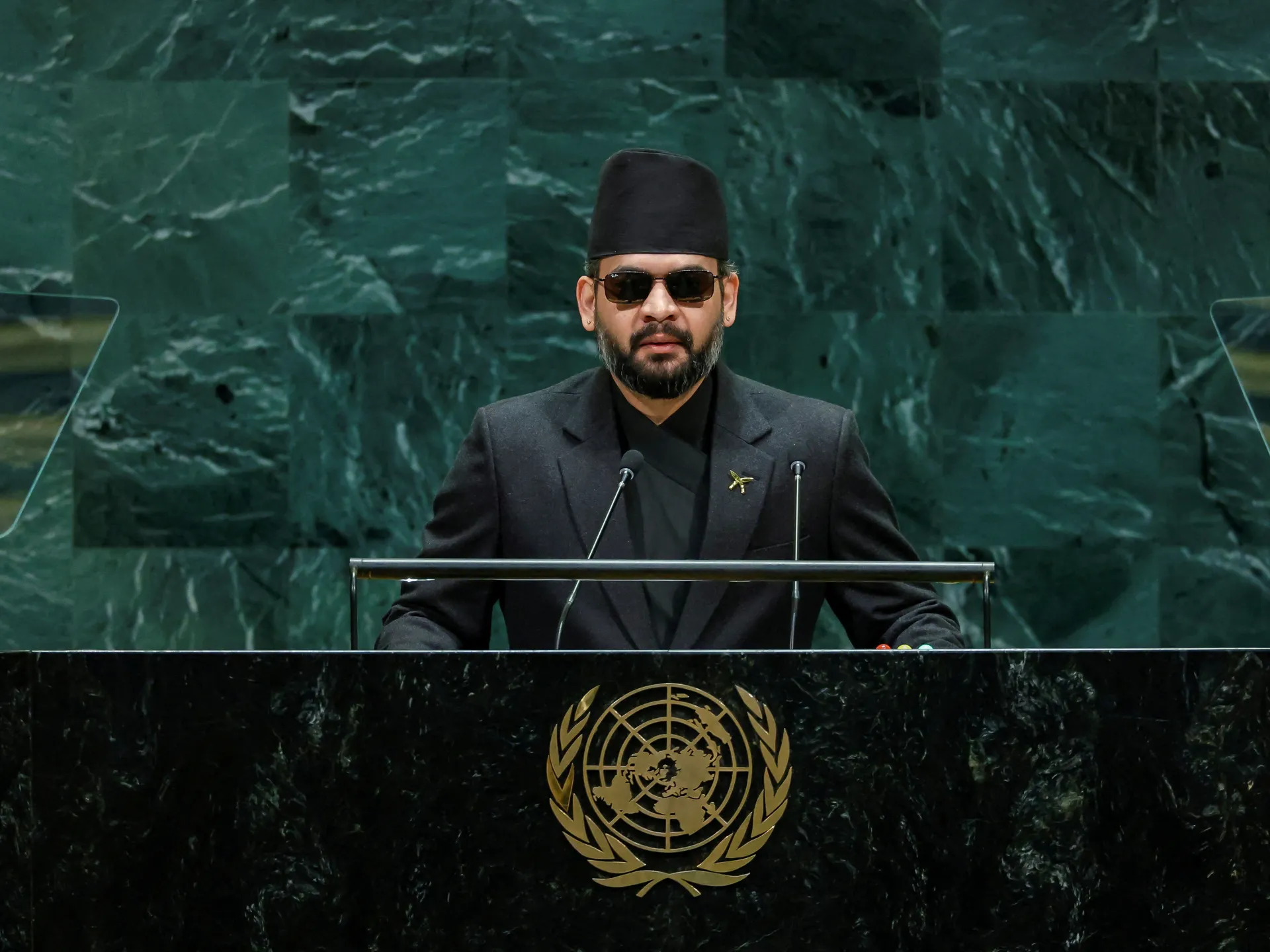
Nepal’s Prime Minister tells UN leaders that his country’s recent devastating floods are a 'warning to the world' regarding the slow pace of climate action.
Standing before the 81st Session of the United Nations General Assembly in New York, Prime Minister Balendra Shah of Nepal delivered a stark indictment of the international community’s approach to climate mitigation. Framing the catastrophic flooding that decimated parts of his nation last month not as a local misfortune but as a global harbinger, Shah challenged world leaders to reconcile their rhetoric on climate action with the grim reality faced
The August 26 disaster, which saw a lethal combination of mud, rock, and water engulf northern regions along the border with China and Tibet, resulted in a staggering human toll. Official figures from Nepal’s National Disaster Risk Reduction and Management Authority confirm at least 1,453 deaths, with 5,500 individuals currently listed as missing. While rescue operations managed to recover 13,795 survivors, the scale of the destruction has left the government grappling with an existential crisis that threatens decades of development and infrastructure progress.
The tragedy in Nepal serves as a crucible for the international climate finance architecture, specifically the UN’s “loss and damage” fund. Established in 2022 following similar climate-induced disasters in Pakistan, the fund was intended to provide immediate financial relief to nations bearing the brunt of a crisis they did not create. Nepal’s case represents a critical test of this mechanism’s viability. With the government requesting $20 million—the maximum allowable aid under current guidelines—and receiving only a fraction of what is required to rebuild, the gap between policy promises and the realities of climate adaptation is widening.
Furthermore, the crisis highlights a profound geopolitical and economic disparity. Nepal contributes less than 0.1 percent of global greenhouse gas emissions yet faces a disproportionate threat from glacial retreat, permafrost thaw, and geological instability. Prime Minister Shah’s proposal for a “Himalaya Climate Resilience Mechanism” involving India and China underscores the necessity of trans-boundary cooperation in managing early warning systems and satellite data for shared mountain ecosystems, shifting the burden from isolated national efforts to regional resilience.
While the immediate impact of the August event was defined play of environmental factors. Contrary to initial reports that might have focused solely on seasonal weather, analysis from the World Weather Attribution (WWA) group indicates that long-term warming and geological instability significantly exacerbated the disaster. The unpredictability of Himalayan rivers, now a recurring nightmare for local populations, is directly linked to the rapid melting of glaciers that once served as stable water sources.
Economic recovery remains a primary hurdle for the administration. Beyond the humanitarian emergency, the destruction of hydropower infrastructure—which provides nearly 99 percent of the nation’s electricity—has crippled domestic industry and stalled reconstruction efforts. While the United States recently pledged $31 million in flood recovery support, the government insists that such bilateral aid, while appreciated, cannot substitute for a systemic global overhaul of how climate-vulnerable countries are compensated for permanent loss and infrastructural damage.
The diplomatic focus will likely shift toward the functionality of the UN’s loss and damage fund. As Nepal serves as a litmus test for the fund’s credibility, the international community will be under immense pressure to authorize the first disbursements. Observers suggest that if the fund fails to provide meaningful relief in this instance, it may prompt a broader movement among developing nations to seek alternative, regional financing models or to leverage the Himalaya Climate Resilience Mechanism as a primary vehicle for future disaster risk reduction.
Domestically, Nepal faces the challenge of potential fresh flooding, a threat that persists as the region’s geography remains volatile. The government’s ability to stabilize mountain slopes and rebuild hydropower capacity will be contingent on both securing international capital and successfully fostering the proposed data-sharing agreements with neighboring states. Should these regional partnerships fail to materialize, the country remains highly susceptible to future cycles of destruction, further solidifying the Prime Minister's warning that the current rate of global action is insufficient for survival.