

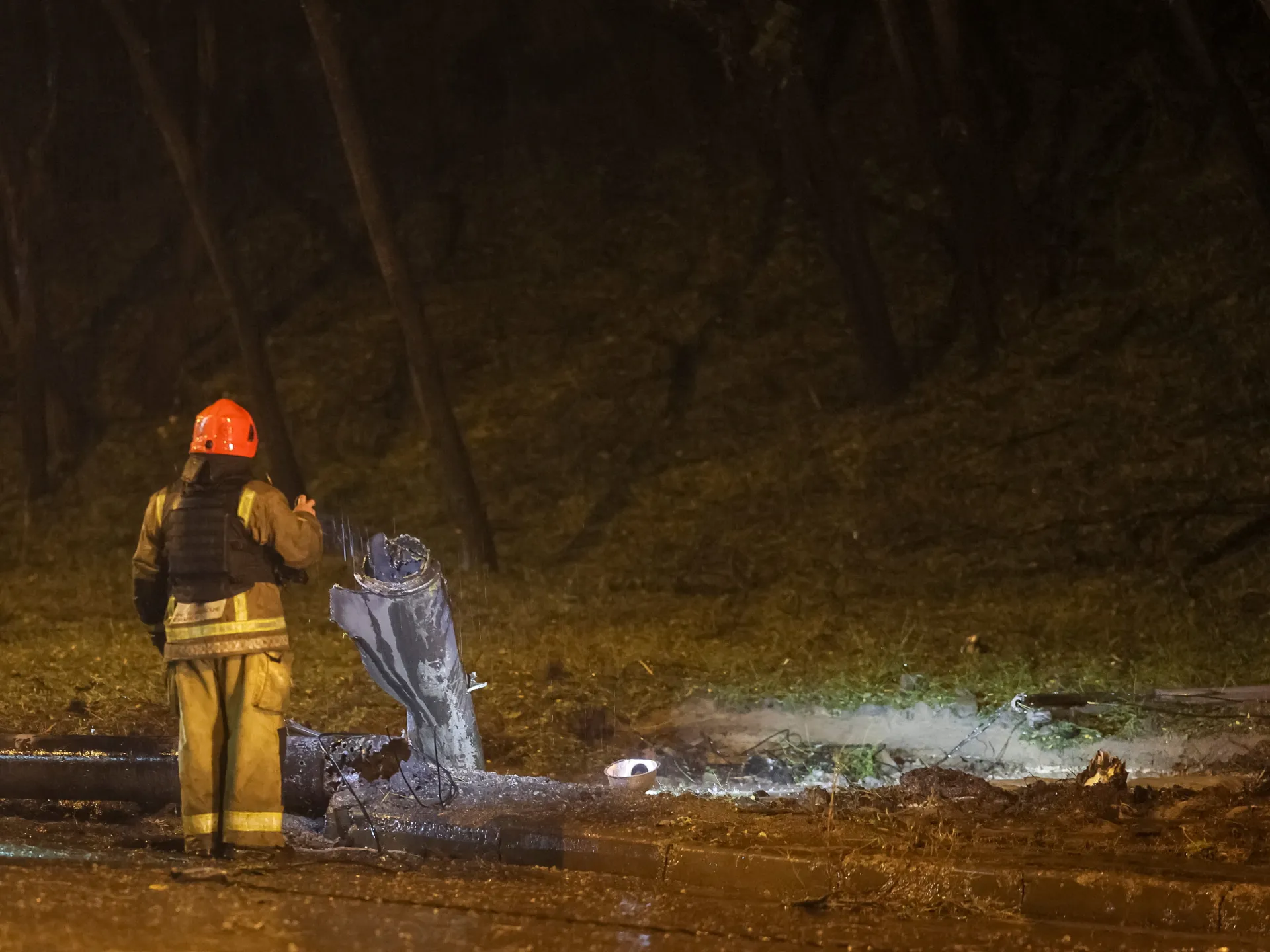
A massive Russian aerial offensive has killed dozens of Ukrainians while raising regional tensions through suspected sabotage on Polish soil.
A massive wave of Russian aerial strikes targeted civilian and military infrastructure across Ukraine this week, resulting in a significant loss of life and renewed urgency in international diplomatic circles. The coordinated assault, which utilized a combination of hypersonic missiles, ballistic projectiles, and a swarm of 282 drones, has pushed the ongoing conflict into a precarious new phase of instability.
Reports regarding the human toll of the strikes remain conflicted. Al Jazeera and Reuters have reported that at least eight individuals were killed in the attacks. However, NBC News has provided a significantly higher figure, stating that at least 22 people have died as a result of the bombardment. This disparity underscores the chaotic nature of the current intelligence environment as Ukrainian authorities scramble to assess the damage to critical infrastructure and civilian areas.
The intensity of this latest offensive suggests a shift in tactical application, specifically targeting logistical hubs and telecommunications infrastructure essential for both the Ukrainian military and the nation's civilian functionality. The reported sabotage of a Starlink ground station in Poland, which Polish Deputy Prime Minister Krzysztof Gawkowski characterized as “hybrid warfare,” signals that the conflict's theater is expanding beyond Ukraine's borders. This development challenges the stability of NATO's eastern flank and forces a re-evaluation of how Western alliances protect critical digital and physical infrastructure from clandestine operations. Furthermore, the timing of these attacks—coinciding with high-level UN General Assembly diplomacy—serves as a stark reminder of the limitations of international dialogue when faced with entrenched military objectives.
The strikes caused widespread devastation, with specific reports of a maternity clinic in Kyiv being struck. Local officials confirmed that one of the two deaths in the capital occurred in the hospital’s car park. In the northern Kharkiv region, Governor Oleh Syniehubov reported an attack on a farm that claimed six lives and left eight others wounded. Russian military officials stated that the operation was intended to neutralize defense sites, telecommunications hubs, and vessels, specifically highlighting the successful striking of a tanker near the port of Chornomorsk.
The regional instability was felt acutely ft, scrambled jets to secure airspace adjacent to the conflict zones. This preventive measure highlights the growing concern among Central European nations that the war is increasingly prone to spillover effects. Meanwhile, on the Russian side, authorities in the Krasnodar region reported that debris from intercepted drones caused a fire at an industrial facility, though they maintained there were no casualties.
The immediate future appears defined uvering. While the United States continues to facilitate discussions, the invitation extended to Russian leadership for the upcoming G20 summit in Miami suggests a potential pivot toward direct, high-level engagement to mitigate global economic fallout. However, given the severity of the recent attacks, Ukrainian officials are reportedly seeking increased support from the United States, specifically looking for direct intervention or deepened commitments from the American administration. Analysts anticipate that as the winter months approach, the focus will likely shift toward the protection of energy grids and communication infrastructure, as both sides appear intent on leveraging tactical strikes to force a more favorable position at the negotiating table. The success of these diplomatic overtures remains uncertain, as the reality on the ground continues to be defined