The equinox is more than a calendar date; it is a precise astronomical alignment that shifts solar exposure across the globe. We explore the mechanics of this phenomenon.
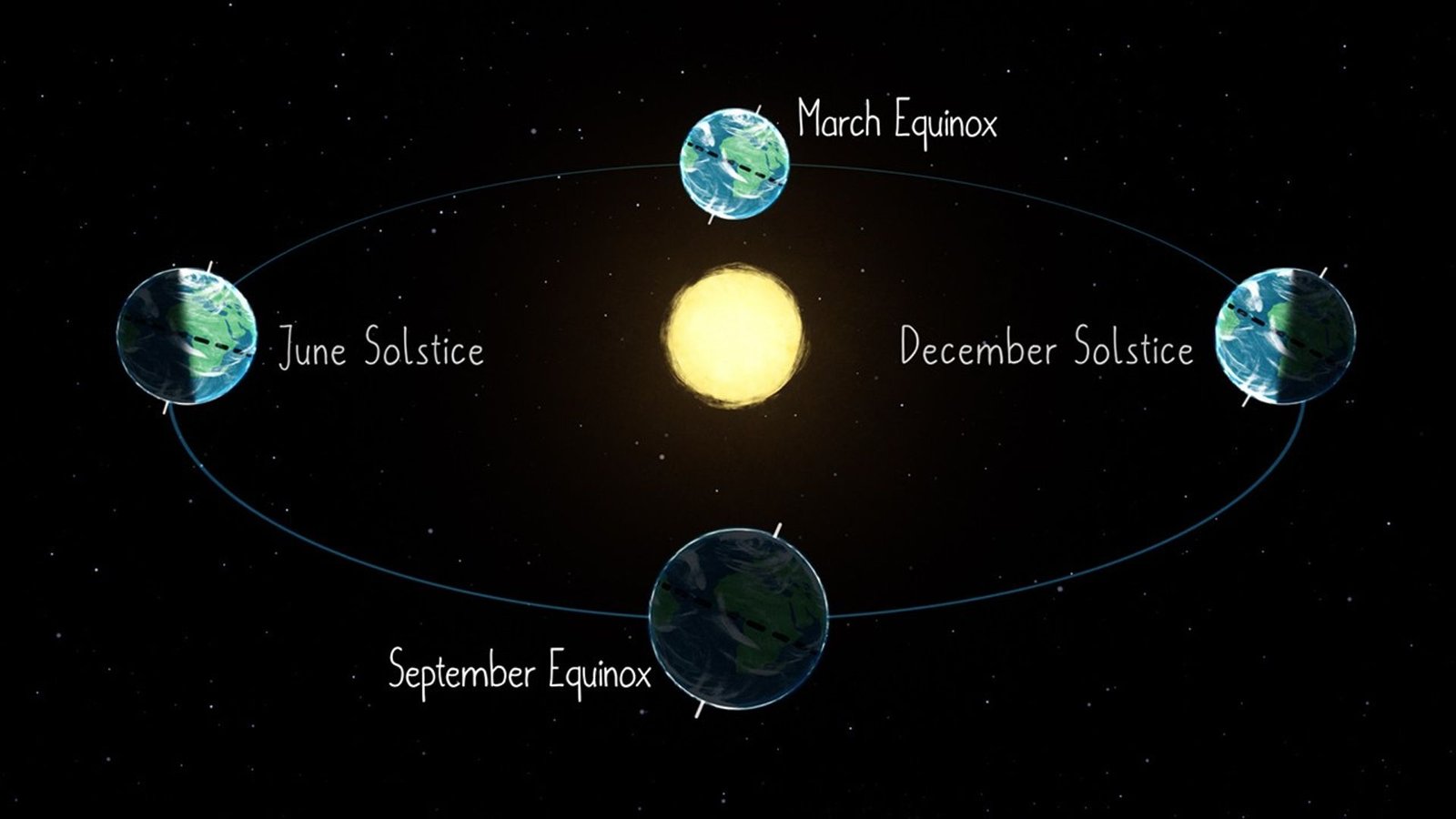
While modern calendars designate specific dates for the equinox, the phenomenon is fundamentally a precise geometric alignment between Earth and the Sun. Twice annually, the center of the solar disk crosses the celestial equator, momentarily neutralizing the planet's axial tilt relative to our star. This occurrence, which serves as a global marker for shifting seasons, remains one of the most consistent and predictable events in our solar system.
Far from being a mere date on a wall, the equinox represents a complex interplay of light and planetary orientation. As Earth continues its orbit, the timing of these crossings—occurring in March and September—dictates the transition of solar exposure between the Northern and Southern Hemispheres. This transition is not instantaneous in its effects on human experience, but it marks the critical juncture where the Sun's path shifts its trajectory in our skies, dictating the duration of daylight and the progression of the seasons.
Understanding the equinox transcends basic astronomy; it provides essential context for how we perceive time and environment. Throughout human history, the ability to track these moments was a critical survival skill, allowing early societies to align agricultural cycles with the movement of the heavens. Today, the equinox acts as a bridge between ancient observation and modern satellite-based monitoring. Recognizing the mechanics of the equinox allows us to better understand the nuances of the climate, the behavior of our atmosphere in refracting light, and the delicate balance of solar radiation that sustains life on Earth. It serves as a reminder that our seasonal variations are not random occurrences but the result of precise orbital mechanics that have remained stable for millennia.
The term "equinox" is rooted in the Latin words for "equal night," suggesting a perfect 12-hour split between light and dark. However, atmospheric conditions and the physical size of the Sun mean this is an approximation. Because the Sun is a sphere rather than a point source of light, and because our atmosphere refracts sunlight, the actual experience of day and night on the day of an equinox is rarely an exact, mathematical split. The proximity of this balance, nonetheless, remains a striking feature of the event.
During the March equinox, often referred to as the northward equinox, the Sun's path across the sky begins a steady migration toward the north. Conversely, the September event, or the southward equinox, signals the Sun's shift toward the south. At the moment of the equinox, observers positioned directly at the equator experience the Sun passing precisely overhead at noon. This phenomenon is a direct consequence of the Sun illuminating both the North and South Poles simultaneously, a unique condition that only occurs during these two annual windows.
Astronomers have mapped these occurrences with high precision for years to come. In 2026, the first of these events is scheduled for March 20 at 14:46 UTC. The subsequent event, the September equinox, is slated for September 23 at 00:05 UTC. These specific times are calculated based on the Earth's position in its orbit, illustrating the extreme predictability of our solar neighborhood. While local weather may vary, the astronomical event itself remains indifferent to terrestrial conditions, moving forward with clockwork regularity.
As we look toward the upcoming equinoxes, the focus remains on the continued observation of solar patterns and their long-term impact on global climates. Because the Sun's light is refracted le affect thermal absorption at varying latitudes. While the equinox itself is a singular moment of orbital alignment, its aftermath involves months of gradual change in the duration of daylight and seasonal temperature shifts. Future analysis will likely continue to emphasize the distinction between the mathematical moment of alignment and the observable effects on our local environment, ensuring that both scientific accuracy and public understanding remain synchronized.