

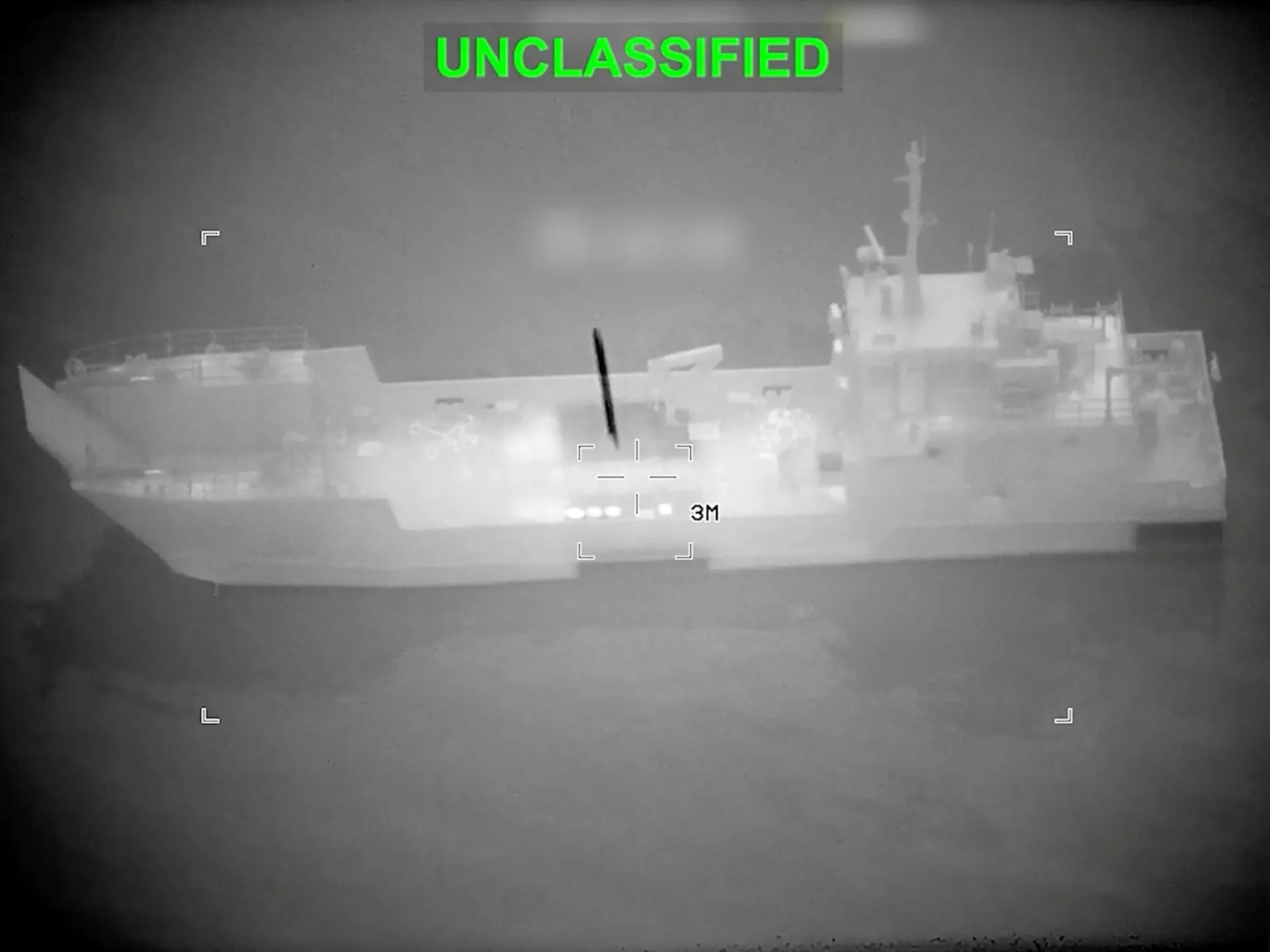
Following US strikes on Iranian rocket launchers, experts are debating the feasibility and strategic impact of using rocket systems to deploy sea mines in the Strait of Hormuz.
Recent military engagements in the Strait of Hormuz have brought the issue of unconventional naval warfare to the forefront of global security discussions. The United States recently conducted a series of targeted strikes against rocket launchers situated on Larak Island, citing intelligence that indicated the Iranian Islamic Revolutionary Guard Corps (IRGC) was preparing to deploy sea mines using rocket technology. This military action marks a significant escalation in the ongoing regional conflict, with Tehran responding through retaliatory strikes on US bases in Jordan.
The US Central Command, or CENTCOM, has maintained that the decision to engage these assets was a direct response to a perceived threat against international shipping lanes. While the US currently enforces a blockade on several Iranian ports, officials argue that the use of rocket-delivered mines represents a novel and dangerous shift in tactics. For its part, the Iranian leadership has labeled these actions as aggressive violations of its sovereignty, further complicating an already volatile maritime environment.
The plausibility of using rockets to deploy sea mines remains a subject of intense debate among military analysts and naval experts. Some observers, including retired senior US naval officers, have expressed skepticism regarding the feasibility of such a method. The primary concern lies in the physical impact of a rocket hitting the water, which could theoretically cause significant structural damage to the delicate internal mechanisms of a sea mine. Despite these doubts, intelligence reports suggest that the IRGC has been actively developing and testing this capability.
Publicly available evidence from Iranian state media appears to support the existence of such programs. In early 2025, military exercises demonstrated the use of the Fajr-5 Multiple Launch Rocket System (MLRS) in a maritime context. While the Fajr-5 was originally designed as a medium-range artillery system capable of delivering fragmentation warheads, its mobile platform allows for rapid positioning along coastal areas. em could potentially scatter mines across wide swaths of the Strait from a safe distance.
The primary appeal of land-based, rocket-delivered mine laying is the ability to influence maritime traffic without risking vulnerable naval vessels. Traditional mine-laying operations typically rely on specialized warships, submarines, or aircraft, all of which are susceptible to detection and destruction ersary could theoretically deploy hundreds of mines rapidly while remaining shielded
Technically, the process would involve the rocket opening its casing mid-air, allowing the mines to be deployed with parachutes to ensure a controlled entry into the water. This method would present a unique challenge to conventional mine-sweeping operations. Clearing a waterway of mines is a painstaking, slow process that requires specialized vessels to locate and neutralize explosives. If a large volume of mines were dispersed simultaneously via rockets, it could overwhelm current defensive measures and severely disrupt commercial shipping through one of the world's most critical oil transit chokepoints.
While the focus remains on the situation in the Strait of Hormuz, the concept of aerial or long-range mine deployment is not entirely unique to Iran. The US Navy itself utilizes advanced systems like the Quickstrike mine, which can be delivered such as the integration of Joint Direct Attack Munition (JDAM) kits, have allowed for even greater precision in these operations. These advancements highlight a broader global trend toward seeking more survivable and efficient ways to control maritime domains.