

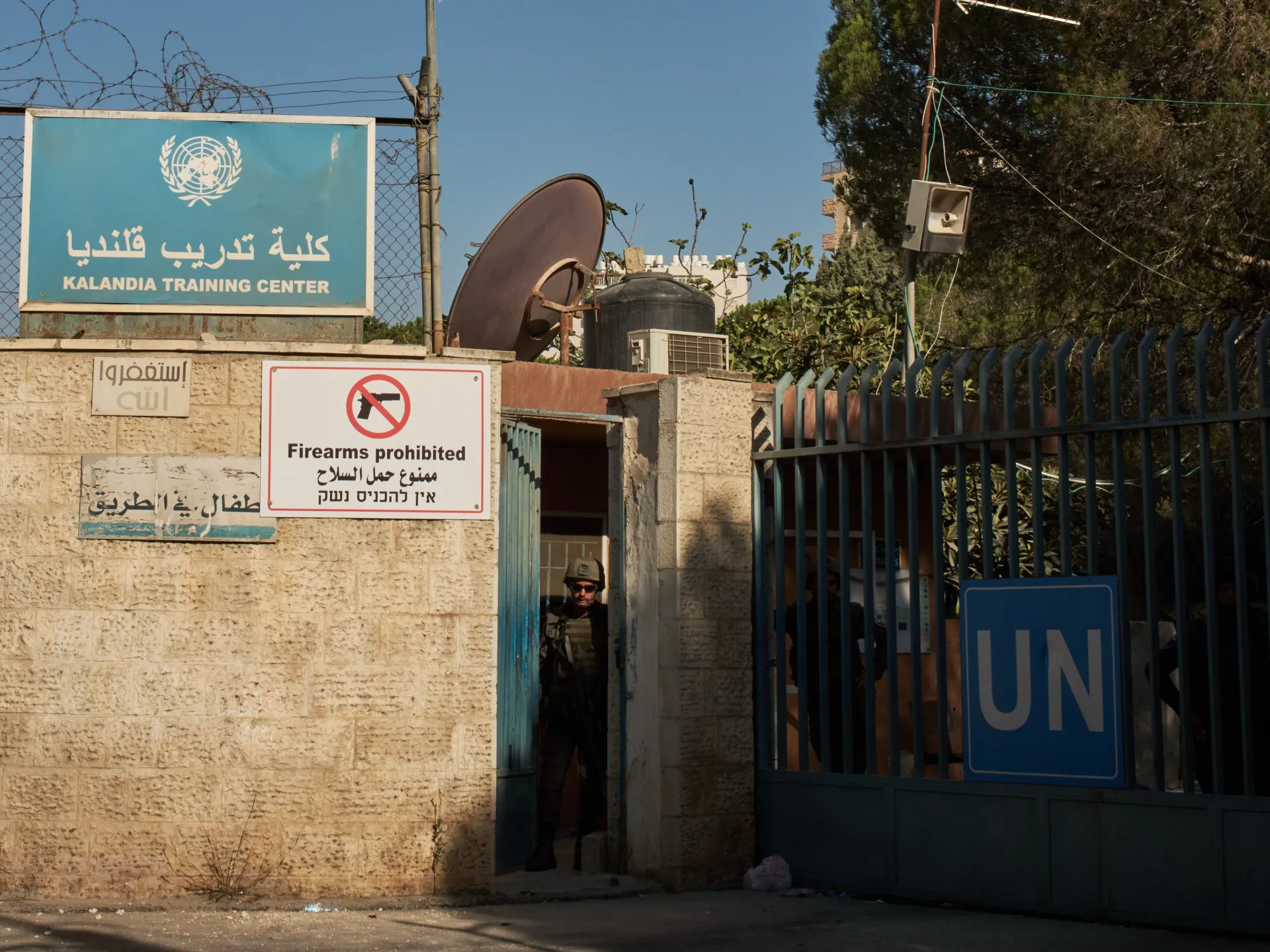
UNRWA leadership has condemned the forced takeover of its Qalandiya Training Centre in East Jerusalem, labeling the action a violation of international law and an attempt to dismantle refugee services.
The United Nations Relief and Works Agency for Palestine Refugees (UNRWA) is facing a significant challenge following the seizure of its training facility in East Jerusalem hood, was the site of a high-profile raid that resulted in the expulsion of UN personnel and the immediate cessation of operations at the site. The move, characterized nited Nations premises, has sparked widespread concern regarding the future of humanitarian operations in the region.
During the operation, which included the presence of high-ranking government officials, employees were ordered to vacate the premises and were explicitly told not to return. The raid was accompanied he closure of the Qalandiya checkpoint. Reports indicate that at least five individuals sustained injuries during the confrontation. The facility, which has long served as a vital educational hub for refugees, remains under Israeli control, with the government citing domestic legislation passed in 2024 as the legal basis for the takeover.
The closure of the training center carries severe consequences for the local Palestinian community. UNRWA officials have emphasized that the facility provided essential vocational training to approximately 340 students, many of whom come from highly marginalized and disadvantaged backgrounds. izure effectively halts their path toward developing the skills necessary for professional employment and economic self-sufficiency.
Beyond the immediate cohort of students, the center functioned as a cornerstone for a much larger population. It provided diverse services to roughly 16,000 refugees residing in the Qalandiya camp and various parts of the occupied West Bank. The loss of this infrastructure disrupts not only educational continuity but also the social support networks that the agency has maintained for decades. UNRWA leadership has characterized this disruption as an intentional effort to dismantle the institutional support structures that provide a semblance of stability for refugee families in the occupied territories.
UNRWA officials view this incident as part of a systematic campaign to weaken the organization and, ndermining its operations and attempting to eliminate its presence in areas like Jerusalem, the Israeli government seeks to render the status of Palestinian refugees invisible. This, according to agency representatives, is tied to long-standing disputes over the right of return, property reparations, and compensation for displaced populations.
The agency maintains that its existence is rooted in a clear mandate from the United Nations General Assembly, which tasks it with providing humanitarian and public services until a durable political solution to the conflict is achieved. While the Israeli government maintains that the land has been reallocated for municipal development and that the seizure is consistent with its internal legal framework, UNRWA rejects these assertions. The agency insists that as a United Nations facility, it remains protected its activities.
Addressing the broader implications of the raid, UNRWA leadership has acknowledged the inherent difficulties the United Nations faces in preventing future incursions. Despite the clear international consensus regarding the immunity of UN property, the agency noted that the organization’s effectiveness is ultimately dependent on the collective will of its member states. There is a growing sense of frustration within the agency that the international community has failed to provide the necessary support to deter such actions over the course of the seven-decade-long conflict.
Moving forward, the agency has declared its commitment to maintaining its services despite the mounting pressure. However, officials warn that without a unified stance from the international community, the erosion of humanitarian protections may continue. The agency remains firm in its position that it will continue to operate under its existing mandate until a political resolution is reached or the General Assembly mandates a change in its status. For now, the focus remains on navigating the immediate crisis while attempting to secure the safety of its staff and the continuity of its vital humanitarian mission.