
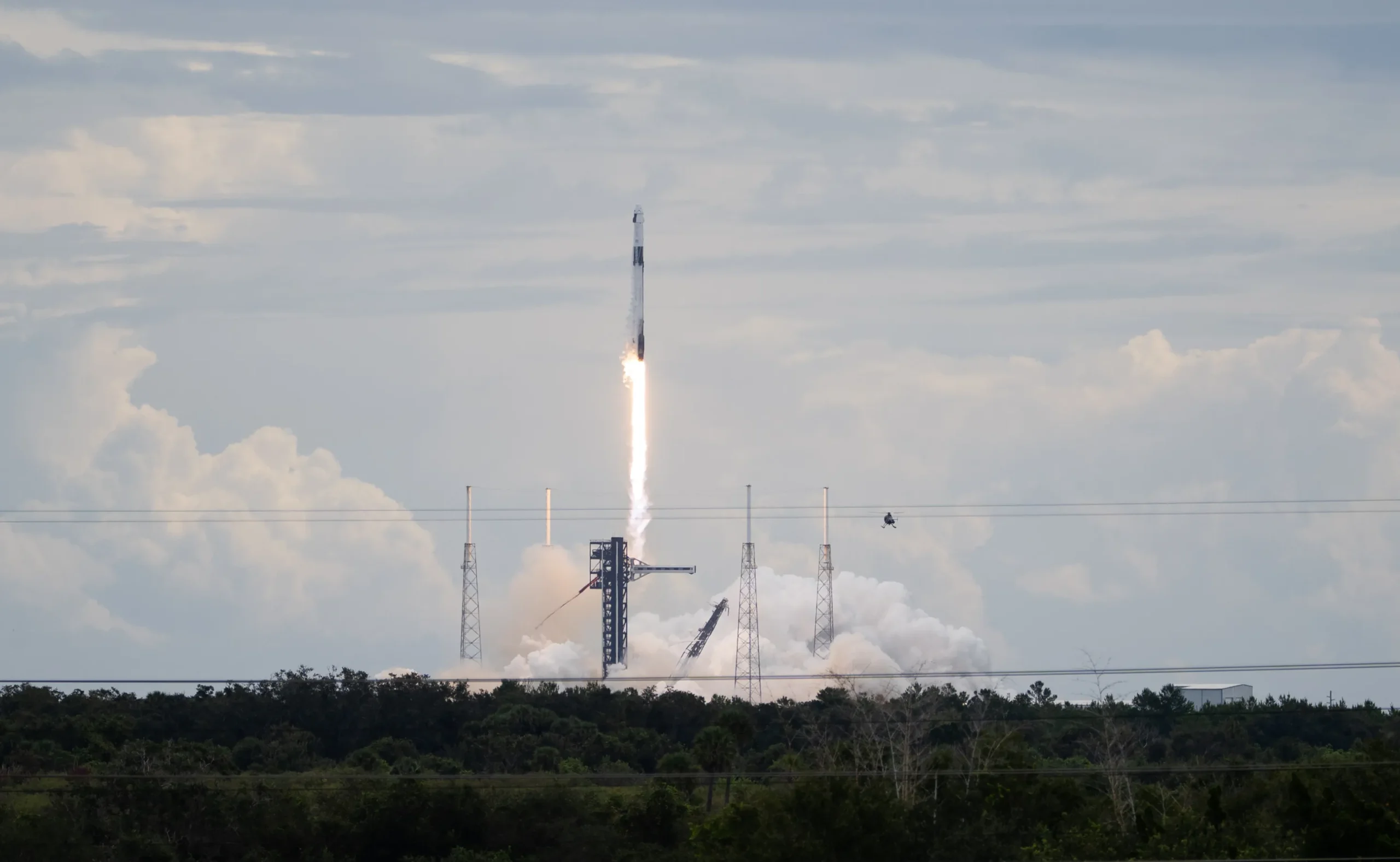
A new crew of four astronauts launched toward the International Space Station on October 1. Meanwhile, global agencies are planning new ways to grow food on the Moon.
Why this matters
Space exploration requires new ways to keep humans healthy. Astronauts cannot carry all their food from Earth forever. Growing crops in space offers a solution to this problem.
Also, plants help keep air clean for crews. They absorb carbon dioxide and release fresh oxygen. This technology makes long missions to the Moon or Mars possible.
Meanwhile, government leaders work on problems closer to home. UK Prime Minister Andy Burnham recently announced plans to change public services. He wants to improve housing, social care, and energy for citizens.
These two stories show how nations balance current needs with future goals. Countries invest in space science while solving daily challenges on the ground. Both paths help build a stronger future for everyone.
New Crew Heads to Space
NASA and SpaceX successfully launched the Crew-13 mission. The Falcon 9 rocket left Florida on October 1, 2026. It carried four astronauts toward the International Space Station.
Next, the crew will spend months living and working in orbit. NASA astronauts Jessica Watkins and Luke Delaney joined this flight. Joshua Kutryk from Canada and Sergey Teteryatnikov from Russia also climbed aboard.
Then, the team prepared for their docking process. NASA planned to stream the event for the public. Viewers could watch the spacecraft arrive at the station live.
After that, the astronauts will begin their science mission. They will conduct experiments to learn about life in microgravity. These results help experts plan for longer trips into deep space.
Growing Food on the Moon
NASA recently signed a new deal with international partners. They want to test how to grow crops on the Moon. This agreement includes Canada and Germany.
Also, the team will build a special testing ground on Earth. They will mimic the conditions found at a future Moon base. Scientists need to see if plants can survive there.
However, the project faces many difficult challenges. The Moon lacks a natural atmosphere for plants. Researchers must create controlled environments to provide water and light.
Finally, these space crops will provide fresh nutrition for crews. Astronauts will enjoy more variety in their daily meals. This reduces the need to launch heavy supply ships from Earth.
How we got here
- April 17, 2023: Scientists at Kennedy Space Center study plant health using cameras.
- September 30, 2026: UK Prime Minister Andy Burnham reveals a new plan for public services.
- September 30, 2026: NASA and international partners sign a deal to research lunar agriculture.
- October 1, 2026: SpaceX launches the Crew-13 mission from Cape Canaveral.
What happens next
NASA will manage the docking of the Dragon spacecraft. The crew will join the team already living on the space station. They will then start their assigned research tasks.
Meanwhile, international teams will begin building their ground demonstrator. They must test all systems before sending gear to the Moon. This work will take place over the coming years.
Also, the UK government will debate the new public service plans. Citizens will watch to see how these changes affect their lives. Leaders must now turn their promises into official laws.
Finally, space agencies will continue to track the Crew-13 flight. They will monitor the health of the plants in ongoing lab tests. Every discovery brings us closer to a permanent base on the Moon.