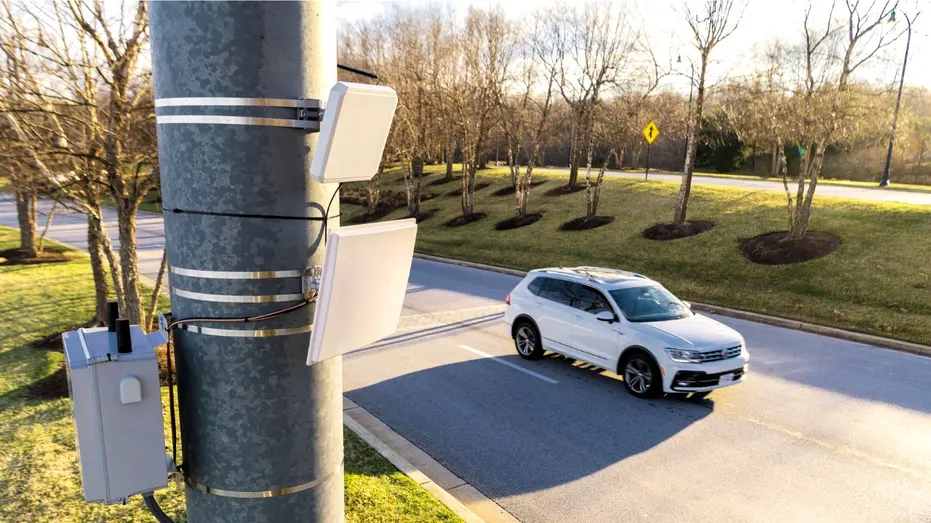
New roadside sensor technology known as SignalTrace can link electronic device signals to vehicles, creating complex digital patterns for law enforcement investigations.
Modern surveillance technology is evolving beyond simple visual identification, moving toward a complex system of electronic tracking. A new tool known as SignalTrace, developed tic license plate readers (ALPR). While traditional plate readers capture images of vehicles to record their time and location, SignalTrace adds a layer of digital monitoring. It functions smartphones, smartwatches, wireless headphones, and onboard vehicle electronics.
The software operates observing which devices consistently move in proximity to a specific vehicle, the system creates an "electronic fingerprint" or signature for that group. This allows investigators to potentially identify or track a vehicle even in instances where a license plate is not clearly visible or has been obscured. The system essentially creates a digital trail based on the recurring patterns of electronic signals detected
Law enforcement agencies are increasingly looking for ways to generate leads that do not rely solely on traditional suspect identification. According to Leonardo, SignalTrace is intended to serve as an investigative tool rather than a definitive proof of identity. The company emphasizes that the technology does not decrypt private communications, access message content, or collect stored data from personal devices. Instead, it focuses on the signals that devices publicly broadcast during normal operation.
The process of identifying a specific individual remains a multi-step investigation that occurs outside of the SignalTrace software. If an electronic signature is linked to a specific license plate, investigators may then access public vehicle registration records to determine the registered owner. It is important to note that the registered owner of a vehicle is not necessarily the person carrying a specific electronic device at any given time. Therefore, the data serves as a starting point for law enforcement, requiring further corroboration to establish any factual connection between a person and a specific incident.
The rise of such tracking technology has sparked a significant debate regarding personal privacy and what constitutes identifiable information. While a device signature may appear anonymous on its own, it can become highly revealing when combined with other data points. Research has shown that even without names, mobility patterns are often unique enough to distinguish individuals. When location history is cross-referenced with vehicle records and social proximity, the potential for identifying individuals increases significantly.
Legal experts and privacy advocates point to recent Supreme Court rulings as a guide for these emerging technologies. Cases such as Carpenter v. United States and the more recent Chatrie v. United States have highlighted that individuals hold a reasonable expectation of privacy regarding their digital location data. Although courts have not yet specifically ruled on the constitutionality of SignalTrace-style collection, the legal landscape is shifting toward requiring higher standards, such as warrants, for accessing detailed movement histories. The central concern remains that software can identify patterns of proximity—such as carpooling or frequent travel—without being able to explain the nature of the relationship or the intent behind those movements.
While there is no single setting that can make a device completely invisible to all roadside sensors, users can take steps to reduce their electronic broadcast. Turning off Bluetooth when it is not in active use can prevent devices from emitting signals that sensors might track, although this also disables wireless connections to headphones and infotainment systems. Furthermore, users should be aware of how much location history their applications collect and store, as this data can be subpoenaed in investigations.
Ultimately, transparency from local authorities is a critical component of public trust. Citizens are encouraged to research whether their local police departments utilize ALPR technology and to review the policies regarding how that data is stored, shared, and accessed. As surveillance infrastructure expands into commercial spaces like parking lots and retail centers, the ability to monitor movement becomes more pervasive. Understanding the capabilities of these systems is the first step in navigating the balance between public safety and the fundamental right to individual privacy.