

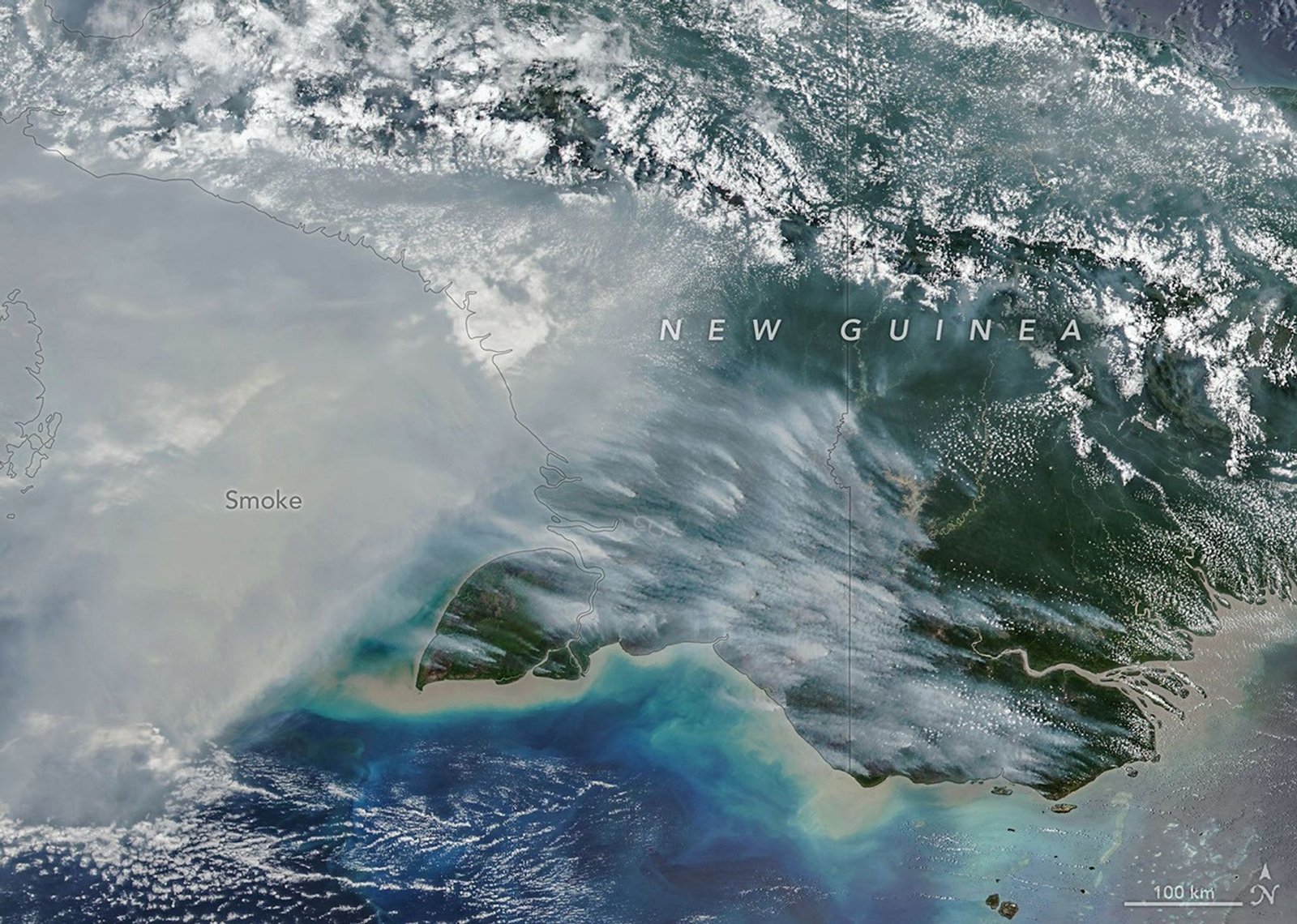
Severe drought and human activity triggered record-breaking wildfires across New Guinea in late 2026, causing significant air pollution and environmental damage.
New Guinea features many diverse plants across various regions. These include rainforests, swamps, and dry savannas. However, severe drought recently hit the island during late 2026.
Also, a strong El Niño weather pattern worsened these conditions. Large fires scorched the land throughout September and October. Thick smoke covered much of the island for several weeks.
Next, the VIIRS sensor on a NOAA satellite captured images of the smoke. It showed clouds of pollution streaming from the southern coast. This smoke created dangerous living conditions for many residents.
Then, air pollution levels rose to dangerous heights. Officials closed schools and delayed flights due to the poor visibility. They also advised elderly people and children to wear protective masks.
Meanwhile, experts track the carbon released by these massive blazes. The Global Fire Emissions Database reports record-breaking carbon levels for Papua New Guinea. The total emissions reached 32 megatons by mid-October.
In addition, the Indonesian side of the island faced similar problems. Carbon emissions there topped 35 megatons this year. This makes 2026 one of the worst years for fires on record.
After that, researchers looked at the cause of the dry weather. El Niño shifted rainfall patterns significantly. Some areas in the south went over 90 days without any rain at all.
However, people also ignite most of these fires. Locals burn land for farming, hunting, and clearing forests. These managed fires often grow out of control during the dry season.
Furthermore, experts note that Papua has become a new frontier for deforestation. Companies clear primary forests for oil palm and pulpwood plantations. This activity leaves the landscape vulnerable to burning.
Finally, scientists expect these fires to continue for a while. They will likely persist until the wet season arrives. Heavy rains should return to the southern region by early November.