
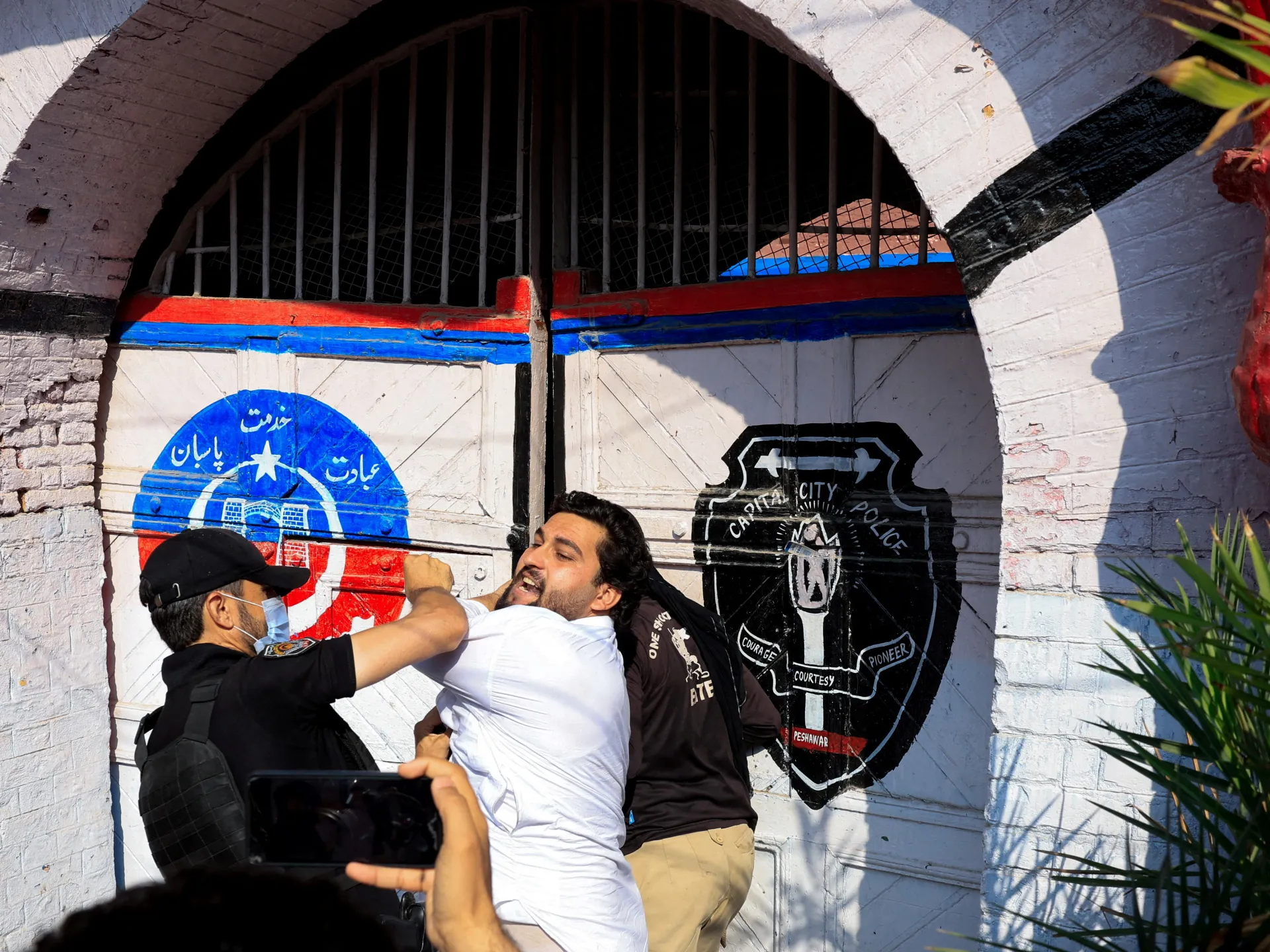
Pakistan's government suspended a provincial administration following large protests. Thousands march to demand the release of jailed leader Imran Khan.
Federal authorities in Pakistan recently suspended the government of Khyber Pakhtunkhwa province. This move comes after months of rising tension between the state and supporters of Imran Khan. The government also declared a state of emergency in the region.
Meanwhile, thousands of people march toward the capital city of Islamabad. These protesters demand the release of the former prime minister. Supporters carry red and green flags of Khan’s political party, the Pakistan Tehreek-e-Insaf or PTI.
Why this matters
The situation creates a serious challenge for Pakistan’s stability. When a federal government removes a regional one, it shakes public trust. Such actions often lead to more street protests and wider unrest.
Also, the struggle highlights deep divisions in the country. Many people support Khan despite the many legal charges against him. His imprisonment keeps him at the center of national debate.
Furthermore, concerns about Khan's health add fuel to the fire. His family claims he lost sight in one eye. They say prison officials failed to provide him with proper medical care.
Finally, the standoff shows how hard it is to hold fair talks. Both sides blame each other for the failure of negotiations. Without dialogue, both parties seem stuck in a dangerous cycle.
The march and the crackdown
Thousands of supporters began their journey in Lakki Marwat. This city sits about 275 kilometers from the capital. The protesters stopped for the night before continuing their march.
However, authorities prepared for the crowds by blocking key roads. They stacked large shipping containers to stop vehicles from reaching the capital. Police also arrested several protesters following the government’s crackdown.
Then, the PTI leaders demanded better access to their jailed leader. They wanted to speak with Khan about national issues. The government refused these requests, which ended the recent talks.
Meanwhile, the government accuses provincial officials of sabotage. Interior Minister Mohsin Naqvi claims the local government broke promises on security. He says these actions forced the federal intervention.
How we got here
- August 2023: Authorities first imprison Imran Khan on various charges.
- Last Year: A court sentences Khan to 17 years in prison for corruption.
- August 2026: Doctors examine Khan after his health complaints, declaring him fit.
- Early October 2026: Talks between the government and PTI end in a deadlock.
- October 12, 2026: The federal government suspends the Khyber Pakhtunkhwa provincial government.
What happens next
The movement likely aims to reach areas near Islamabad by Thursday. PTI leaders hope to gather more support across the country. They want to turn every town square into a protest hub.
Also, legal battles will likely continue in the courts. Khan still faces over 100 different legal cases. These court battles remain a primary way for the state to keep him jailed.
After that, the federal government may try to restore order in the province. They face the difficult task of calming the angry supporters. The risk of more violence remains high as the march continues.
Finally, the international community will watch these events closely. Any further crackdown might lead to more criticism from global observers. The path ahead remains uncertain for both the government and Khan’s party.