

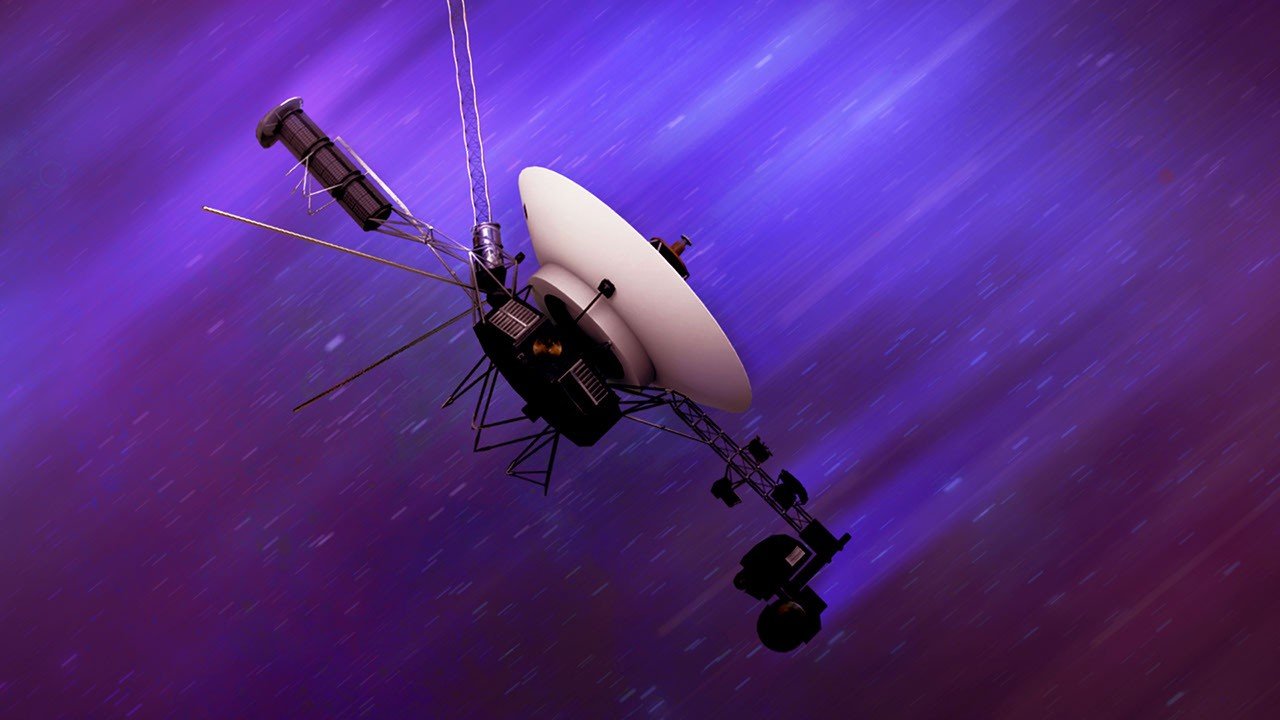
NASA's Voyager 1 probe will soon reach a distance of one light-day from our Sun. This milestone occurs 49 years after the mission began.
NASA launched the twin Voyager spacecraft in 1977. These probes took advantage of a rare planetary alignment. They flew past Jupiter, Saturn, Uranus, and Neptune.
Also, the two crafts used gravity assists to reach these giants. They captured detailed photos of the planets and their many moons. Eventually, the two probes went their separate ways.
Meanwhile, Voyager 1 took a famous final picture of Earth. It looked like a tiny, pale blue dot. The probes carry a special Golden Record for aliens.
This record holds music, sounds, and greetings from Earth. Designers used copper and gold to build the discs. They also added uranium to protect the information from space radiation.
Next, the probes traveled beyond the influence of the Sun. They crossed the heliopause in 2012 and 2018. Now, scientists track them using the Deep Space Network.
As a result, we know Voyager 1 is very far away. It sits over 16 billion miles from our Sun. This distance represents a massive journey through space.
After that, the probe will reach another big milestone soon. On November 18, 2026, it crosses the one-light-day mark. This distance is 16.1 billion miles from the Sun.
Finally, NASA offers tools to help you learn about space. You can study gravity assists with their online activities. You can also learn how light measures distance in the universe.