

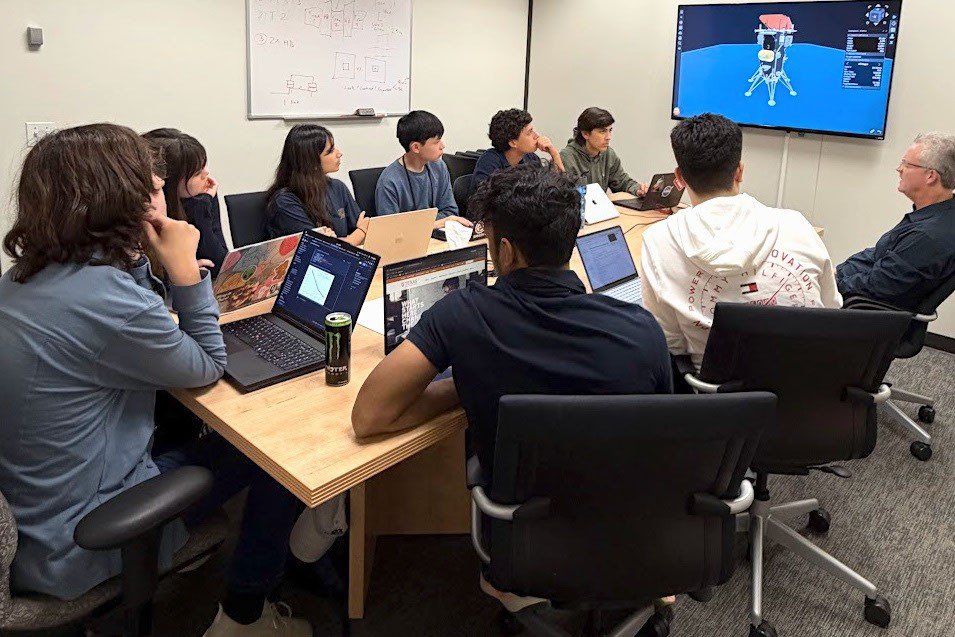
High school students in the NASA SEES program researched new fuel measurement technology for upcoming lunar missions.
The NASA STEM Enhancement in Earth Science program gives high school students real experience. These interns join teams to solve actual space challenges. During the summer of 2026, the MATRIX team studied lunar fuel measurement.
Next, the students focused on how liquid fuel acts in microgravity. Liquid fuel does not settle in space. It clings to the sides of fuel tanks instead. This makes measuring fuel levels very difficult for future lunar missions.
Also, the team worked with Dr. Kevin Crosby to study Modal Propellant Gauging. This method uses sound to guess how much fuel remains inside a tank. NASA plans to use this technology on upcoming moon landings.
Then, the interns built computer models to test this method. They used public data from past Intuitive Machines missions. They studied flight paths to find when the technology works best.
Meanwhile, the students used complex simulations to study fuel movement. They looked at how the fuel sloshes inside the tanks during flight. These tests helped them predict the best times to measure fuel.
As a result, the team found clear windows for these measurements. These windows happen during key engine burns. Their work helps NASA prepare for long-term exploration of the moon.
After that, the group presented their findings to actual space engineers. They shared their data at science conferences and professional meetings. Experts praised the students for their high level of skill and creativity.
Finally, the SEES program continues to help students learn industry methods. These interns showed that young people can solve hard space problems. Their research supports future goals like in-space refueling and fuel depots.