

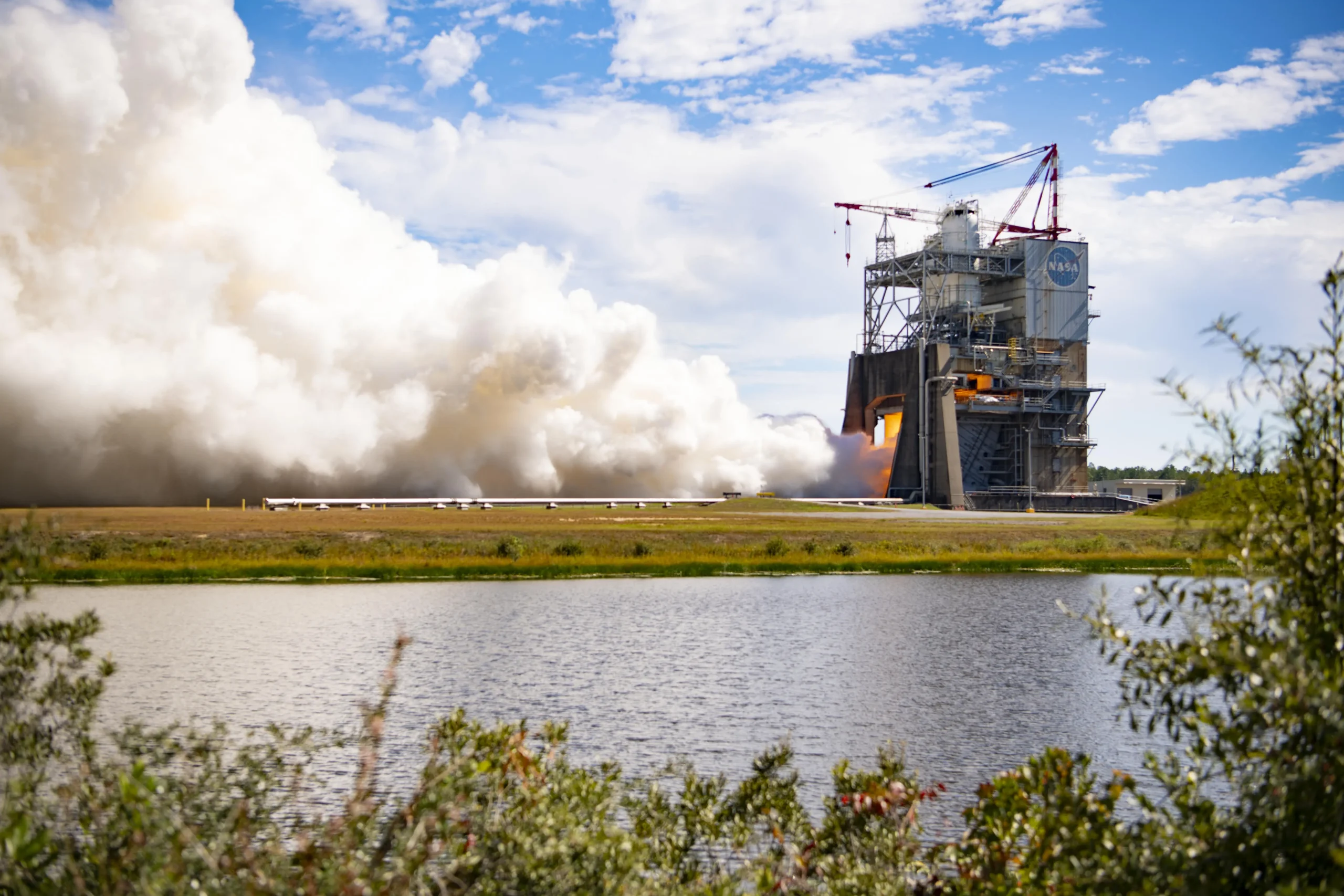
NASA recently tested an RS-25 engine at the Stennis Space Center to prepare for upcoming Artemis moon missions.
NASA experts tested the RS-25 engine number 10001. They conducted this test on October 21 at the Stennis Space Center. This facility sits near Bay St. Louis, Mississippi.
Also, the team fired the engine for eight and a half minutes. This duration matches the time needed for a real rocket launch. It effectively simulates the Space Launch System flight requirements.
Next, the operators pushed the engine to 111 percent power. This level matches the thrust needed for actual SLS missions. The agency uses this power to send the Orion spacecraft into orbit.
The main goal involved checking flight parts for future missions. Teams also verified a new thermal protection system. This shield protects the engine nozzle from extreme heat during liftoff.
However, this specific engine will not fly in space. It serves as a developmental model for research. It helps engineers collect vital data on engine performance and reliability.
Meanwhile, NASA works with L3Harris Technologies on these tests. These experts gather information to improve future rocket designs. They ensure every component meets strict safety standards.
Four RS-25 engines work together on the SLS rocket. They generate 2 million pounds of total thrust. This massive power helps launch every Artemis mission into space.
Finally, the agency proves all engines are flightworthy at Stennis. A dedicated team runs these important tests. This group includes members from NASA, L3Harris, and Nova Space Solutions.