

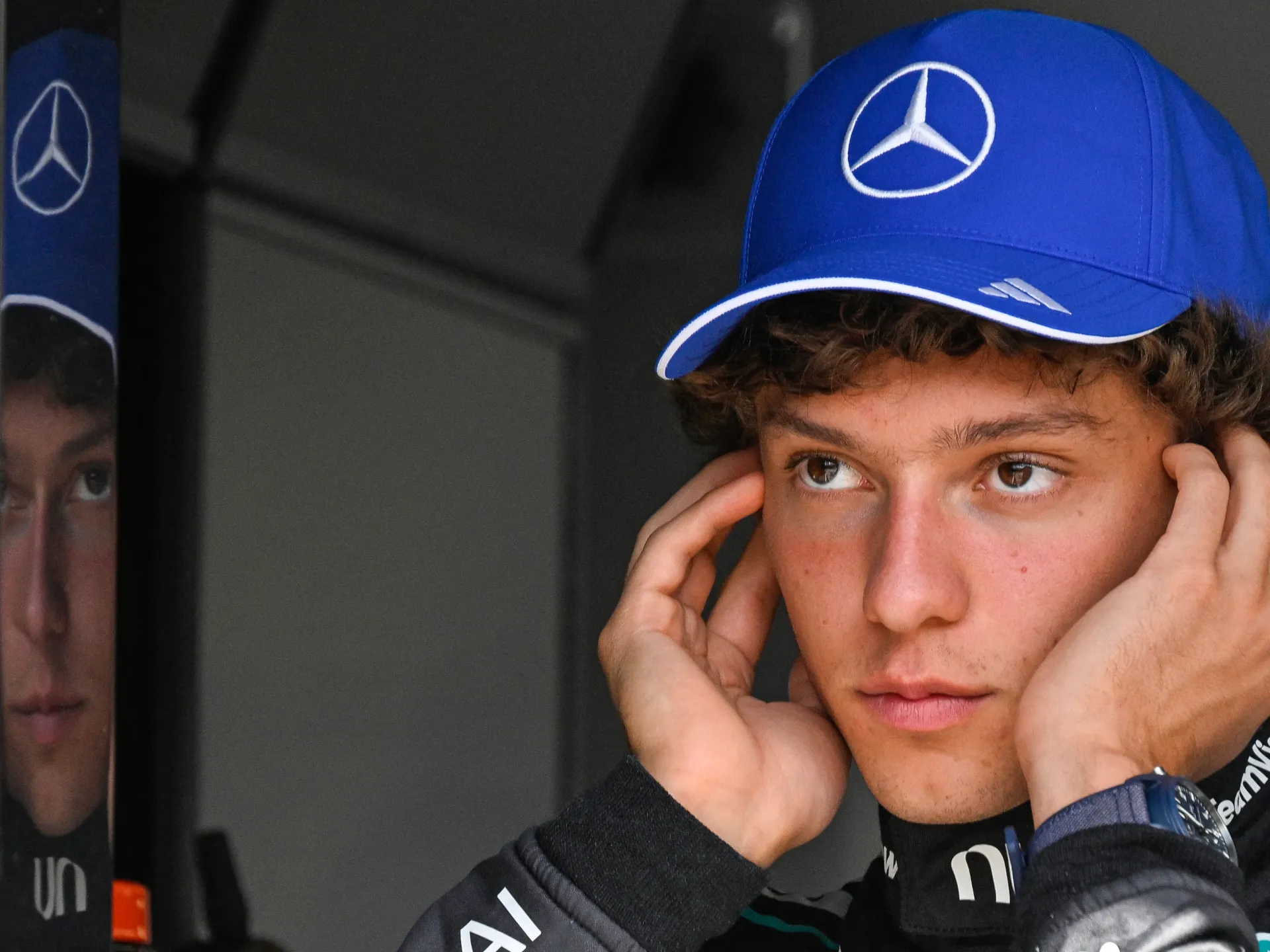
Championship leader Kimi Antonelli admits McLaren has overtaken Mercedes in pace as the F1 title race enters a critical phase.
The landscape of the 2026 Formula One season has undergone a noticeable transformation, according to current championship leader Kimi Antonelli. Following the recent Dutch Grand Prix, the Mercedes driver publicly acknowledged that his team no longer holds the definitive advantage in raw pace. After a dominant start to the year that saw him secure five consecutive victories, Antonelli has observed a marked improvement in the performance of his rivals, specifically McLaren.
This assessment follows a race at Zandvoort where McLaren’s Lando Norris secured his second consecutive victory, starting from pole position. While Antonelli and his teammate George Russell managed to secure podium finishes, the gap between the Silver Arrows and the rest of the field appears to have narrowed significantly. Antonelli pointed to the recent upgrade package introduced ng that the competition has effectively leapfrogged Mercedes in terms of recent development gains.
Despite Antonelli’s assessment, Lando Norris offers a more nuanced view of the current competitive order. The reigning champion pushed back against the idea that McLaren has definitively surpassed Mercedes as the team to beat. Instead, Norris emphasized that the performance delta is highly dependent on specific track characteristics. He credited his recent successes to his own driving execution and the specific strengths of the McLaren chassis rather than an overall superiority in car design.
Norris highlighted that while McLaren has achieved industry-leading performance in high-speed corners, Mercedes maintains a distinct advantage in slower sections of the track. This creates a balanced, yet volatile, competitive environment where track layout dictates the winner. Norris remains cautious about his championship prospects, noting that he does not yet feel he has a vehicle capable of fighting for the title across every remaining circuit on the calendar, despite his recent strong form.
Behind the scenes, the development race is heavily influenced Toto Wolff explained that the team must carefully manage its budget to ensure consistent progress throughout the year. Rather than deploying updates at every opportunity, the team is strategically spreading its resources to maximize points accumulation over the long term. This disciplined approach means that Mercedes may appear slower on track during certain windows while they prepare more significant technical iterations.
Industry observers and rival team principals, such as McLaren’s Andrea Stella, remain wary of the potential held within the Mercedes factory. Stella suggested that the data emerging from wind tunnel testing likely indicates a much higher performance ceiling than what is currently being realized on the asphalt. The expectation is that Mercedes will eventually convert this theoretical potential into tangible on-track upgrades, ensuring the championship battle remains intense for the remainder of the season.
As the season progresses, Antonelli faces a significant hurdle in his bid to become the youngest champion in the sport's history. To safeguard against potential reliability issues for the remainder of the campaign, Mercedes has opted to replace the power unit in his car during the upcoming Italian Grand Prix. This change will result in a substantial grid penalty, forcing the young leader to fight his way through the pack at his home race.
While the timing of the penalty may be inconvenient for public relations, Wolff emphasized that the decision is rooted strictly in technical strategy. Monza, known for its high-speed straights and overtaking opportunities, is viewed as the optimal venue to absorb the penalty. Antonelli has expressed confidence that, despite the starting disadvantage, he will be able to recover and secure a strong points finish, maintaining his lead in the standings as the sport enters the final third of the 2026 season.