

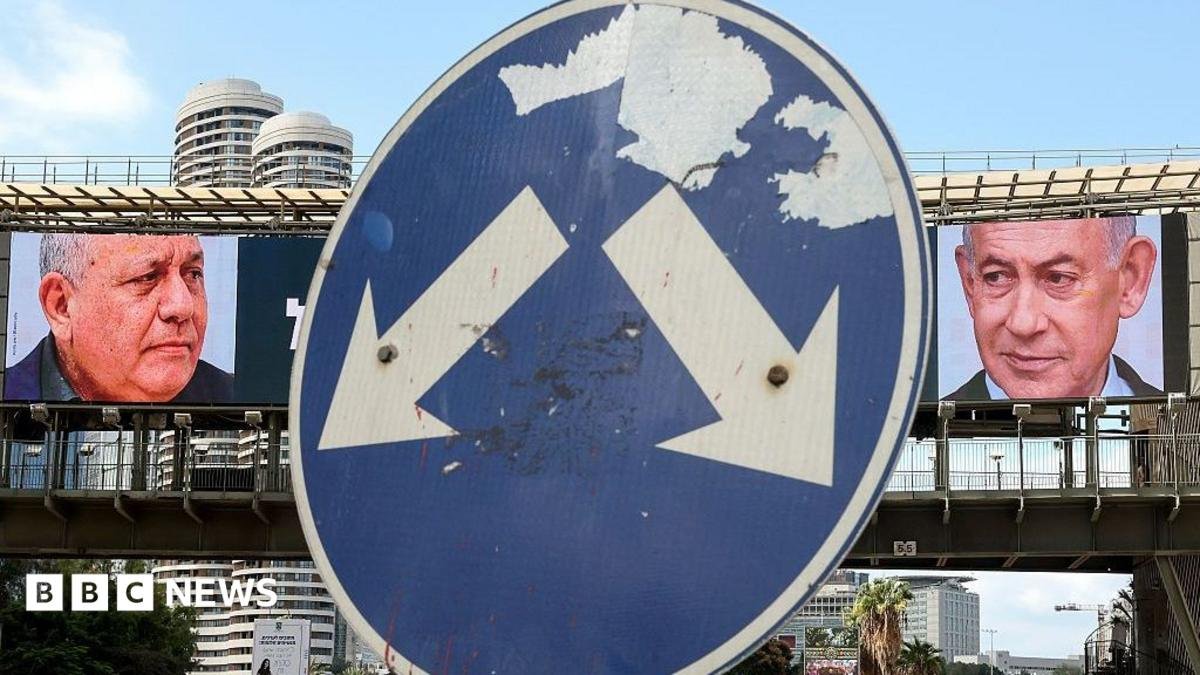
Israel faces political deadlock after recent elections. Four potential scenarios could determine the country's next government.
Israel faces a difficult political stalemate following recent elections. Votes currently show no clear winner for either major bloc. Both Benjamin Netanyahu and Gadi Eisenkot lack the necessary majority to form a government.
Next, a national unity government remains a possible, yet unlikely, solution. Netanyahu could ask Eisenkot to join him in a coalition. However, Eisenkot built his campaign on removing Netanyahu from office. He would have to abandon his core promises to participate.
Also, a major regional conflict could force these leaders together. Some analysts suggest that tensions with Iran might pressure parties to unite. Critics argue that Netanyahu might use such a crisis to his political career.
Meanwhile, an opposition coalition involving Arab parties is another option. This would represent a major shift in Israeli politics. Most Jewish parties currently refuse to partner with Arab representatives. Such a coalition would also face deep internal disagreements.
However, Arab parties saw record voter turnout in this election. They could secure a significant number of parliamentary seats. This surge shows a strong desire to change the current governing direction.
Then, Netanyahu could try to lure right-wing members from the opposition. Leaders like Naftali Bennett and Avigdor Lieberman hold similar security views to Netanyahu. Yet, these figures campaigned specifically to remove him from power.
Furthermore, these potential partners demand military service changes for ultra-Orthodox groups. This policy puts them at odds with Netanyahu’s current allies. Finding a compromise between these groups seems very difficult right now.
Finally, the country might face new elections if no deal emerges. This outcome serves as a default if negotiations fail. Netanyahu would remain as the caretaker leader during this time.
He might believe he has a better chance in a repeat vote. He may hope that Arab voter turnout drops in a second round. History shows that Israel held five elections between 2019 and 2022 due to similar gridlock.