

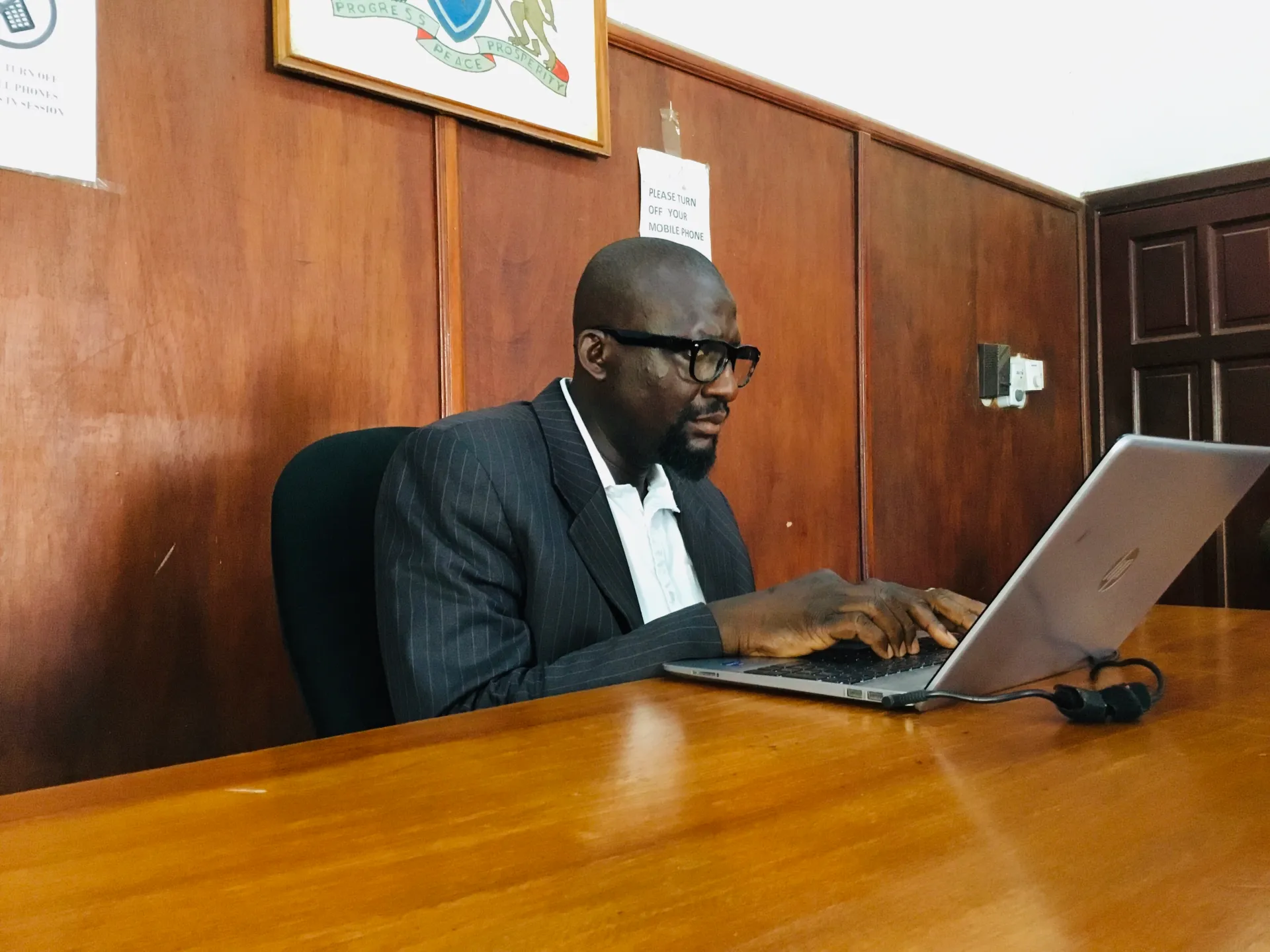
Muhammed Krubally serves as The Gambia's first blind magistrate, balancing his professional duties with the challenges of an inaccessible system.
Magistrate Muhammed Krubally arrives early at the Banjul Magistrates’ Court. His clerk reviews the day’s files with him before the proceedings begin. Krubally prepares to preside over his cases with focus and professional care.
Next, he enters a busy courtroom for a criminal trial. Although he cannot see the people, he hears them clearly. He listens to the lawyers and witnesses to understand the room.
Also, he relies on modern technology to perform his duties. He uses a screen reader called JAWS to navigate his computer. He also uses smart glasses to access information independently.
Then, he uses his sharp memory to track the rhythm of the court. He has presided over 1,000 cases since 2016. He became the first visually impaired magistrate in The Gambia.
However, his path was not always easy. He grew up in a village and faced many educational barriers. Teachers and students often discouraged him from pursuing his legal ambitions.
As a result, he decided to join the judiciary to change the system. He wants to create a more inclusive world for everyone. He believes that people with disabilities deserve equal opportunities.
Meanwhile, national laws like the Persons with Disabilities Act exist to protect these rights. Yet, putting these laws into practice remains a major challenge. Many institutions still lack the tools for full accessibility.
For example, other professionals face similar struggles. A blind parliamentarian often depends on colleagues to follow debates. A visually impaired lecturer must still prove his competence to skeptical students.
Finally, the government has not yet provided full data on disability prevalence. Schools also lack enough resources to support every student. Krubally continues to mentor young people to show them that success is possible.
Ultimately, Krubally wonders how much the legal system has truly adapted. He has spent a decade adjusting to the courtroom. He remains focused on possibility rather than the remaining obstacles.