
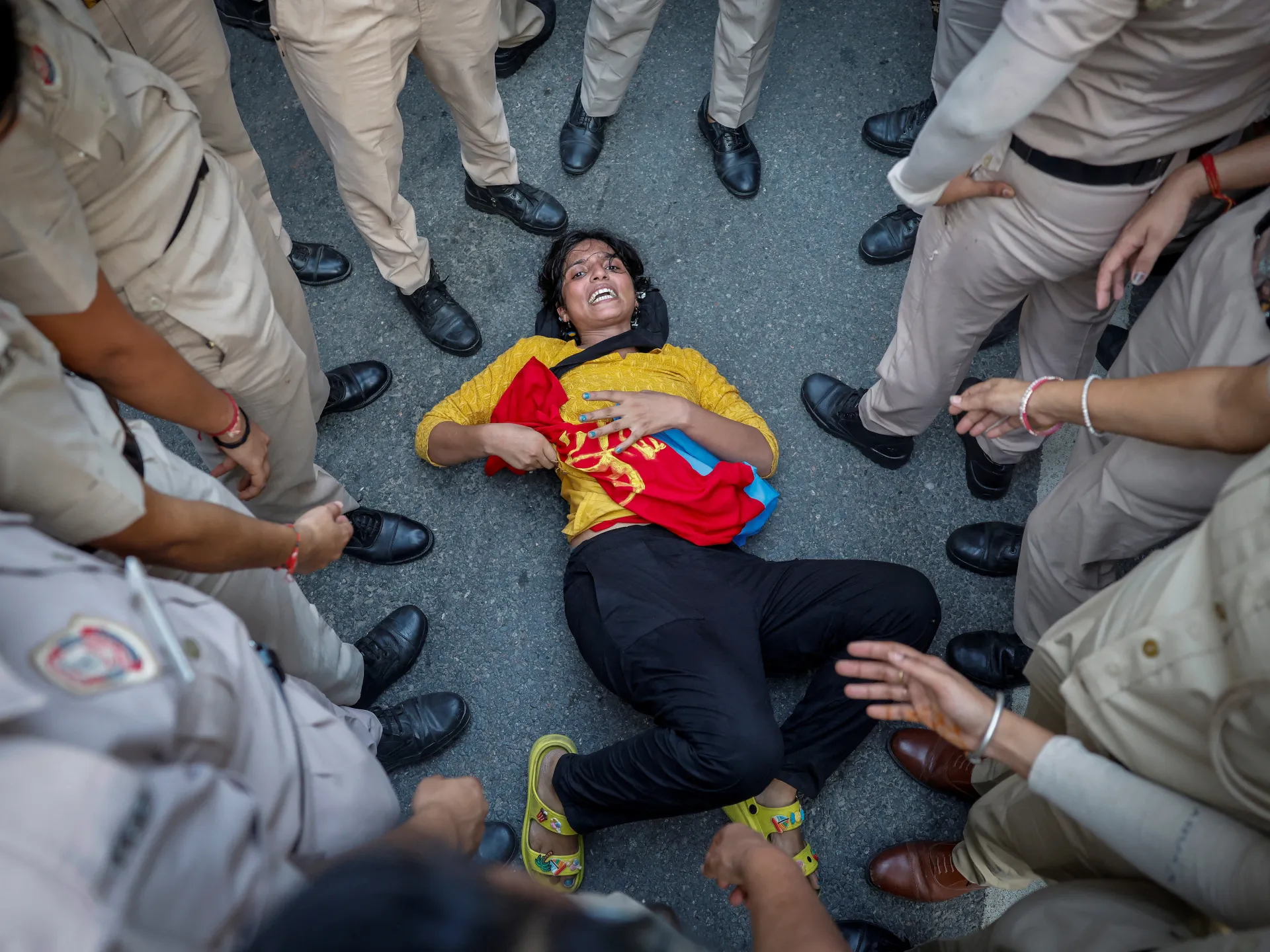
Protesters in Delhi demand the resignation of the election chief amid mass detentions. Opposition leaders and youth groups unite to challenge the government.
Why this matters
The protests in Delhi signal a deep divide in India. Citizens express anger toward the current government. They fear the loss of fair voting practices.
Also, the movement shows the growing power of youth voices. These young people demand accountability from their leaders. The situation tests India's democratic foundations.
Furthermore, the government’s reaction creates a tense atmosphere. Thousands of detentions impact the daily lives of residents. This standoff could change the future of Indian politics.
Opposition and Youth Join Forces
Rahul Gandhi now leads a growing wave of protests. He demands the resignation of Election Chief Gyanesh Kumar. The opposition leader claims the government traps the capital city.
Meanwhile, the youth-led Cockroach Janta Party remains at the center of the unrest. Its leaders, including Abhijeet Dipke, recently faced arrest. Police detained them upon their arrival in Delhi on Saturday.
However, a local court released these leaders on Sunday. They must avoid breaking the peace for one year. The group vows to continue its fight for electoral reform.
After that, the movement gained support from many groups. Thousands of students from left-wing organizations joined the cause. They march to defend their right to vote.
Security Forces Tighten Control
Authorities have locked down large parts of central Delhi. They placed yellow barricades on many busy streets. Shops and restaurants remain shut during the protests.
Also, security forces use a heavy hand against demonstrators. Reports show thousands of people detained each day. Some sources allege that police use violence during these arrests.
Then, the government faces pressure regarding voter list changes. Critics argue officials removed 130 million names from the database. This action supposedly harms minorities and poor communities.
However, the Election Commission denies these claims of bias. They maintain that the process follows official rules. Still, protesters demand a full investigation into the election chief.
How we got here
- May 2026: Abhijeet Dipke starts the Cockroach movement after comments about jobless youth.
- July 2026: The youth movement successfully forces the education minister to resign.
- June 2026 onward: The Election Commission updates voter lists, removing 130 million names.
- October 10, 2026: Police detain youth leaders as they arrive in Delhi for planned protests.
- October 11, 2026: A court releases the protest leaders on the condition of keeping the peace.
What happens next
The political standoff shows no signs of ending soon. Opposition parties will likely increase their pressure on the government. They plan further rallies to gain public support.
Meanwhile, the government must decide how to handle the growing unrest. Continued mass detentions could spark even larger demonstrations. The international community watches these events closely.
Next, the focus will turn to the upcoming state elections. The integrity of the voter database remains a key issue. These protests may change how the election is viewed.