

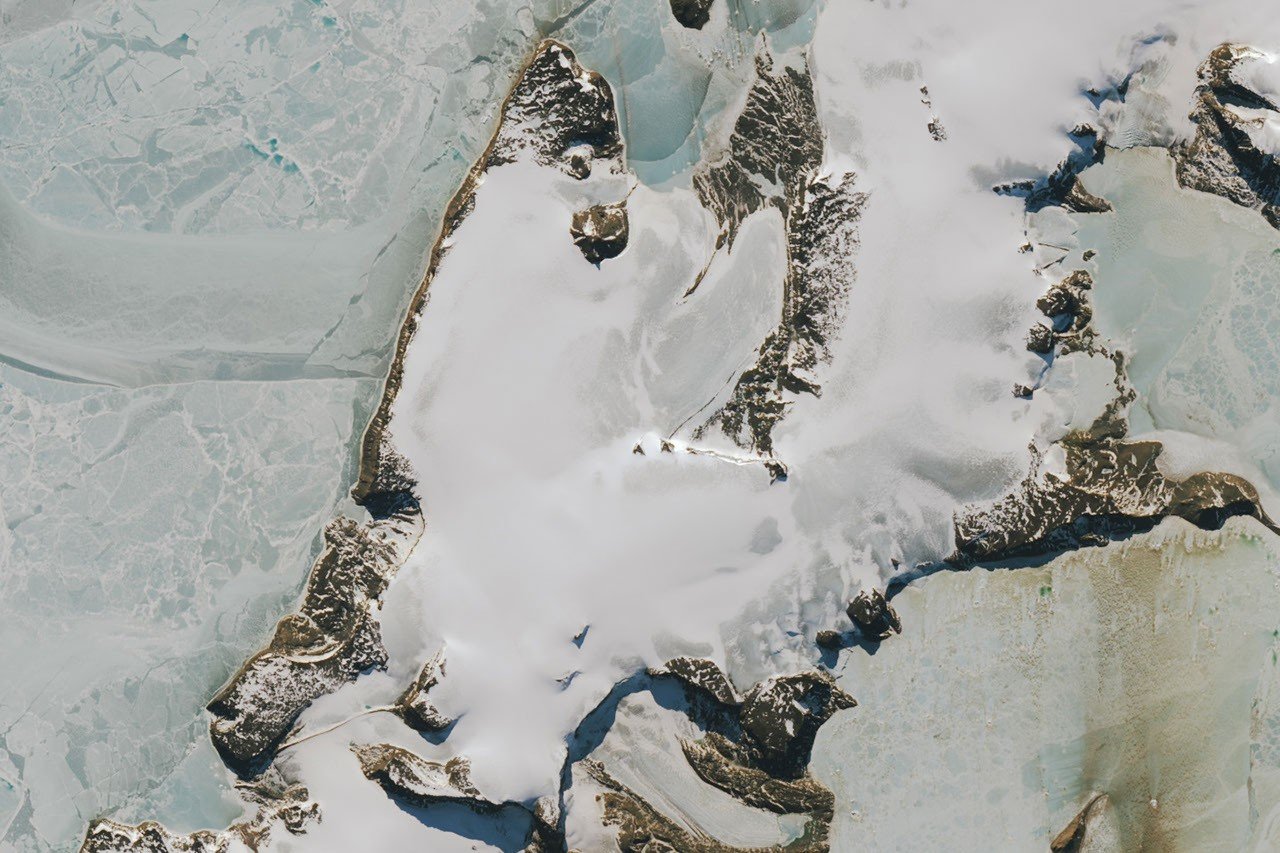
Vega Island in Antarctica features a unique rock and ice formation that resembles a human skull. Scientists monitor the island's melting glaciers.
Vega Island sits in the lonely waters of the Weddell Sea. This small landmass lies east of the Antarctic Peninsula. Its unique shape resembles a human skull when viewed from above.
Also, ice and rock formations create this ghostly image. A nunatak serves as an eye socket. A lateral moraine forms a mouth, while a nearby glacier acts as a jawbone.
Next, NASA satellite images show the island during different seasons. The photos reveal how snow cover changes over time. March images show more snow, while October images show more bare ice.
Furthermore, glaciologist Mauri Pelto notes that warmer winter temperatures caused this bare ice. Little snow fell during the 2026 winter season. Wind and sublimation also stripped away the protective snow layers.
As a result, the exposed dark ice absorbs more solar heat. This process speeds up melting as spring arrives. The island's skull shape will likely change as the ice continues to weather away.
Meanwhile, scientists have studied these glaciers for many years. Researchers used early satellite images to map 29 glaciers on the island. They have tracked the decline of the Devil’s Bay Glacier since 1998.
Still, the island has a history linked to a real survival story. A Swedish expedition became stranded here in the early 1900s. They lost their ship and faced a harsh winter.
Finally, the teams reunited at a spot near the island's forehead in 1903. An Argentinean ship eventually rescued the survivors. Today, the island remains a site of both natural beauty and historical mystery.