

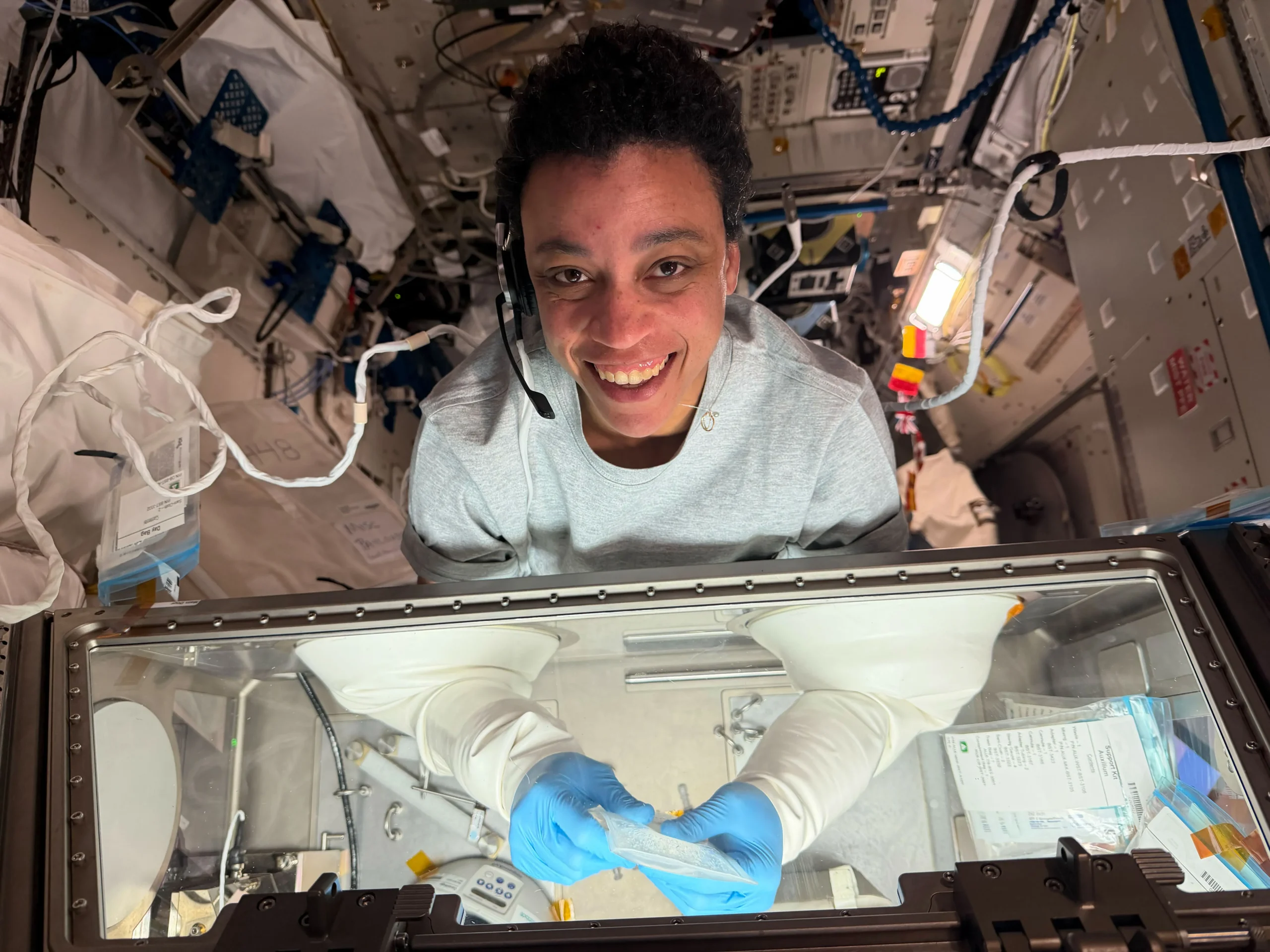
NASA astronaut Jessica Watkins conducted 3D bioprinting research on the International Space Station to study cartilage tissue growth in microgravity.
NASA astronaut Jessica Watkins serves as a flight engineer for Expedition 75. She works on important science projects aboard the International Space Station.
On October 9, 2026, Watkins performed specific tasks inside the Kibo laboratory module. She utilized the station's Life Science Glovebox for her research.
Next, she carefully mixed living cell samples with a special substance called bioink. This mixture helps researchers create biological materials in space.
After that, she filled a dedicated cartridge with the cell-ink mixture. This procedure is part of the InSPA-Auxilium Bioprinter-Cell Printing investigation.
Meanwhile, the study examines 3D bioprinting of cartilage tissue. The team wants to see how microgravity affects the quality of these tissues.
However, scientists believe space-grown tissue may be better than samples made on Earth. Gravity often interferes with the complex printing process here at home.
As a result, this mission helps experts refine how they manufacture cartilage. These findings could provide significant medical benefits for many people.
Also, the research offers hope for patients who need new cartilage tissue on Earth. It might also help astronauts stay healthy during long space flights.
Finally, this experiment shows the value of the space station for medical progress. NASA continues to push the boundaries of what humans can achieve.