
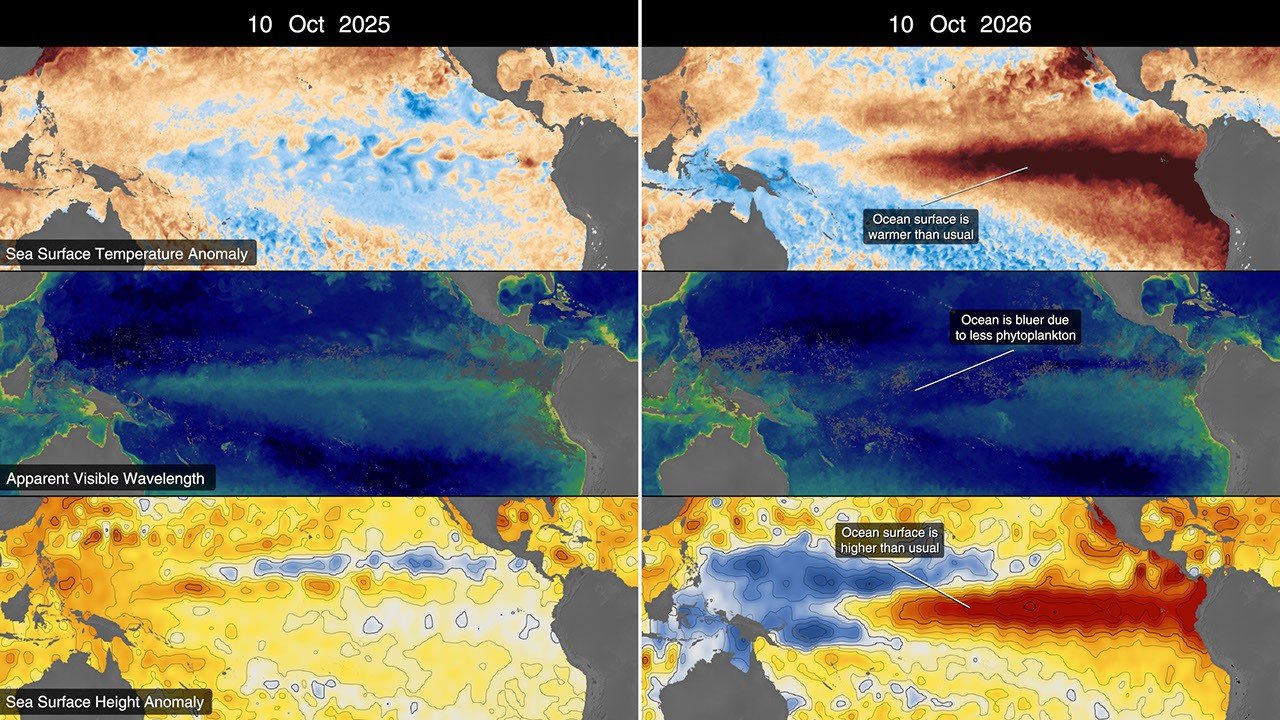
NASA satellites are monitoring a powerful 2026 El Niño event. This climate pattern is shifting ocean temperatures and affecting marine ecosystems.
A powerful climate event is currently unfolding in the Pacific Ocean. NASA experts are closely monitoring this 2026 El Niño. It occurs every few years when Pacific waters become warmer than average.
Also, this pattern changes trade winds and shifts global rain patterns. It also raises sea levels across the Pacific region. Scientists expect this to be the strongest event since 1950.
Next, researchers spotted Kelvin waves in early 2026. These pulses of warm water travel across the ocean. They carry heat from the west toward the Americas. This process weakens the normal trade winds.
As a result, sea levels rise near the coast of South America. Some areas see water levels climb over one foot. Satellites allow scientists to watch these changes with great precision.
Meanwhile, ocean temperatures in the eastern Pacific have risen significantly. They are about 3 degrees Fahrenheit warmer than the long-term average. This heat moves into the atmosphere and creates new weather patterns.
Furthermore, the ocean color is changing due to this event. NASA satellites track these subtle shifts in water hues. The water appears bluer than it did in previous years.
This shift happens because of microscopic plants called phytoplankton. These tiny organisms need cool, nutrient-rich water to survive. El Niño stops deep water from rising to the surface.
Consequently, the phytoplankton population is currently shrinking. This decline impacts the entire marine food web. Many sea creatures must find new places to feed.
Finally, NASA uses the PACE satellite to study these changes. This tool measures light across many different wavelengths. It provides a real-time look at how ocean life reacts to heat.
The agency will keep tracking this event with its satellite fleet. Scientists want to understand exactly how El Niño affects the entire globe. Data helps experts prepare for the impacts on farmers and coastal towns.