
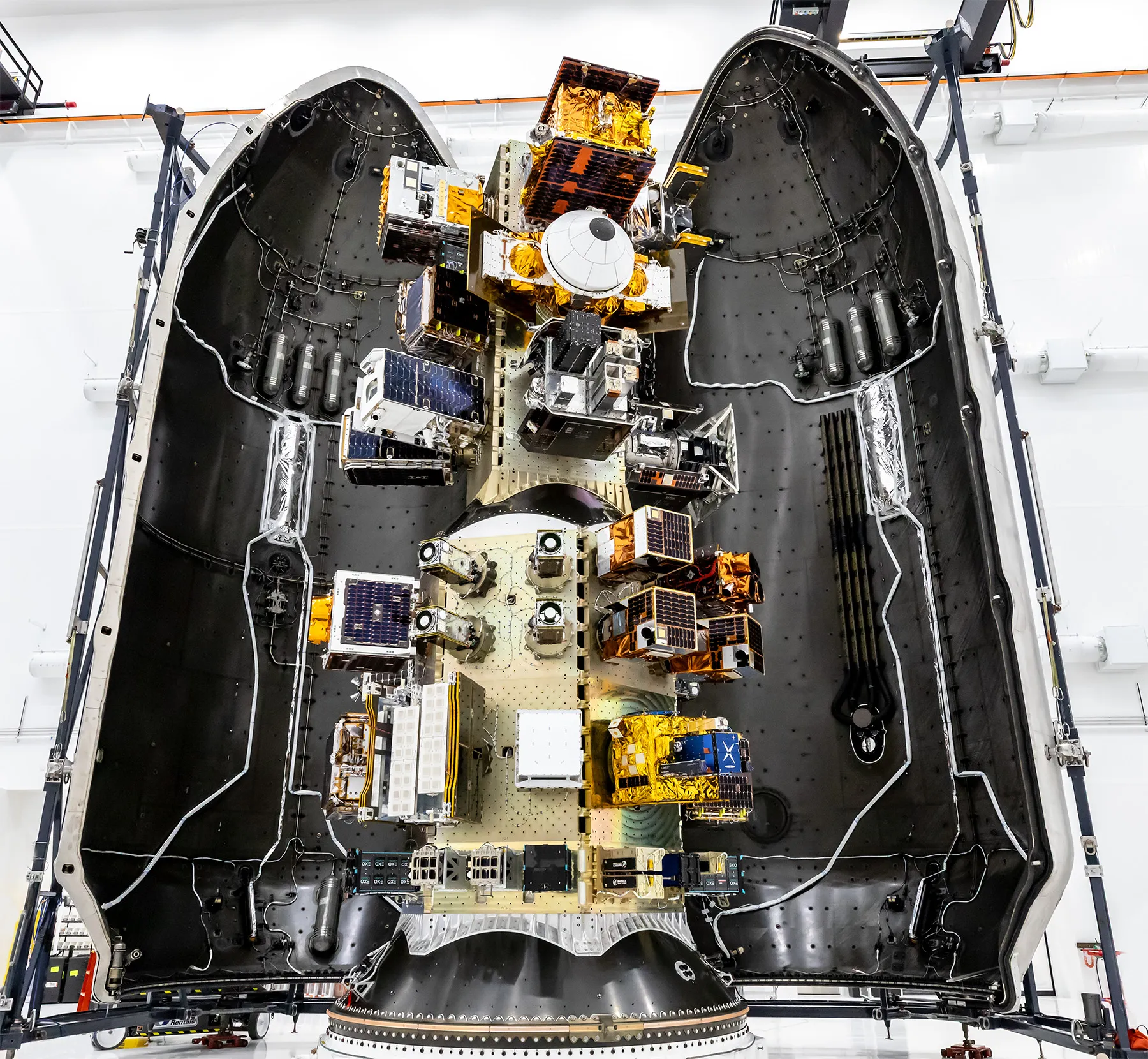
SpaceX is readying three NASA spacecraft for an upcoming October launch. These missions will test new propulsion and space observation technologies.
Technicians recently placed three NASA spacecraft inside a SpaceX Falcon 9 rocket. The teams finished this work in preparation for the Transporter-18 launch. This mission remains scheduled for October 1, 2026.
These small satellites carry unique tools for space research. They will ride into orbit along with many other commercial payloads. Scientists designed them to test new systems in the harsh environment of space.
Why this matters
This mission highlights the growing role of small satellites in space exploration. These devices cost much less than large probes. They allow researchers to conduct experiments more often.
Also, the launch tests new ways to move objects in space. Precise movement helps satellites last longer. It also reduces the amount of debris left behind after missions end.
Furthermore, these tiny craft will study mysterious cosmic forces. They hope to learn how radiation moves through galaxies. Understanding this helps scientists explain the history of our universe.
New technology in orbit
The ASCENT mission features a new dual-mode propulsion system. Engineers built this to make cube satellites more efficient. This technology could change how we move small craft in the future.
Also, the SPRITE mission will examine galactic dust. It tracks how radiation shifts through space. This data helps experts map the structure of distant galaxies.
Next, the SSPICY mission focuses on satellite maintenance. It carries tools to inspect inactive machines in orbit. This capability might broken satellites in the future.
Launch preparations continue
SpaceX manages the encapsulation process with great care. Workers secure each satellite inside the rocket fairing. This protective shell shields the cargo from the intense heat of liftoff.
After that, the company will conduct final checks on the rocket. Every part must work perfectly before the countdown begins. They verify communication links between the ground and the payload.
Meanwhile, NASA teams monitor the status of their three spacecraft. They ensure all instruments remain stable before the flight. These final tests provide the best chance for mission success.
How we got here
- 2024: NASA selects the three small spacecraft missions for development.
- 2025: Engineers finalize the design for the propulsion and radiation tools.
- Early 2026: Teams complete construction and begin rigorous vibration testing.
- September 2026: SpaceX begins the encapsulation of payloads for the upcoming flight.
What happens next
Now, the SpaceX team moves the rocket to the launch pad. They will perform a final test of the engine systems. This ensures the vehicle can handle the stress of flight.
Finally, the rocket will lift off on October 1, 2026. Once in orbit, the satellites will separate from the rocket. They will then activate their systems to begin their research.
After that, NASA will track the performance of the new hardware. They expect to receive the first data packets within a few weeks. The agency will then these findings with the public.