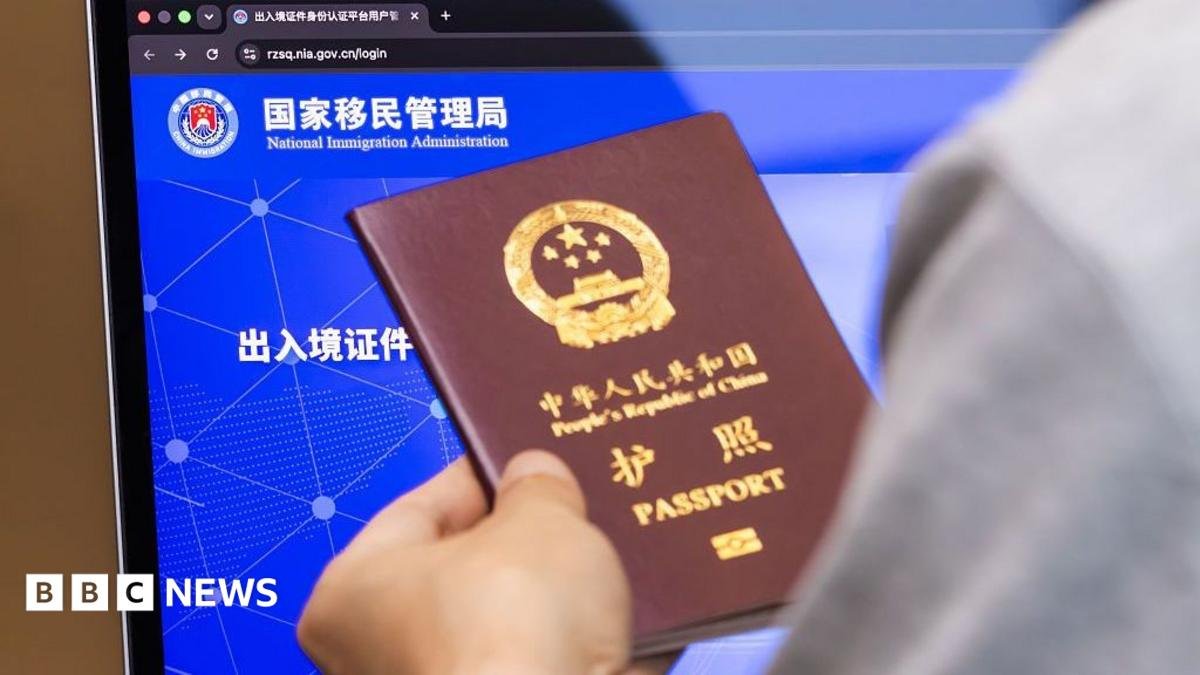
New regulations in China formalize and expand the state's authority to impose exit bans on citizens, citing national security and technological protection as primary justifications.
The Chinese government has implemented a new set of regulations governing the movement of its citizens, marking a significant escalation in the state's oversight of international travel. These measures allow authorities to bar individuals from leaving the country for up to three years if they are accused of harming national security or interests while abroad. Furthermore, the updated framework introduces penalties for those who violate technological import and export regulations, specifically targeting actions that are perceived to threaten national industrial or technological security.
While government representatives maintain that these policies are designed to protect national sovereignty and prevent citizens from falling victim to overseas scams or illegal gambling, the breadth of the language has raised alarms among legal scholars and human rights advocates. Critics argue that the vague terminology used to define "national interests" provides officials with broad discretionary power to restrict travel based on political considerations rather than clearly defined criminal acts.
For many Chinese citizens, the reality of travel restrictions is often characterized ently discover they are subject to an exit ban only at the moment they attempt to apply for travel documents or pass through border control. This lack of clear, written communication makes it nearly impossible for those affected to seek legal recourse or administrative reconsideration, leaving them in a state of indefinite uncertainty regarding their ability to travel internationally.
Reports from individuals suggest that these informal bans have been in place for years, often targeting those who have engaged in political activism or attended pro-democracy protests. Without official notification, citizens are left to speculate on the reasons for their restricted status, fearing that any attempt to challenge the decision could lead to further state scrutiny or even imprisonment. This atmosphere of fear and ambiguity serves to discourage citizens from participating in any activities that could be interpreted as contrary to state interests while outside the country.
Data analysis indicates a dramatic increase in the use of exit bans over the past decade. Records from the Chinese supreme court database show that the number of legal references to exit bans has surged significantly since 2016. Furthermore, the proportion of civil verdicts involving such restrictions has grown exponentially, rising more than thirty-fold between 2019 and 2025. These figures, while substantial, are likely conservative estimates, as many judicial decisions involving travel restrictions remain withheld from public view.
Beyond formal legal cases, various sectors of the workforce, including civil servants and employees of state-owned enterprises, have long faced internal requirements that limit their mobility. Many are required to surrender their passports to their employers and must obtain explicit permission before any international trip. In some instances, specific countries are designated as "sensitive" and are effectively placed off-limits, highlighting a systemic approach to controlling the global exposure of the Chinese workforce.
Experts view these developments as a return to a more insular period of Chinese history, drawing parallels to the era of Mao Zedong when international travel was tightly restricted and largely inaccessible to the general public. The transition toward greater openness in the 1990s and 2000s facilitated a period of global integration, but the recent shift suggests a pivot toward prioritized ideological security. Legal scholars note that this contraction of freedom reflects a broader trend of centralized control under the current leadership.