

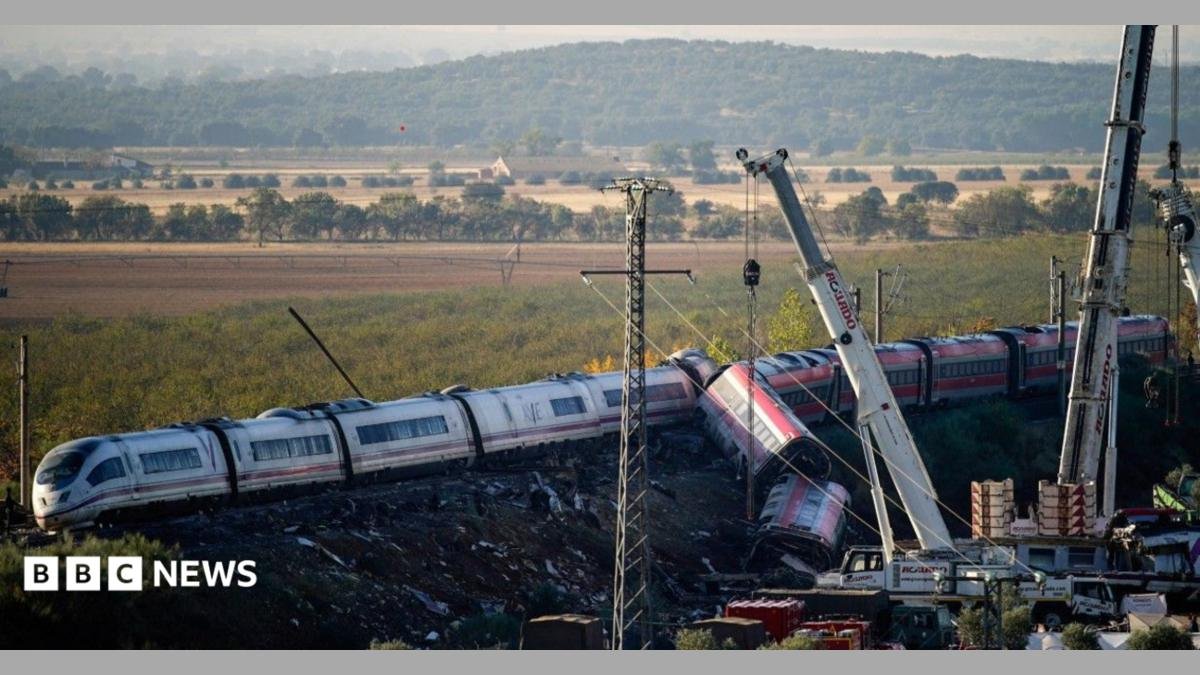
A deadly train crash in Spain creates new political trouble for Prime Minister Pedro Sánchez just before a national election.
A major train crash occurred this week on a high-speed line south of Madrid. Authorities recovered 69 bodies from the wreckage. This incident follows a similar crash near Cordoba just nine months ago.
Also, this tragedy destroys public trust in the national rail network. It also hurts the government led by Pedro Sánchez. He faces this crisis only weeks before a planned general election.
Next, the government moved quickly to manage the public reaction. Transport Minister Oscar Puente blamed the accident on human error. He denied that the rail system lacks proper funding.
However, the opposition People's Party demands the minister's resignation. They call his exit an ethical necessity. Puente refuses to step down from his role.
Then, the minister highlighted specific mistakes made by controllers. Records show a controller told a train to move forward. Yet, another train stood stalled on the same track.
After that, the controller failed to stop the advancing train. Puente claims he acts to improve the system. He wants to restore safety for all train passengers.
Still, many citizens remain skeptical of these government claims. Experts note that people often blame the government for national disasters. This crash adds to a series of recent political crises.
Meanwhile, the prime minister already faced corruption allegations. He also dealt with migrant issues and protests over housing costs. These events forced him to call an early election.
Now, polls show the center-right party leading the race. Analysts believe the government lost control of the campaign agenda. A sense of national decay now influences many voters.
Finally, public anger continues to grow across the country. Some citizens plan protests against the current administration. Many travelers now fear using the high-speed rail network entirely.