

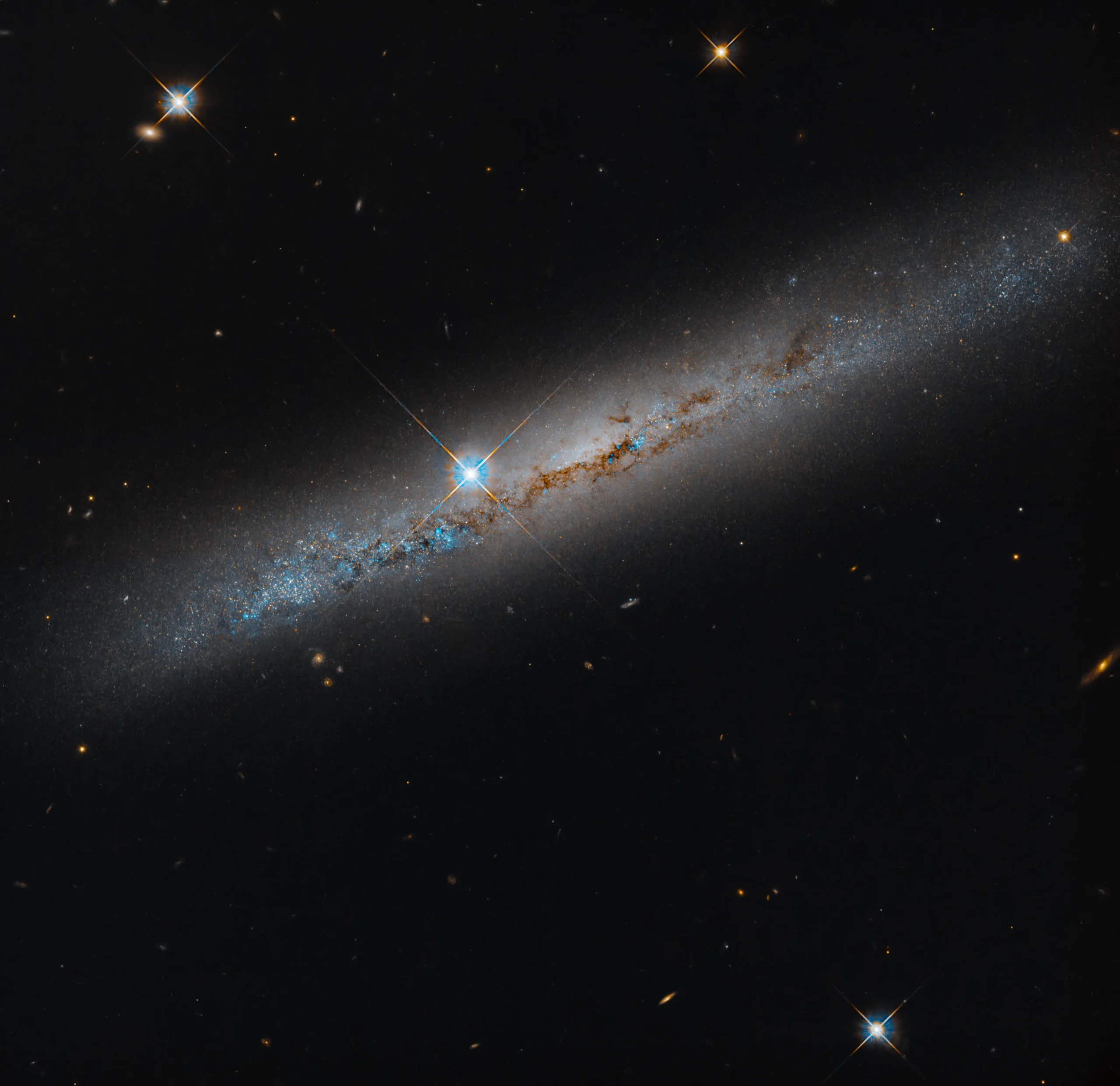
The Hubble Space Telescope captured a detailed image of the spiral galaxy NGC 1827. Researchers use this data to test complex cosmological models.
The NASA Hubble Space Telescope recently shared a new image. It shows the spiral galaxy known as NGC 1827. This galaxy sits about 37 million light-years away from us.
It appears edge-on in the photograph. You can find this galaxy in the constellation Columba. Astronomers often call this area the Dove.
Also, the space team captured this view for a special survey. They studied 260 smaller satellite galaxies. These galaxies orbit 22 large host galaxies.
Next, the researchers focused on hosts similar to our Milky Way. They looked at galaxies within 32 million light-years of Earth. This range helps scientists map the nearby universe.
However, the team specifically targeted low-mass galaxies for this study. These small objects help experts test current scientific theories. They look for clues about how the universe works.
As a result, astronomers can check if their math matches reality. Many existing models struggle to explain small-scale galactic behavior. This data helps fix those gaps in knowledge.
Meanwhile, the project uses the power of the Hubble telescope. Its clear lens allows for very detailed observations. This helps researchers see distant structures with great precision.
Finally, experts from several institutions worked on this image. The California Institute of Technology and NASA contributed to the project. They processed the data to create this final view.