

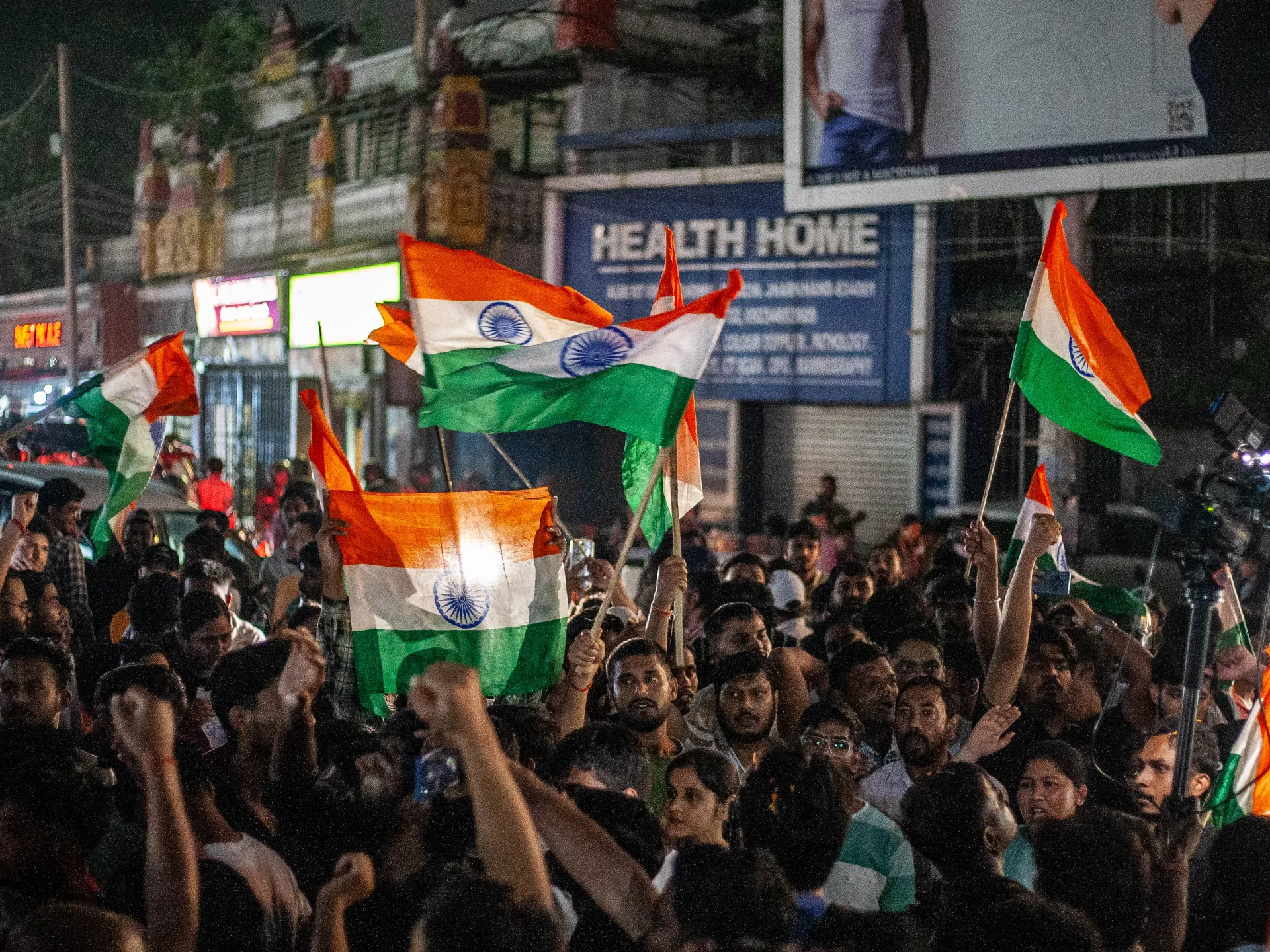
Students in Jharkhand are escalating protests against alleged government exam irregularities, demanding further cancellations and a federal investigation.
The capital city of Jharkhand, Ranchi, has become the focal point of intense student-led demonstrations as protesters marched toward the state Legislative Assembly building. The demonstration highlights deep-seated frustration regarding the integrity of government recruitment examinations. These recent protests represent the culmination of weeks of civil unrest that began in late July, triggered aterials.
In response to the growing crowds, local authorities deployed significant security measures, including the use of riot police, water cannons, and multi-layered barbed-wire barricades. Despite the heavy security presence and the use of surveillance drones to monitor the situation, protesters continued to press their demands. The scene turned confrontational near the Jagannath Mandir, where security forces utilized water cannons to deter activists who attempted to breach established security perimeters.
Central to the ongoing crisis is the physical and political toll the movement has taken on student leaders. A group of at least six protesters has engaged in an indefinite hunger strike to underscore their commitment to reform. Among them is 33-year-old Devendra Nath Mahto, who notably participated in the march while on a stretcher, having maintained his fast for nine consecutive days. His resolve reflects the broader sentiment among participants who feel that traditional channels of communication with the state government have been exhausted.
The atmosphere of defiance is fueled on. Students argue that the current examination framework is fundamentally compromised and requires a total overhaul to ensure merit-based selection. While the state government attempted to address some grievances, the student movement remains largely unsatisfied, insisting that their demands for systemic change go far beyond the minor concessions already offered.
Faced with mounting pressure, the Jharkhand state government announced on Sunday that it would cancel the 14th Jharkhand Public Service Commission (JPSC) preliminary examination, alongside two separate backlog recruitment tests. Furthermore, three board members associated with the JPSC tendered their resignations amid growing scrutiny of their oversight roles. While these actions signify a victory for the protesters, student organizers have clarified that the movement is far from over.
The core of the remaining conflict centers on the Combined Graduate Level examination, which protesters are demanding be scrapped entirely. Moreover, there is an insistent call for an investigation into the allegations of systemic exam paper leaks to be handed over to the Central Bureau of Investigation (CBI). Activists believe that an independent, high-level federal investigation is the only way to ensure transparency and hold those responsible for the irregularities accountable.
The unrest in Jharkhand is not an isolated incident but rather mirrors a growing trend of youth-led activism across India. The protests echo the recent “cockroach” movement in New Delhi, which successfully pressured the national government regarding irregularities in medical school entrance examinations. That movement eventually led to the resignation of Education Minister Dharmendra Pradhan, proving that sustained, organized public pressure can influence high-level political outcomes.
As the standoff in Ranchi continues, the situation serves as a stark reminder of the mounting pressure on state and federal authorities to secure the integrity of public recruitment systems. With the student movement showing no signs of backing down until their specific demands are met, the incident highlights a critical juncture for governance and administrative accountability in the region. The outcome of these protests will likely serve as a precedent for how future examination controversies are handled across the country.