

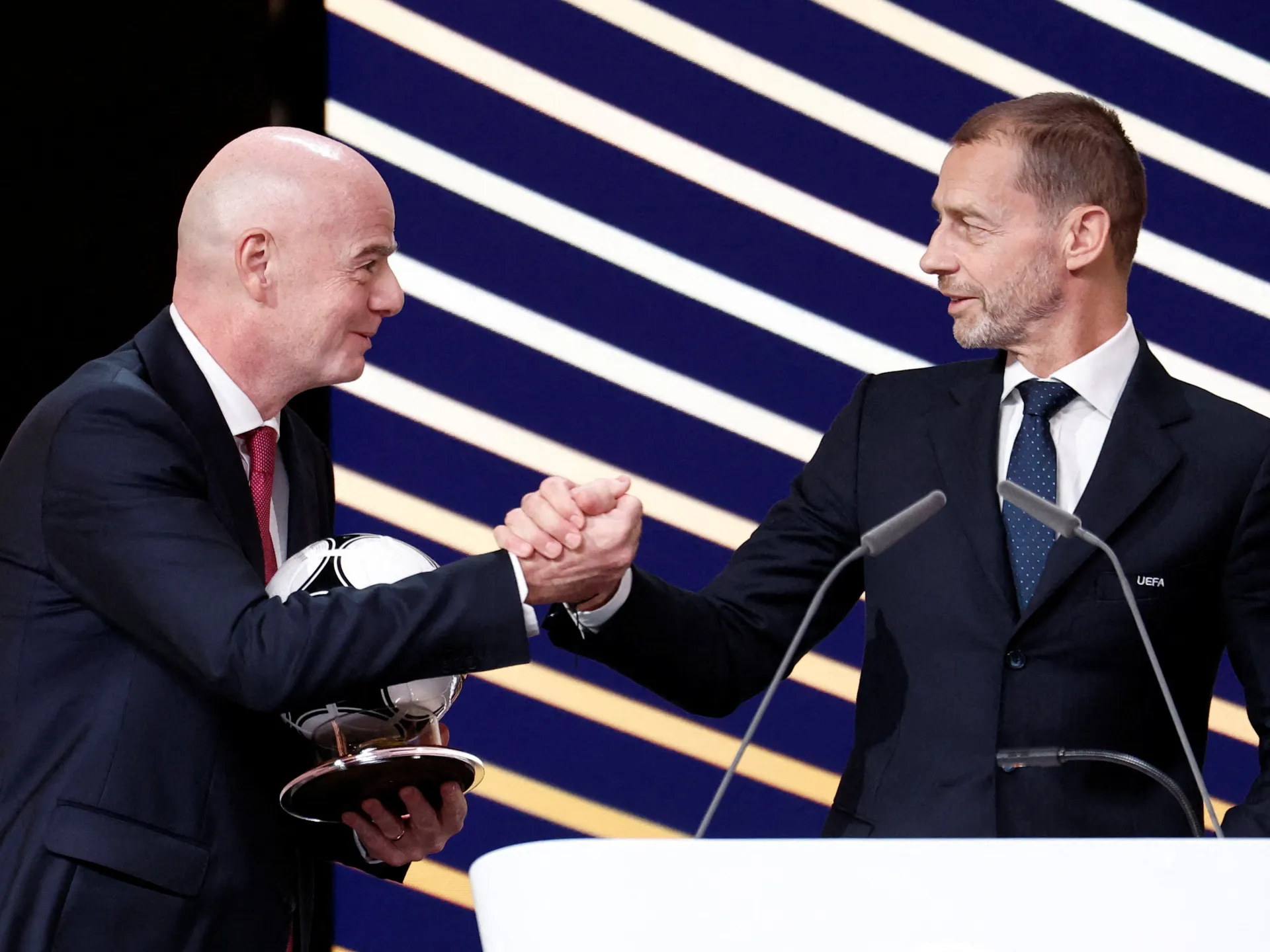
UEFA president Aleksander Ceferin has confirmed he will not run for FIFA president, yet he warns that Gianni Infantino must resign to avoid a leadership challenge.
The landscape of international football governance is currently experiencing a period of significant volatility. Aleksander Ceferin, the head of UEFA, has publicly addressed the growing unrest surrounding FIFA president Gianni Infantino. Despite the intensifying calls for a change in leadership, Ceferin has explicitly stated that he has no intention of seeking the presidency of the global football body himself. His comments arrive at a critical juncture for FIFA, as the organization grapples with the fallout from controversial initiatives that have strained its relationships with major continental federations.
Ceferin cited personal and professional reasons for his decision to remain at the helm of UEFA. He expressed a deep commitment to his current role within European football and noted a desire to find a balance between his professional responsibilities and his personal life. Furthermore, he emphasized that his criticism of the current FIFA administration carries more weight precisely because he is not angling for the top job. n aims to hold the existing leadership accountable without being perceived as a self-interested rival.
The rift between the leadership of UEFA and FIFA stems largely from Infantino’s ill-fated proposal to invite private investment into FIFA-operated tournaments, including the prestigious World Cup. This move, which has since been abandoned, drew sharp rebukes from various corners of the football world. The backlash was not limited to administrative offices; it extended to national federations and player associations, many of whom felt the proposal threatened the integrity and sovereignty of the sport’s most important competitions.
The intensity of the opposition led UEFA to contemplate drastic measures, including the possibility of boycotting FIFA-sanctioned events. This threat created a significant fracture in the traditional power structure of football. Ceferin’s recent remarks suggest that while the specific plan for private investment has been shelved, the damage to Infantino’s reputation and political standing remains severe. The incident has arguably turned a once-secure presidency into a precarious one, as the trust of key stakeholders has been deeply compromised.
Looking ahead to the FIFA Congress scheduled for March in Morocco, the path for Infantino appears increasingly narrow. Ceferin has outlined two potential outcomes for the embattled president. The first is a voluntary resignation, born out of a realization that he no longer commands the necessary political support from the broader football community, including fans, players, and coaches. The second outcome involves Infantino forcing a contest at the upcoming elections, a scenario that Ceferin suggests would inevitably result in a formidable challenger emerging from within the ranks of football governance.
While Ceferin has ruled himself out, speculation regarding potential successors continues to grow. Figures such as CONCACAF president Victor Montagliani and AFC leader Sheikh Salman bin Ebrahim Al Khalifa are frequently mentioned as potential candidates who could mount a serious campaign. The shifting alliances within these confederations suggest that Infantino’s traditional base of support is under intense scrutiny. As the March deadline approaches, the pressure on the incumbent to secure his position or face an organized opposition will likely intensify.
Despite the mounting criticism, Gianni Infantino has shown no public inclination to step down. During recent travels, including a trip to the Dominican Republic, he has actively sought to shore up support among smaller national associations. ons, he is attempting to bypass the resistance of the major continental confederations. This strategy mirrors his previous efforts to appeal directly to individual members rather than relying solely on the backing of regional bodies.