

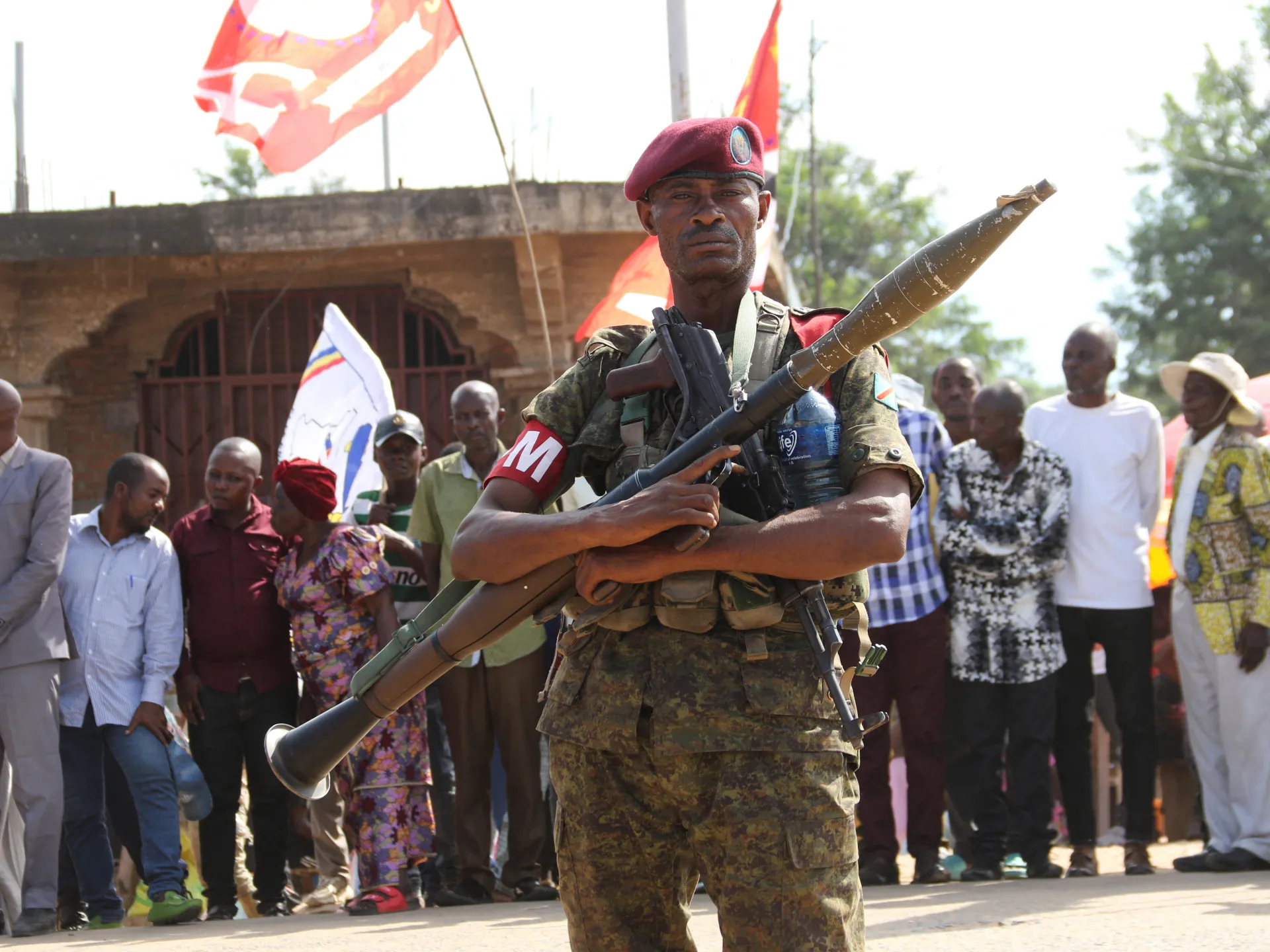
The Congolese government and M23 rebels have formalized a roadmap for peace talks following international mediation efforts in Switzerland.
The Democratic Republic of the Congo (DRC) government and the M23-led rebel alliance have officially committed to a structured roadmap intended to guide future peace negotiations. This development follows a series of intensive discussions held in Switzerland, which concluded on August 21. The agreement outlines specific, sequenced steps and established timelines, building upon a foundational framework that was initially signed in Doha, Qatar, back in November.
These high-level talks, which spanned five days, included international observers and mediators from the United States, Qatar, Togo, Switzerland, and the African Union Commission. mates and create a predictable path toward ending the long-standing hostilities that have plagued the eastern provinces of the country for years.
A critical component of the newly announced roadmap is the creation of a standardized methodology for reporting and addressing ceasefire violations. Both the Congolese government and the rebel coalition have recognized that previous attempts at peace were often undermined n the ground. To rectify this, the parties have committed to establishing a dedicated mechanism to resolve implementation issues related to the Doha agreement.
As part of this enforcement strategy, a ceasefire verification mission is scheduled to arrive in the Minembwe region of South Kivu province. This mission is expected to serve as an on-the-ground observer to ensure that both sides adhere to the terms of the agreement. The recent transfer of 15 prisoners from the DRC government to the Congo River Alliance (AFC) and M23, which occurred earlier in August, reflects a growing, albeit tentative, effort to build confidence between the opposing factions.
Despite the diplomatic progress made in Switzerland, the reality on the ground in eastern DR Congo remains precarious. Violent clashes continue to threaten the stability of the region, and both sides have reported incidents that challenge the efficacy of current peace efforts. Recently, representatives for the AFC and M23 alleged that government-allied forces conducted drone strikes against civilian areas in Minembwe, leading to reports of casualties and infrastructure damage. While these claims remain unverified nt security environment.
The humanitarian situation is further exacerbated sands of lives since May. The ongoing conflict, which intensified significantly in 2021 when M23 resumed its offensive, has resulted in the displacement of approximately 5.3 million people. With major urban centers like Goma and Bukavu having fallen to rebel forces in early 2025, the regional instability continues to pose a severe threat to the civilian population.
The conflict in eastern DR Congo is deeply rooted in the historical fallout of the 1994 genocide in Rwanda. Over the decades, the region has become a complex theater for proxy battles involving various militias and neighboring states. The DRC government, along with several Western nations and the United Nations, has consistently accused Rwanda of providing direct support to the M23 rebels. Conversely, the Rwandan government has maintained that Kinshasa supports Hutu militias, such as the Democratic Forces for the Liberation of Rwanda (FDLR), a charge that the DRC has repeatedly denied.