

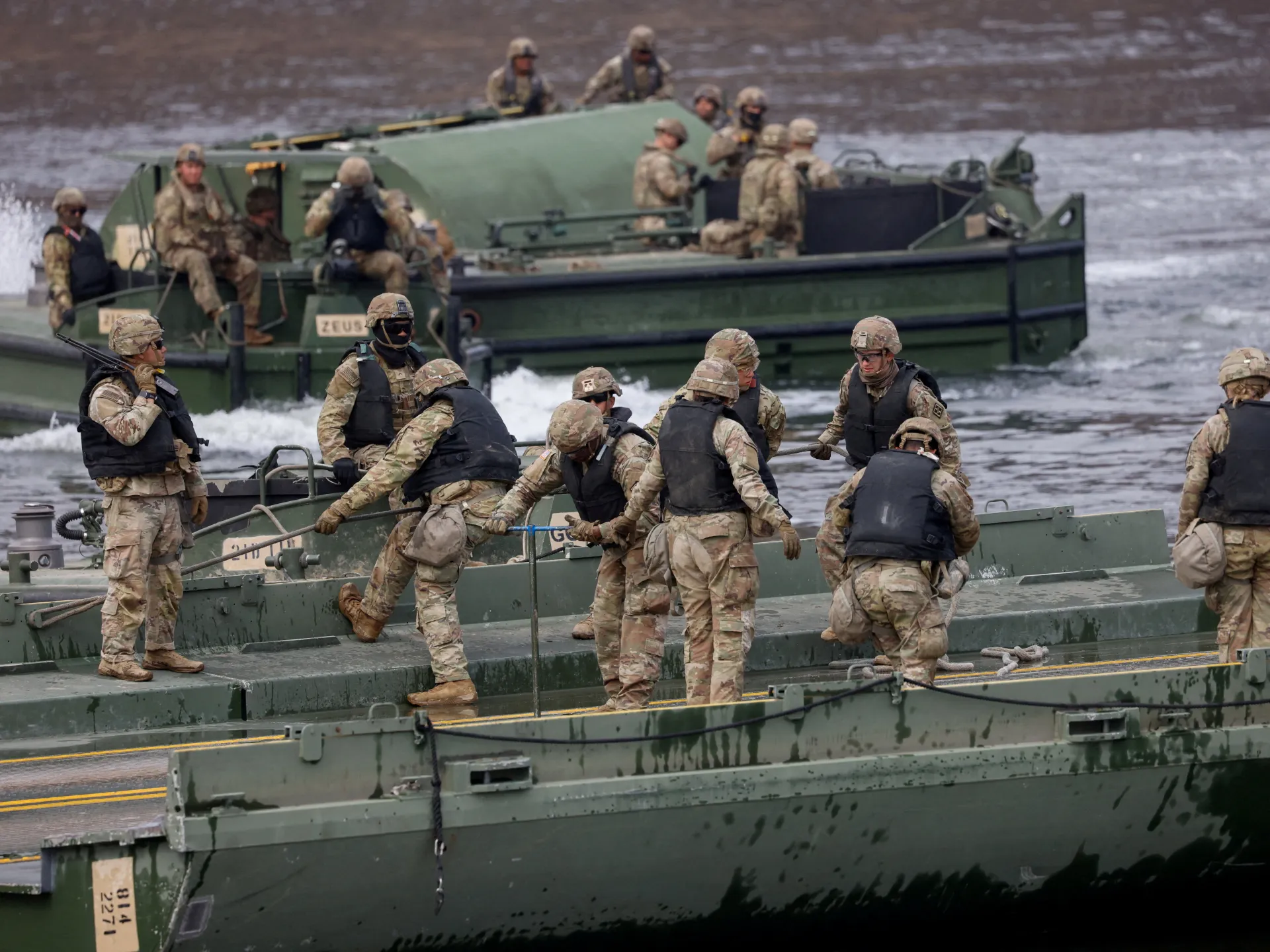
The United States and South Korea have significantly curtailed their annual Ulchi Freedom Shield military exercises following a direct order from President Trump.
The annual joint military exercises between the United States and South Korea, known as Ulchi Freedom Shield, have undergone a significant reduction in scope and duration. Originally scheduled to span 11 days, the drills have been curtailed to a five-day timeline, concluding on August 21. This decision follows a direct order from US President Donald Trump to implement a substantial reduction in the scale of these war games.
Military officials from the South Korean Joint Chiefs of Staff confirmed that the adjustment was made at the suggestion of Washington. Beyond the shortened schedule, the allies have opted to scale back various field maneuver exercises. Reports from South Korean defense leadership suggest that the second phase of the drills, which was intended to simulate counterattack operations following initial defensive maneuvers, has been effectively canceled.
A representative from the US Department of Defense stated that the modifications include the cancellation of several live-training events, with many operations being transitioned to digital simulations. Despite these changes, the Pentagon maintains that the essential readiness and primary training objectives of the combined forces remain intact, asserting that the overall effectiveness of the alliance's defensive capabilities will not be compromised.
The abrupt nature of this policy shift has raised questions regarding communication between the two allies. South Korean Foreign Minister Cho Hyun recently testified before the national parliament, revealing that high-level officials in both Seoul and Washington were caught off guard dently at the highest level of the American executive branch.
Observers and government officials have noted that the timing of the reduction appears linked to broader geopolitical maneuvering. President Trump has explicitly cited his ongoing relationship with North Korean leader Kim Jong Un as a primary motivation for the change. Furthermore, there are indications that the administration is leveraging the military drills to pressure the South Korean government to increase its involvement in the ongoing conflict involving the United States and Israel against Iran.
The policy change has been met with predictable hostility from Pyongyang. North Korean authorities continue to characterize the joint exercises as provocative rehearsals for an invasion of their sovereign territory. In response to the latest developments, North Korean officials reiterated their commitment to maintaining their nuclear and defensive capabilities, citing the persistent military pressure exerted
The reduction of these exercises has broader implications for security in East Asia, where the United States maintains a significant presence of approximately 28,500 troops. This force is a remnant of the 1950-53 Korean War, which concluded with an armistice rather than a formal peace treaty. The stability of the peninsula remains heavily dependent on the credibility of the US-South Korea mutual defense pact.
Regional partners, including Japan and Australia, have expressed varying degrees of concern regarding the shifting landscape of security commitments. During a recent visit to Australia, Japanese Defense Minister Shinjiro Koizumi emphasized that trilateral cooperation between Japan, the United States, and South Korea is essential for maintaining peace in an increasingly volatile security environment. Australian officials echoed these sentiments, highlighting the ongoing threat posed
As the diplomatic situation evolves, reports suggest that the US administration is exploring the possibility of a new summit between President Trump and Kim Jong Un. While no official confirmation has been provided, potential discussions could coincide with the upcoming Asia-Pacific Economic Cooperation summit scheduled for later this year. Whether these diplomatic overtures will lead to a long-term resolution or further strain existing alliances remains a subject of intense international scrutiny.