

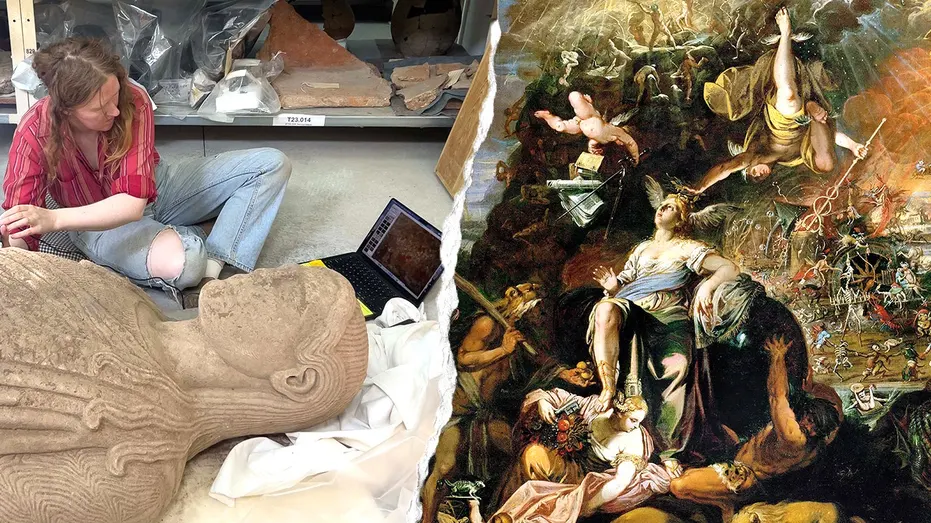
Archaeologists in Turkey have unearthed a 2,500-year-old marble statue in the ancient city of Sardis, a site famously mentioned in the Book of Revelation.
Archaeologists working in the historic district of Salihli, located within Turkey’s Manisa province, have revealed a remarkable discovery: a 2,500-year-old marble statue. Found amidst the ruins of Sardis, an ancient city famously referenced in the New Testament, the artifact offers a rare window into the artistic and cultural landscape of the fifth century B.C. The statue, which stands approximately 7.2 feet tall, depicts a young man and was unearthed in a state of preservation that has surprised researchers.
The discovery was made public ordinary addition to the nation's historical record. The statue’s survival is largely due to a stroke of historical irony; during the Roman era, the figure was repurposed as a paving stone for a colonnaded street. facial features and intricate carvings from centuries of erosion and environmental damage.
What sets this statue apart from other classical finds in the region are the specific details of the subject's attire. While the figure wears a traditional thick himation and a thin chiton, it also features a unique garment marked nt in similar statues recovered from other parts of Anatolia or Greece, serving as a clear indicator of localized Lydian craftsmanship.
The statue is depicted holding a piece of fruit, a detail that historians believe will provide valuable insights into the religious practices and symbolic traditions of the Lydian people. As the former capital of the Lydian Kingdom and a subsequent administrative hub for the Persian Empire, Sardis was a melting pot of cultural influences. This statue serves as physical evidence of how those diverse identities were manifested through art and public sculpture during the ancient era.
Sardis holds a unique place in history, not only as a powerful political capital but also as one of the seven churches of Asia Minor mentioned in the Book of Revelation. The city’s inclusion in this biblical text has long drawn scholarly attention to the archaeological potential of the site. The recent recovery of this monumental figure highlights the ongoing importance of Sardis in understanding the broader narrative of the ancient world.
The site has historically been a treasure trove for researchers, and this latest find aligns with a recent trend of significant discoveries in cities linked to the Book of Revelation. From mosaic floors in Smyrna to Roman-era plumbing and statuary fragments in Ephesus, these excavations continue to bridge the gap between ancient historical accounts and physical reality. Each new discovery helps to reconstruct the daily lives and social structures of the populations that inhabited these influential ancient centers.
Currently, the statue is covered in a dense layer of hardened mineral deposits accumulated over two and a half millennia. Conservators are now tasked with the delicate process of cleaning the marble without compromising the integrity of the stone or any potential traces of ancient pigment. Historically, marble statues in this region were often brightly painted, and specialists are hopeful that microscopic residue may remain on the surface or within the surrounding soil.
Once the restoration process is finalized, the statue will be relocated to the Manisa Museum, where it will be made available for public viewing. This addition is expected to draw significant interest from historians, tourists, and students of archaeology alike. continues to be understood and appreciated, offering a tangible connection to a civilization that once thrived at the crossroads of empires.