

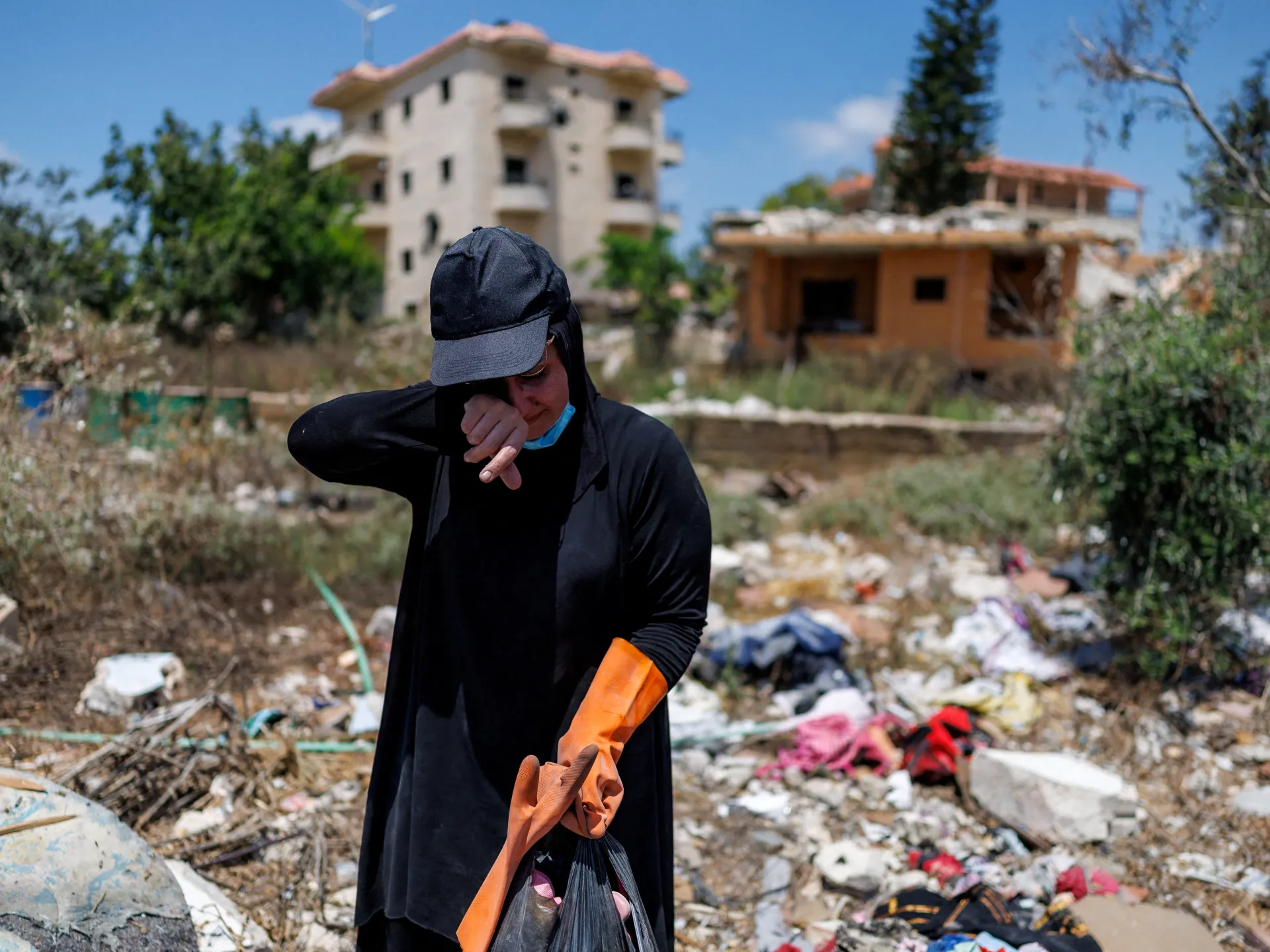
Prime Minister Nawaf Salam has accused Israel of violating international law through the systematic destruction of civilian infrastructure in southern Lebanon.
The government of Lebanon has issued a formal condemnation regarding the ongoing military activities conducted recent spate of incursions, building demolitions, and the systematic destruction of residential infrastructure as a profound breach of international humanitarian law. According to the administration, these actions go beyond standard tactical maneuvers and represent a deliberate effort to dismantle civilian life in the region.
These accusations follow a series of high-profile visits Israel Katz recently inspected operations in southern Lebanon, where he openly discussed the destruction of underground infrastructure and residential properties. The Lebanese Prime Minister has explicitly rejected the narrative that these villages were utilized as military staging grounds, asserting that such justifications lack logical consistency and serve merely as a pretext for the mass displacement of local populations.
Despite a nominal ceasefire agreement that was brokered earlier this year, the situation on the ground remains volatile. The framework, which was established through mediation in Washington, intended to facilitate a gradual withdrawal of Israeli forces in tandem with the deployment of the Lebanese army. However, the presence of Israeli troops in dozens of villages persists, and no definitive timeline has been established for a complete withdrawal from the occupied areas.
International observers have noted that the ceasefire, which was designed to transition security responsibilities to the Lebanese state, is currently facing significant obstacles. While the US State Department has reiterated its expectation that all parties adhere to the agreed-upon framework, there is a clear disconnect between diplomatic rhetoric and the reality of the ongoing ground operations. Washington has maintained that Israel holds no territorial ambitions in Lebanon, yet the continued occupation suggests a prolonged strategic stalemate.
The human toll of the conflict since its escalation in March has been catastrophic for the Lebanese population. Official data indicates that over 4,300 individuals have lost their lives as a direct result of the hostilities, with more than one million people forced to flee their homes. This displacement represents roughly twenty percent of the total population, creating a severe internal humanitarian crisis that shows few signs of abating as the summer months progress.
The cycle of violence continues to be punctuated n of Mansouri. These actions, often sparked in new evacuation orders and civilian casualties. As the conflict drags on, the ability of local residents to return to their communities remains hindered
Looking toward long-term stability, international stakeholders are exploring various economic and security packages to support the Lebanese state. Two US senators have proposed a substantial $1.2 billion security assistance package spanning five years, which aims to bolster the Lebanese military. However, this funding is contingent upon the state achieving a monopoly on force and the disarmament of non-state actors, which remains a deeply contentious issue.
The path forward is complicated north of the Litani River, has categorically refused to disarm. This political and military impasse continues to hold the nation's reconstruction efforts hostage. As Lebanon and Israel engage in intermittent, US-mediated talks in cities like Washington and Rome, the lack of a cohesive agreement on the ground continues to undermine the prospects for a lasting peace.