

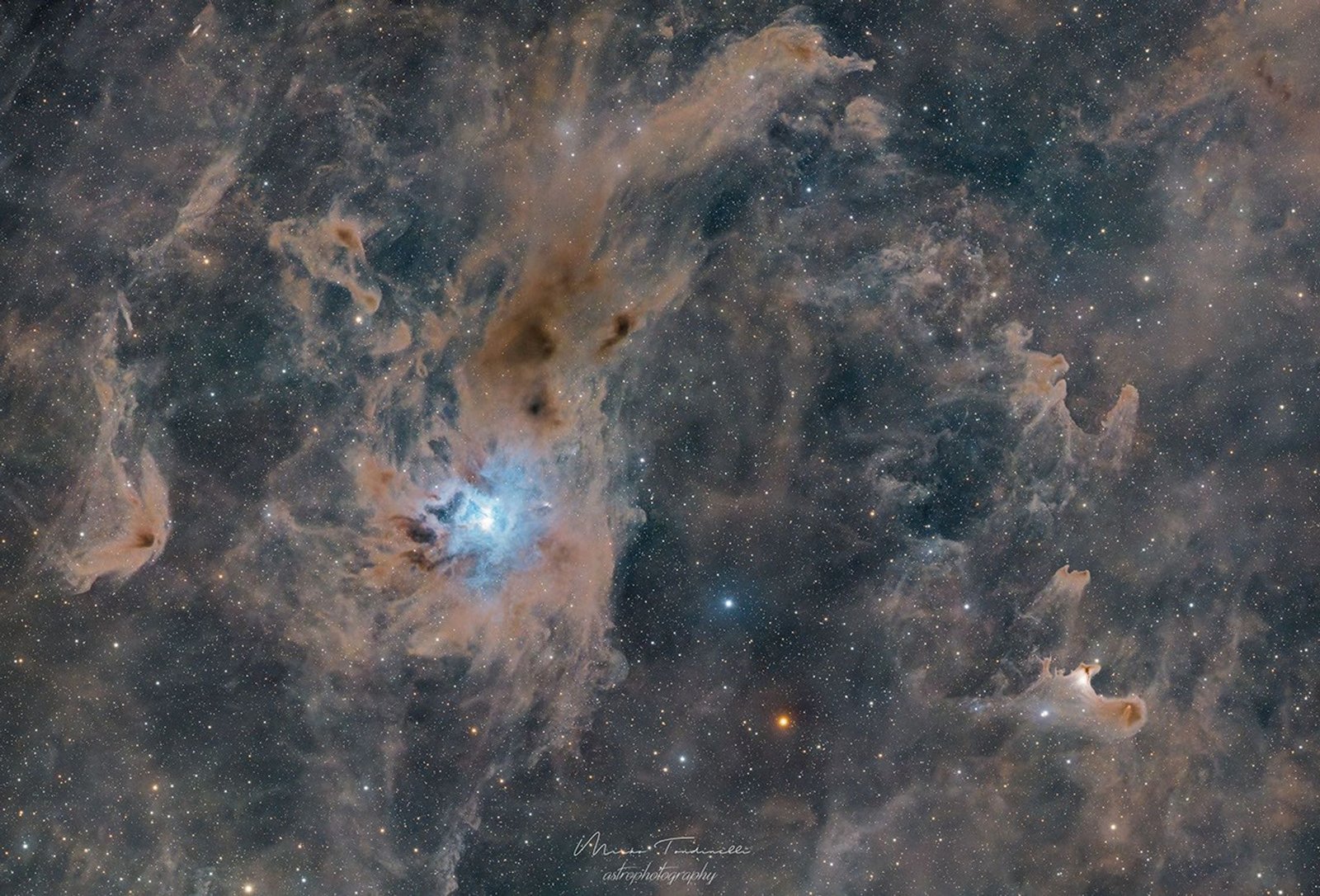
Explore the haunting shapes of the Ghost Nebula and the Iris Nebula within the distant Cepheus Flare molecular cloud complex.
Strange shapes float through the sky in the Cepheus constellation. These eerie forms appear to haunt a dusty region of space. Astronomers identify these shapes as large clouds of cosmic dust. They glow by reflecting light from nearby stars.
Also, these dust clouds sit far away from our own solar system. They exist above the Milky Way's main plane. They reside at the edge of the Cepheus Flare molecular cloud complex. This area is about 1,200 light-years away from Earth.
Next, experts call one specific cloud the Ghost Nebula. Its scientific name is vdB 141 or Sh2-136. This nebula is over two light-years wide. It appears brighter than many other ghostly clouds in this area.
Meanwhile, the Ghost Nebula sits in the lower right of this space view. It contains dense cores that show a reddish color. These regions mark the early stages of star formation. Gravity causes these cores to collapse inward.
However, the Iris Nebula also appears in this wide telescopic frame. It sits to the left of the image center. This nebula reflects blue light from hot, young stars known as NGC 7023. This creates a striking contrast against the dark background.
As a result, these dust fields create a beautiful view for observers. The entire frame covers a large area of the night sky. It spans a distance equal to almost six full moons. The scene highlights how active and creative the universe remains.
Finally, these cosmic structures show us where new stars begin. They drift through the darkness of space for millions of years. Scientists continue to study these clouds to learn about our universe. Each day, astronomers a new picture to help us understand these wonders.
Still, the beauty of the Cepheus Flare remains a popular subject for study. It reminds us of the vast scale of space. These dusty regions are truly remarkable sites for star birth. We look forward to more images of the cosmos soon.