

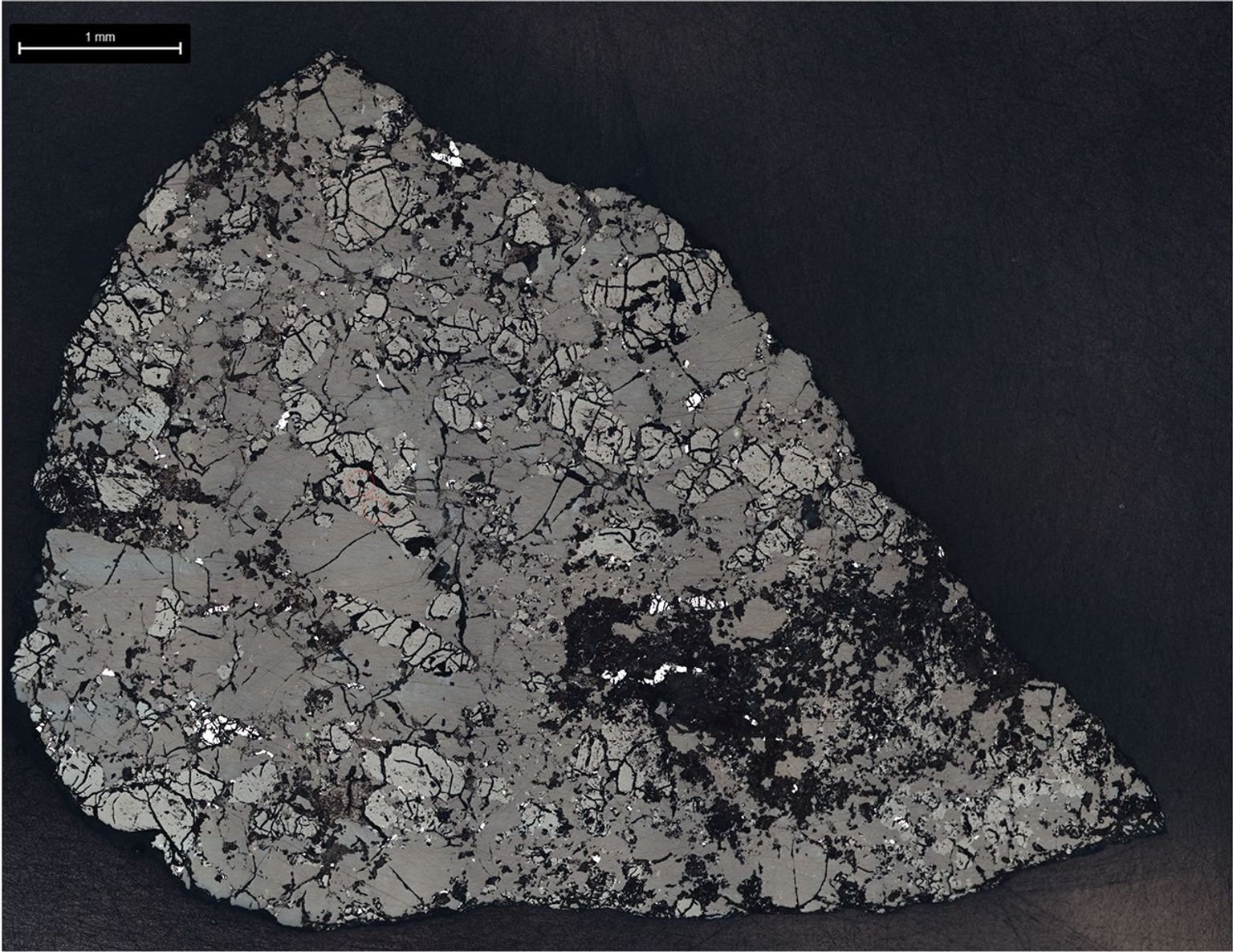
Researchers studied a slice of the ancient Teghaza 001 meteorite. This rock provides valuable clues about the geological history of Mars.
Researchers recently studied a slice of the Teghaza 001 meteorite. This rock is one of the oldest Martian samples found on Earth. Experts used this specific piece to calculate the age of the meteorite.
Also, scientists use reflected light images to study the rock. These images act as a map for researchers. They help experts find specific minerals for further testing with various scientific tools.
Next, the team identified several key minerals within the sample. They found iron-titanium oxides and pyroxene grains. These materials reveal important details about how the crust and mantle of Mars formed.
Furthermore, the scientists observed shocked plagioclase in the rock. High-pressure impacts create this material. One such massive impact likely launched the meteorite into space toward our planet.
Meanwhile, the researchers noted signs of alteration on the surface. These areas contain carbonates, sulfates, and clay minerals. These substances formed after the rock landed on Earth.
As a result, this meteorite provides a clear window into Martian history. It connects the distant red planet to our own world. Every grain of material tells a unique story.
Still, the study of such rocks remains a vital task for space agencies. It helps us understand the geological past of Mars. Each discovery adds to our growing knowledge of the solar system.
Finally, these findings help prepare future missions to the red planet. They allow experts to predict what they might find on the surface. Science continues to unlock the secrets of these ancient space travelers.