

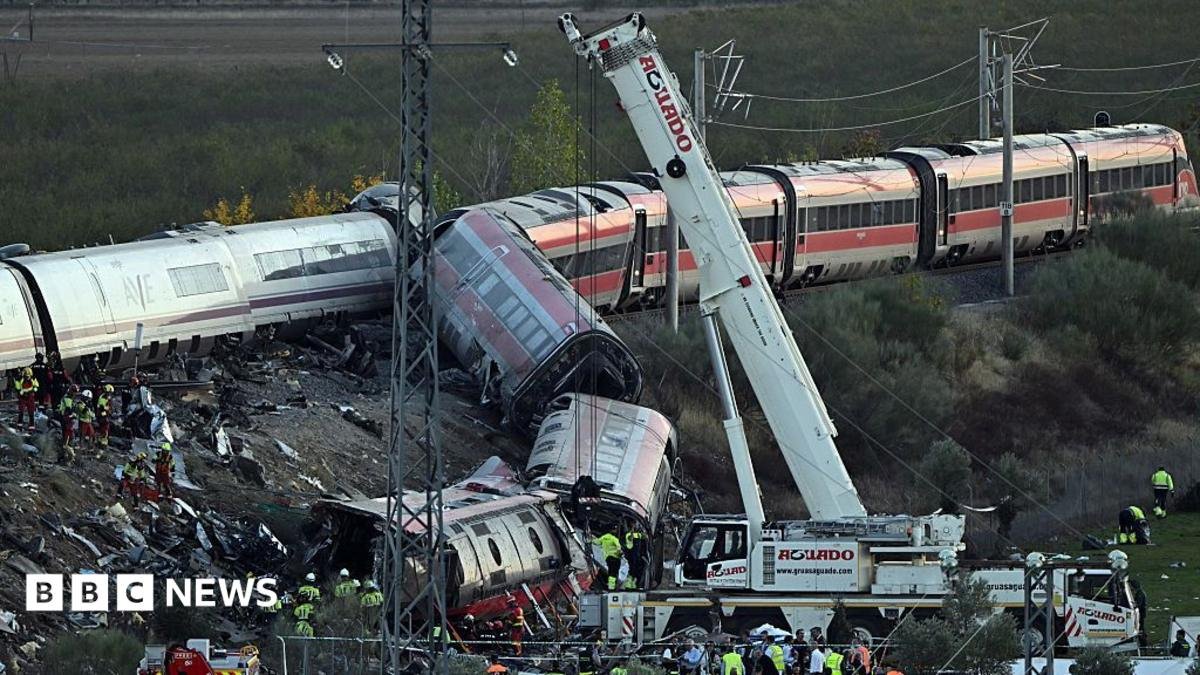
New audio recordings show control center errors led to a deadly train crash in Spain that killed at least 68 people.
Recent audio recordings show conversations between train drivers and a control center in Madrid. These clips reveal the events just before a fatal train collision. The crash caused at least 68 deaths and many injuries.
Also, officials are investigating why the accident happened. A train traveling from Madrid to Seville hit a stopped train on Wednesday. The collision occurred during the morning hours.
Next, the audio reveals a serious mistake. The control center gave a high-speed train permission to move. However, another train sat stopped on the tracks 15 miles ahead.
Meanwhile, Spain has started three days of national mourning. This tragedy marks one of the worst rail disasters in modern European history. Two different companies operated the trains involved.
The Renfe train carried 397 passengers. The Iryo train carried 147 passengers. A computer failure had previously forced all trains on that line to stop.
However, the transport minister called the decision to restart the trains inexplicable. The control center ordered the Renfe train to proceed at normal speed. The controller ignored the fact that the Iryo train remained stationary.
After that, the Iryo driver told the controller they could not start their engine. The train remained stuck in front of a signal at Urda. Despite this, the Renfe train continued moving forward.
Then, the Renfe train struck the Iryo train from behind. Emergency crews worked through the night to find survivors. They used floodlights and heavy equipment to cut through the metal wreckage.
Finally, the nation feels deep sorrow for the lost lives. Prime Minister Pedro Sánchez stated that the country is grieving. Political parties suspended election campaigning to respect the victims.
Still, some protesters gathered at the transport ministry to demand accountability. Police dispersed the crowd after some people threw bottles. Spain now continues its investigation into these tragic safety failures.