

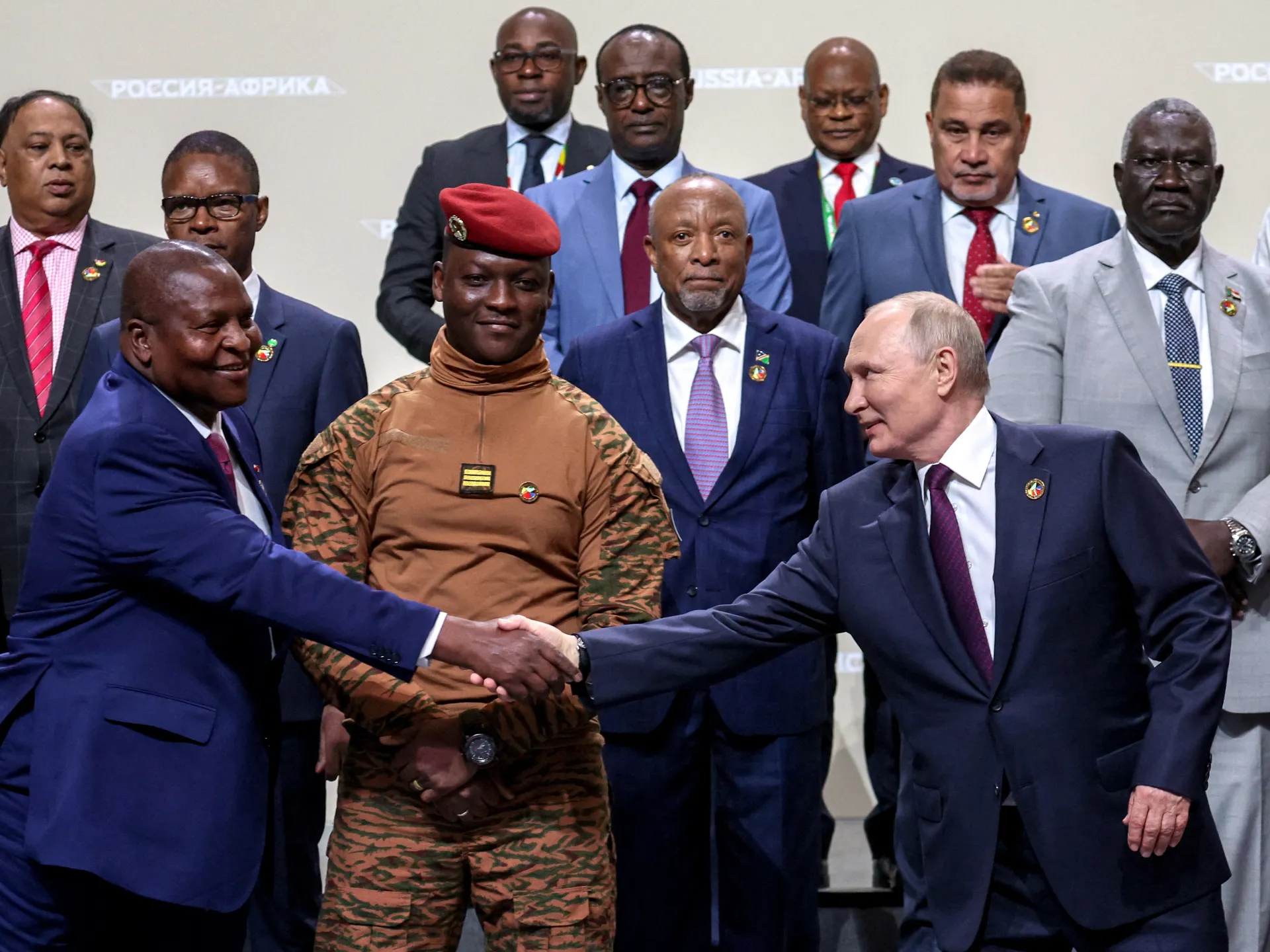
Russia is increasing its footprint in Africa, but the partnership largely benefits Moscow while leaving many African nations with increased instability.
Moscow is hosting its third Russia-Africa summit this week. President Vladimir Putin wants to grow Russia's economic and political reach across the continent. However, these partnerships primarily serve Russian interests rather than delivering prosperity to African citizens.
Next, leaders will discuss investment, energy, and food security. Despite many promises, trade results remain poor. Russia failed to hit its target of $40 billion in annual trade. Recent statistics show a large trade imbalance favoring Moscow.
Also, Russia focuses heavily on exporting wheat and fertilizer. While these supplies help food security, they mostly benefit Russian producers. Many infrastructure projects promised in past summits never actually began or were abandoned by Russian firms.
Meanwhile, some projects are moving forward through high-interest loans. For instance, Egypt is building nuclear reactors with a massive loan from Russia. Other deals, like a pipeline in the Republic of Congo, give Russian interests total control.
After that, Russia increased its military footprint across Africa. The Kremlin uses the Africa Corps to provide security for allied governments. These forces operate in countries like Mali and the Central African Republic.
However, this military support often fails to provide lasting safety. Reports show Russian forces are linked to civilian deaths and human rights abuses. Many locals face more violence instead of the protection they were promised.
Still, Moscow successfully helps friendly leaders maintain power. Russian troops helped crush a mutiny in Niger recently. They also protect the government in the Central African Republic while silencing political opposition and journalists.
Finally, Russia uses media and political influence to shape public opinion. They fund pro-Russian articles and control news channels in several nations. These actions undermine local democracy and favor the Kremlin's geopolitical goals.
In conclusion, this relationship remains deeply unequal. Russia gains mineral resources and military bases while African nations suffer from political repression. African leaders should demand higher standards of accountability and fair treatment from Moscow.