

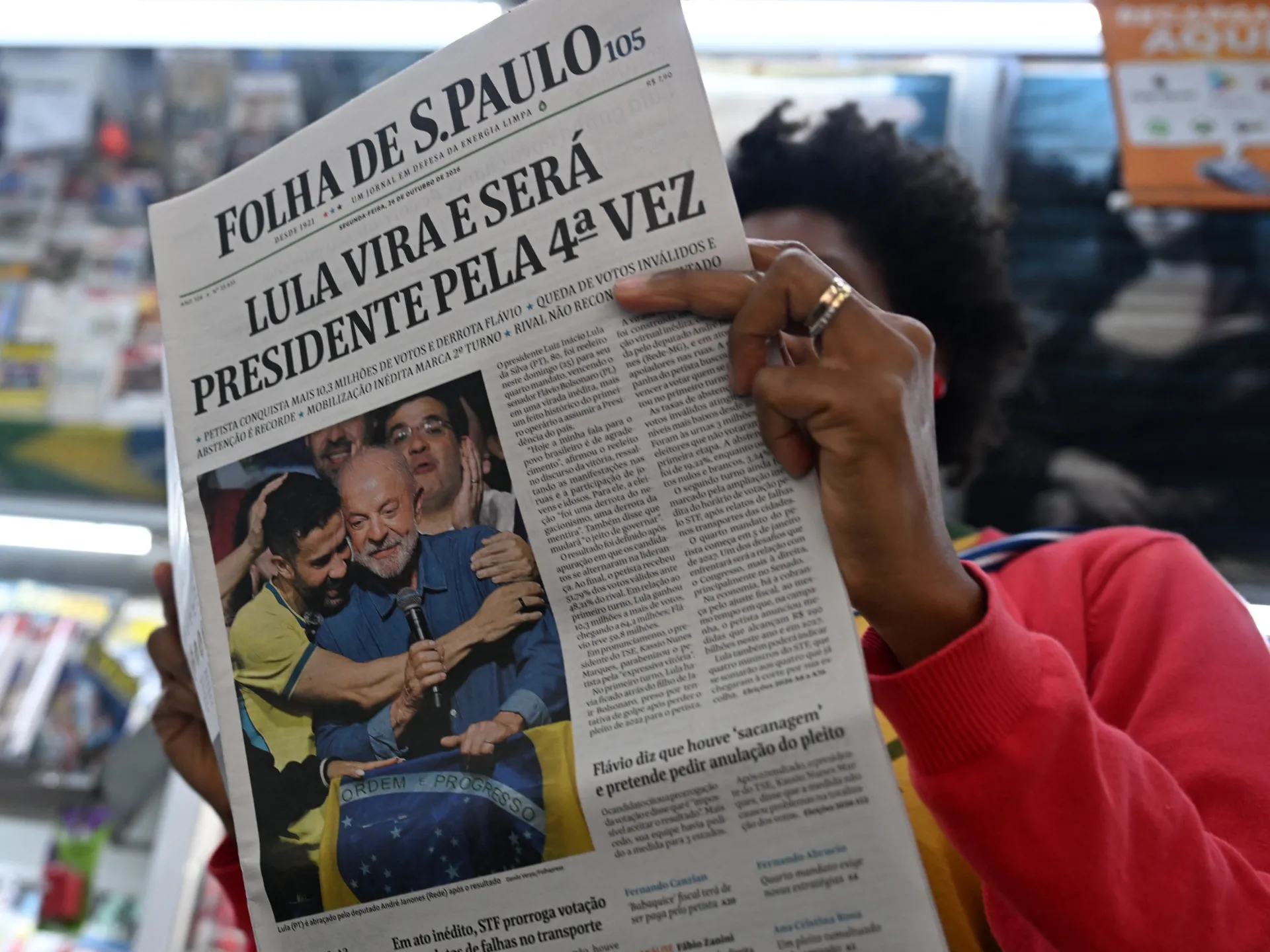
Brazil's currency and stock market dropped sharply following the re-election of President Lula da Silva.
Brazil's national currency lost significant value against the U.S. dollar recently. This shift occurred immediately after the re-election of President Luiz Inacio Lula da Silva.
Investors reacted quickly to the news of the election results. The real experienced a sharp decline in spot trading markets.
Meanwhile, the drop in value reached 12 percent for the currency. This change highlights the immediate impact of the political outcome on the economy.
Also, the stock market faced major trouble following the vote. Bovespa stock index futures plummeted by nearly 15 percent on Monday.
The election result caught many market observers by surprise. Flavio Bolsonaro had previously led during the first round of voting.
Next, experts noted the connection between the election and market volatility. Flavio is the son of former President Jair Bolsonaro.
After that, the political shift altered investor confidence in the region. Many traders chose to sell assets as the new results emerged.
Then, financial analysts monitored the situation closely throughout the day. The sudden drop reflects the uncertainty felt by global market participants.
As a result, the Brazilian economy faces new challenges after this vote. The government now manages a nervous investment climate.
Finally, stakeholders wait to see how policies change under the new term. The currency and stock markets remain sensitive to political shifts.