

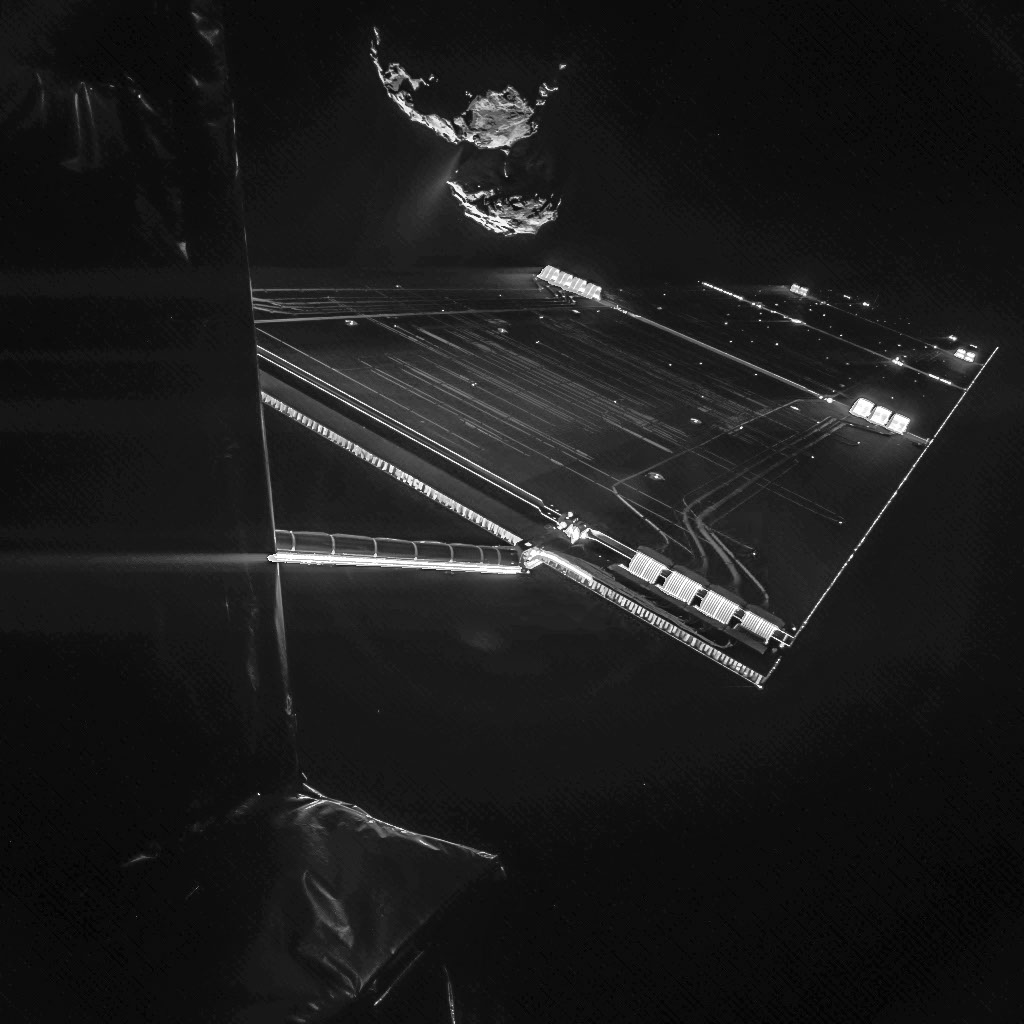
In 2014, the Rosetta spacecraft captured a historic selfie near comet 67P. The image shows the probe and the comet's icy, double-lobed surface.
The Rosetta spacecraft captured a famous selfie on October 7, 2014. This image shows the probe near a distant comet. At that time, the spacecraft traveled far from our home planet.
It sat about 472 million kilometers away from Earth. However, it stayed just 16 kilometers from comet 67P/Churyumov-Gerasimenko. This close distance allowed for a very clear view.
The comet features a strange double-lobed shape. Dust and gas flow away from its center. These materials rise high above the nucleus in the photograph.
Also, bright sunlight reflects off the spacecraft parts. One of the 14-meter solar arrays shines in the light. This creates a high contrast effect in the final image.
Next, the team used the CIVA camera system to record this scene. This camera sat on the Philae lander. The lander remained attached to the orbiter at that time.
Scientists combined two separate exposures to create this shot. They used one short exposure and one long exposure. This method captured all the fine details of the scene.
Furthermore, the image shows the planned landing site for the probe. This site sits on the smaller lobe of the comet. It appears clearly on the visible side.
After that, the lander separated from the main spacecraft. This event happened on November 12, 2014. This selfie served as the final photo from the camera before that moment.
Later, the Philae lander took another picture. It looked back toward the orbiter during this process. This happened right before the lander began its final descent.
Finally, the small probe moved toward the surface of the comet. It aimed for the nucleus after the separation. This mission provided a unique look at deep space.