

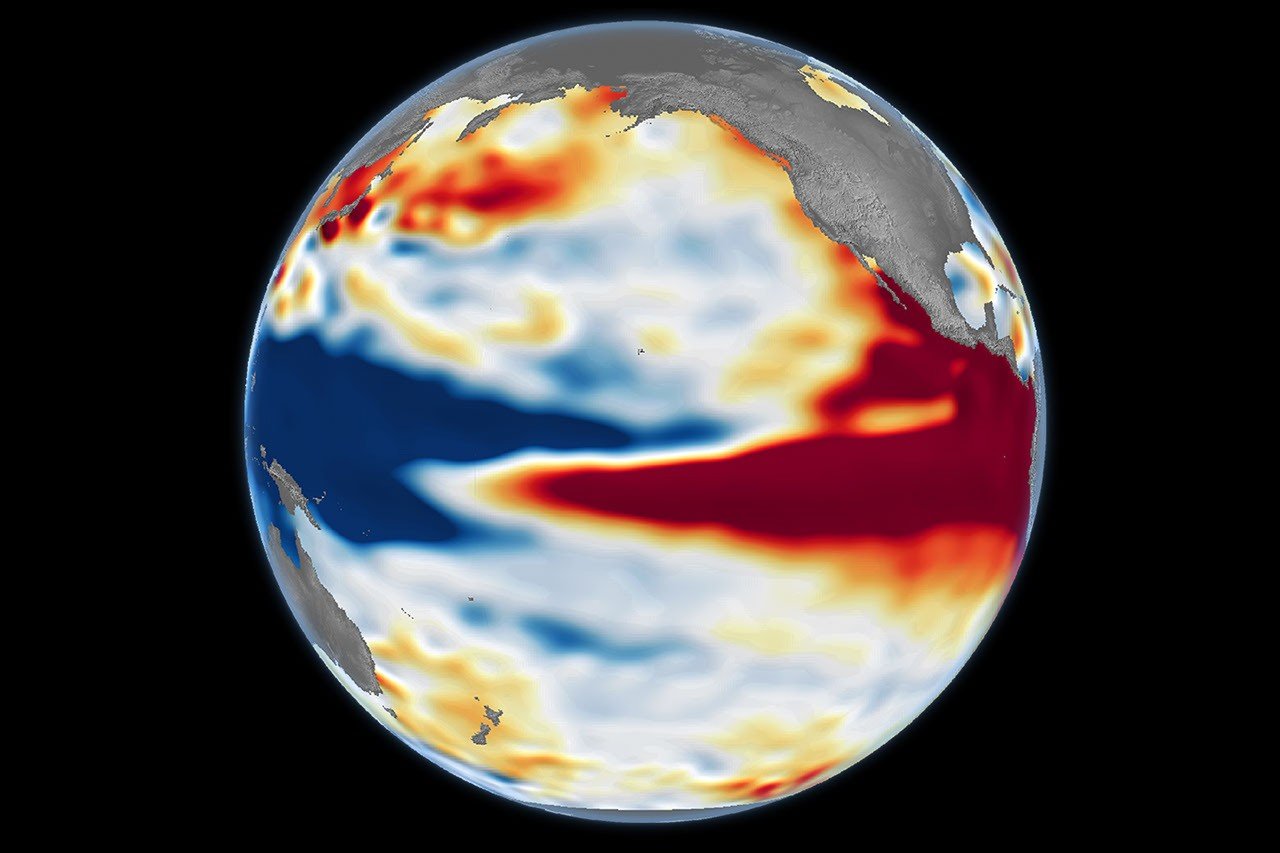
El Niño is a natural climate cycle that impacts weather worldwide. NASA scientists use satellite data to compare current and historical events.
El Niño is a natural climate event. It happens every two to seven years. It brings warmer water to the equatorial Pacific.
Also, this weather pattern changes global climates. Past events in 1997 and 2015 caused major issues. These included forest fires and crop failures.
Next, the cycle begins with trade winds. These winds usually keep warm water in the western Pacific. When winds weaken, the warm water moves east.
Then, the cycle gains strength. More warm water piles up in the eastern Pacific. This process creates a feedback loop with the atmosphere.
However, each El Niño is unique. Experts struggle to find a typical pattern. Every event hits different areas in different ways.
After that, scientists track these events with satellites. These tools measure the height of the sea surface. Warmer water causes the sea to expand.
Also, higher sea levels show heat buildup. NASA scientists compare current data to older records. They have tracked this for thirty-five years.
Meanwhile, the 2026 event resembles the 1997 disaster. Both events show high, warm water moving toward South America. This suggests similar weather impacts might occur.
Next, the 2015 event showed different traits. That year, warm water did not reach South America as much. Rainfall patterns shifted toward Central America instead.
Finally, experts predict a strong El Niño through early 2027. Yet, the atmosphere remains chaotic and unpredictable. Scientists view these comparisons as educated guesses.